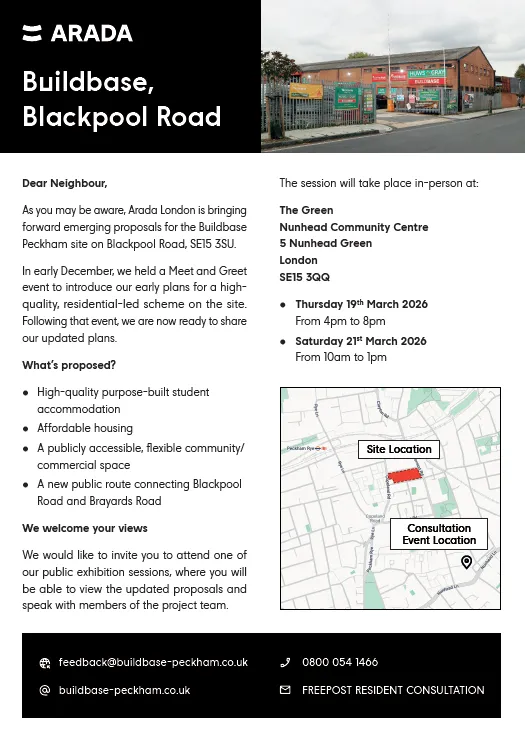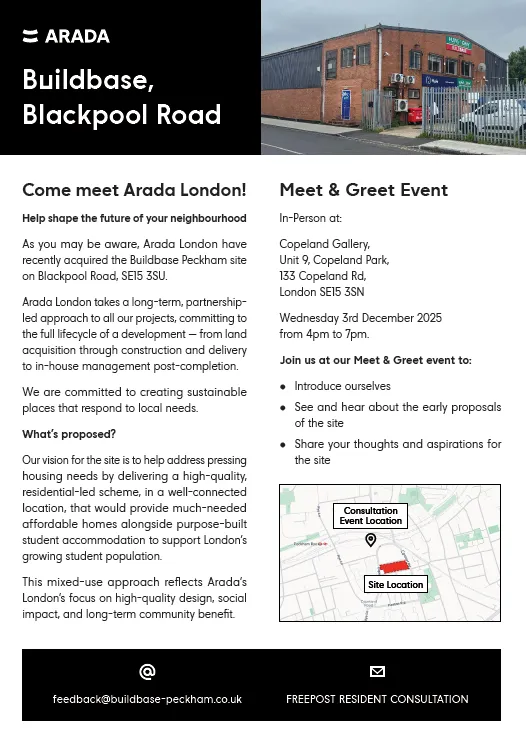
Arada London has recently acquired the Buildbase Peckham site on Blackpool Road, SE15 3SU.
We are now developing our ideas for a high-quality, residential led scheme on the site. Arada London is committed to engaging with the local community.
This is an opportunity to ask any questions and let us know what you think about the emerging proposals. We appreciate you taking the time to visit our community hub and sharing your views on our emerging plans.
Arada London has recently acquired the Buildbase Peckham site on Blackpool Road, SE15 3SU.
We are now developing our ideas for a high-quality, residential led scheme on the site. Arada London is committed to engaging with the local community.
This is an opportunity to ask any questions and let us know what you think about the emerging proposals. We appreciate you taking the time to visit our Community Hub and sharing your views on our emerging plans.
Coming soon.
In the meantime, you can view the boards from our consultation event here:
The Site
The site is located in the London Borough of Southwark, and benefits from excellent transport connectivity within an 8-minute walk of Peckham Rye station.
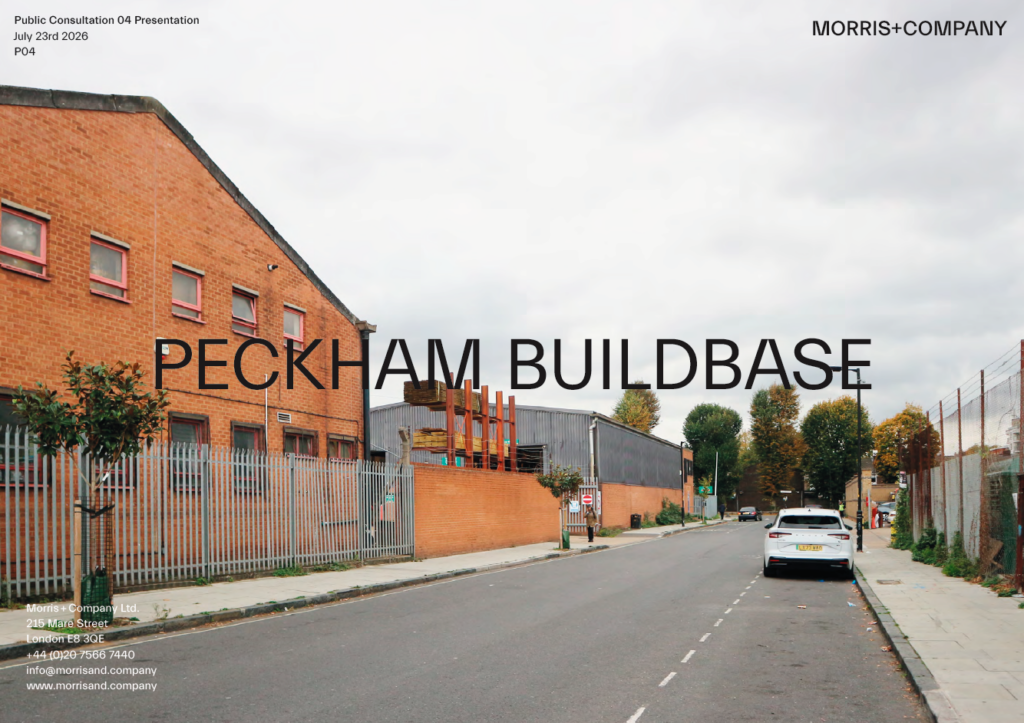
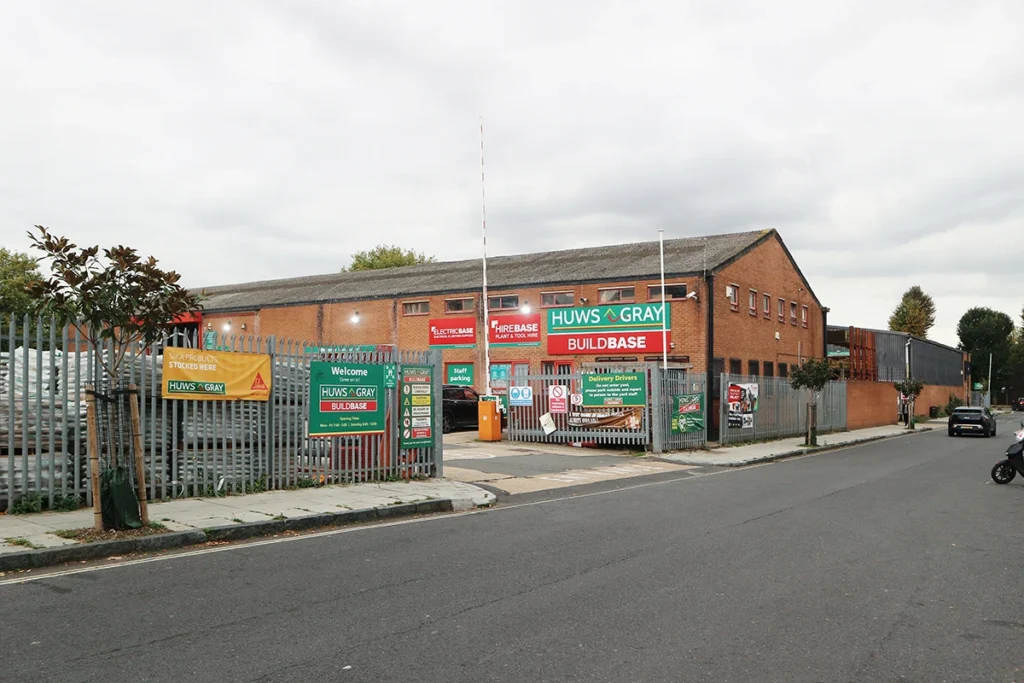
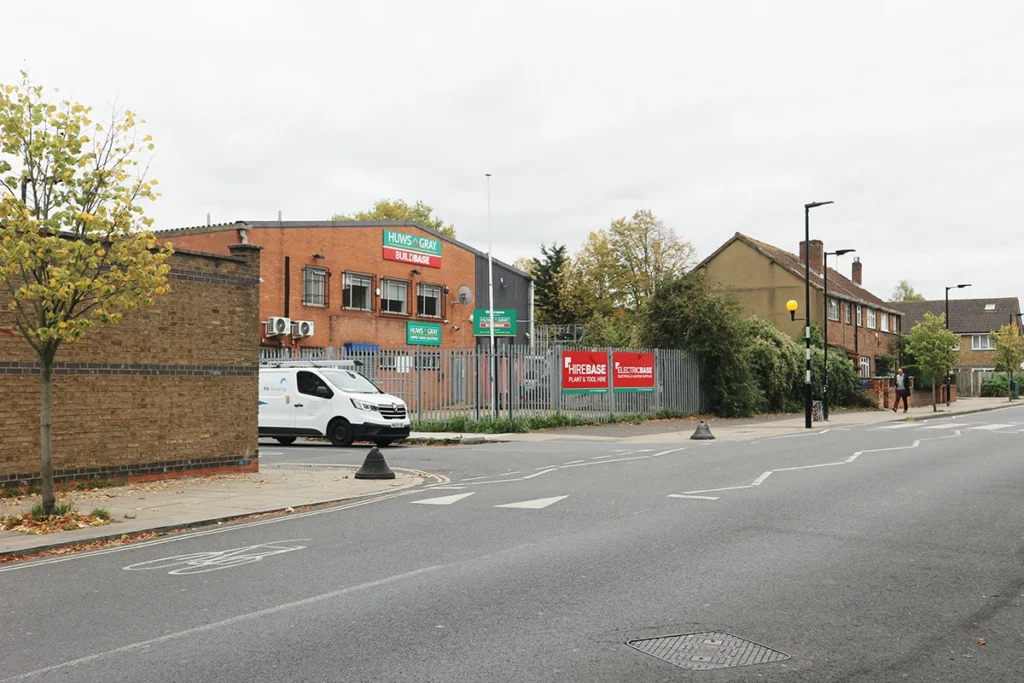
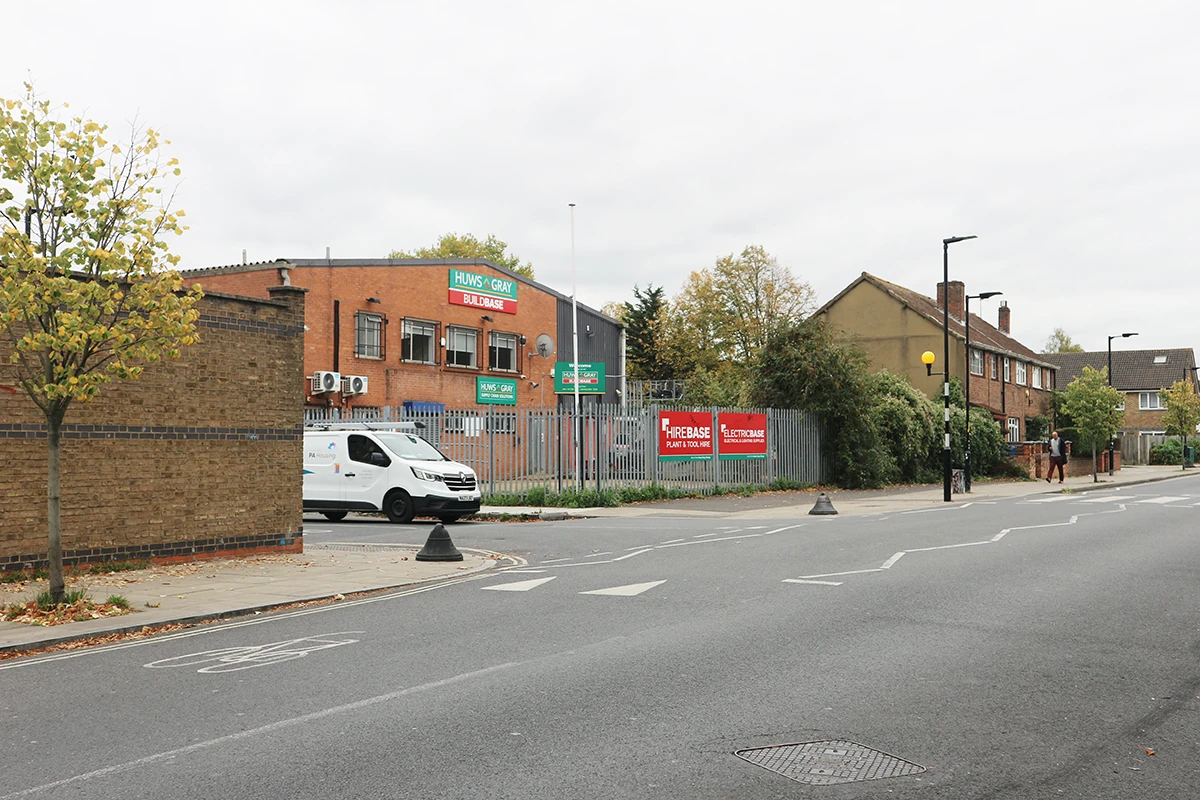
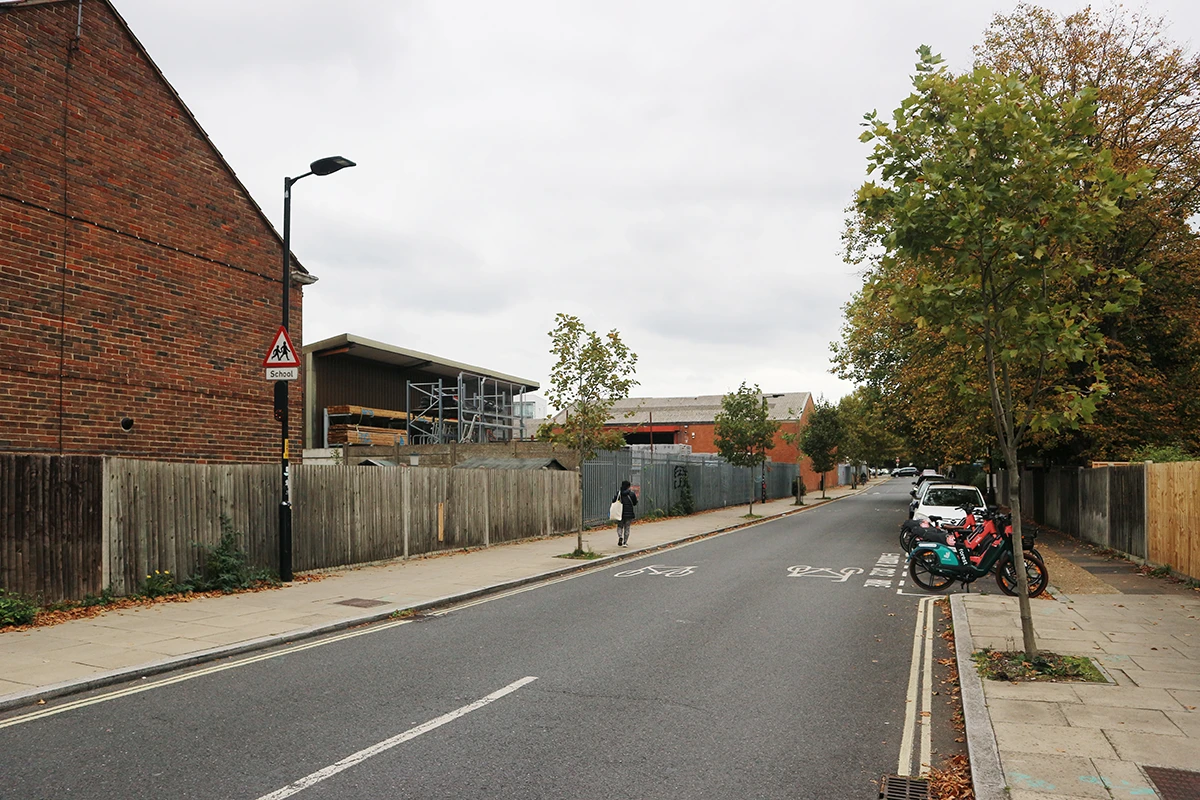
Beyond the site’s industrial function as a builder’s yard, the current use offers little to no benefits to its immediate urban condition.
The corner of Copeland Road and Brayards Road presents three terraced houses with private gardens. The rest of the site’s frontages are entirely inactive presenting solid brick walls or fences over two metres tall.
The site is mostly covered in a continuous layer of hard-standing offering little to no biodiversity or permeability for rainwater attenuation. A few existing trees are located along the South Eastern and Eastern boundaries of the site and are planted into the footway.
Planning Context
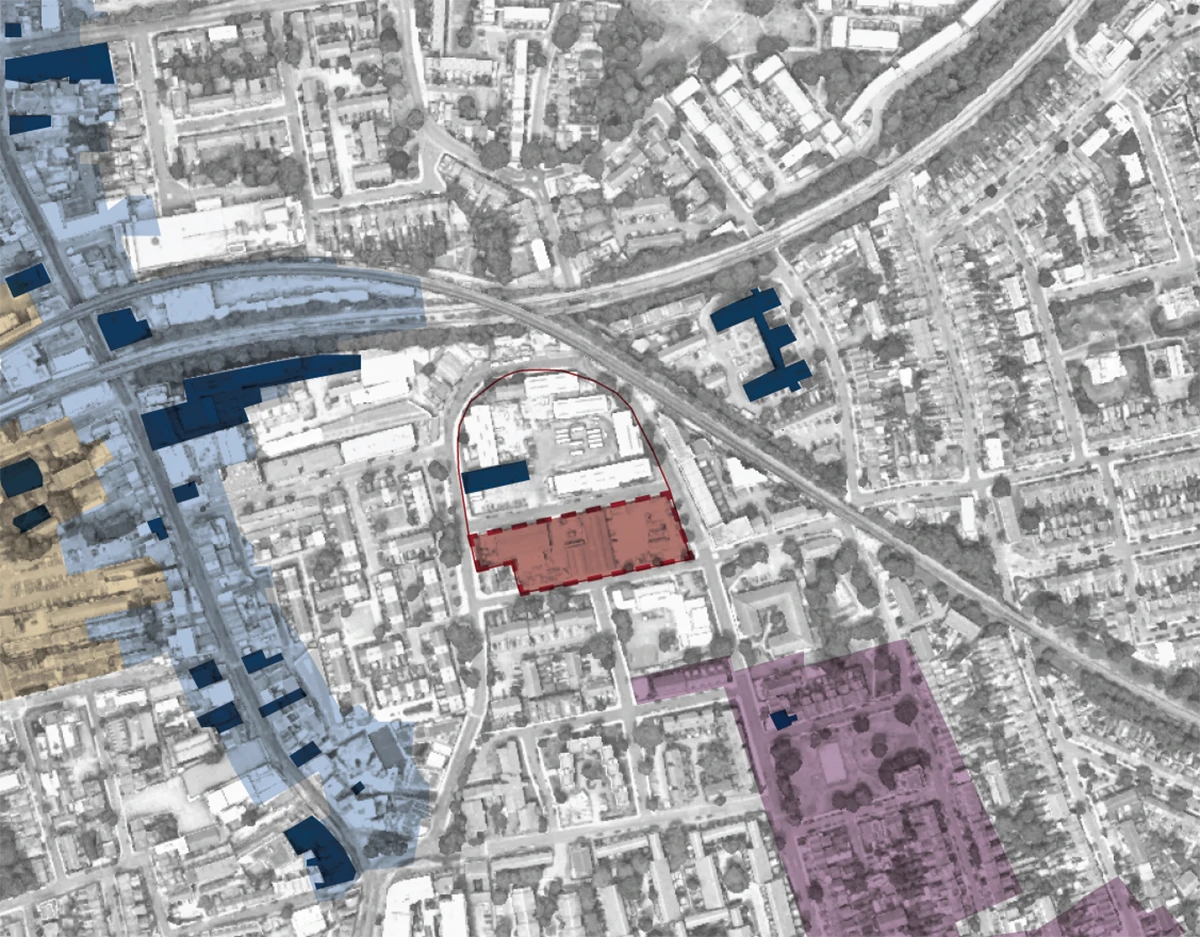
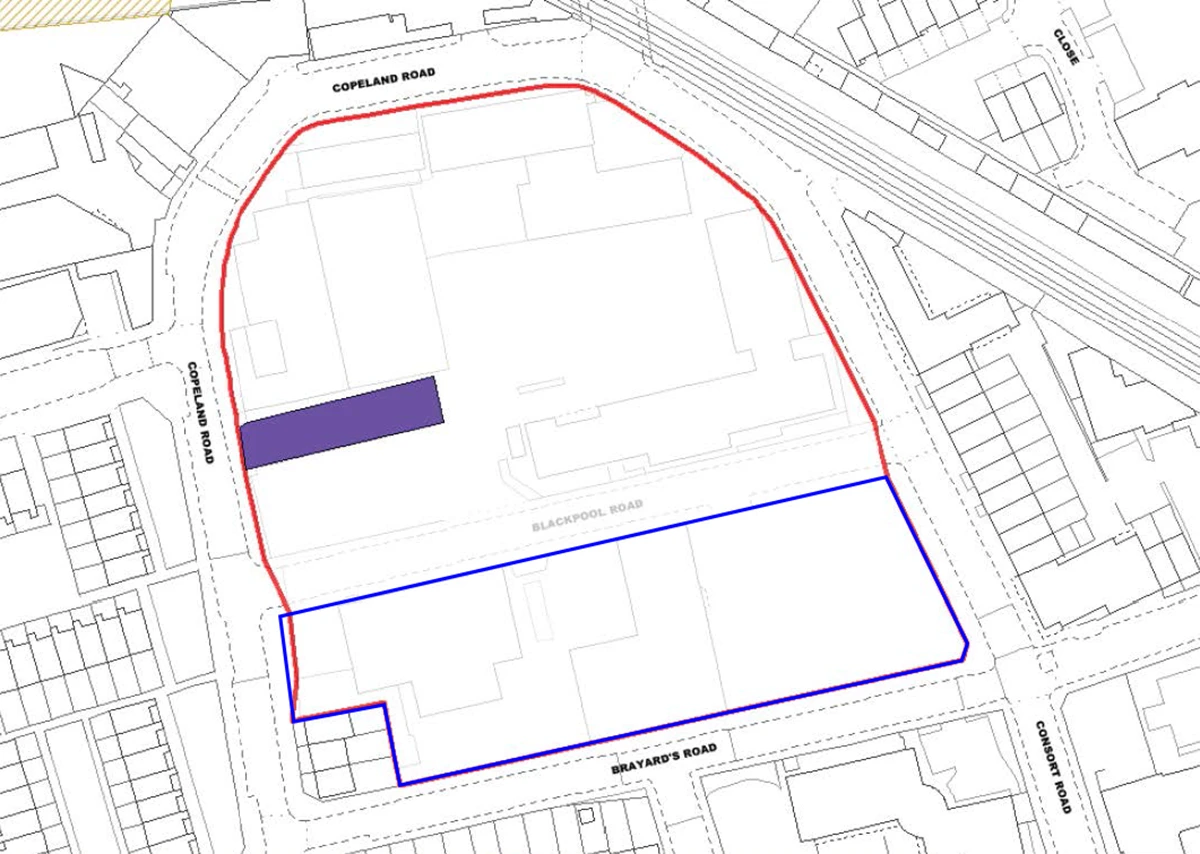
Site Boundary (in red)
NSP75: Blackpool Road Business Park Allocation
The site is located in the southern parcel of allocated site NSP75: Blackpool Road Business Park as highlighted in the Southwark Plan (2022).
Key considerations mentioned for future development of the allocation includes:
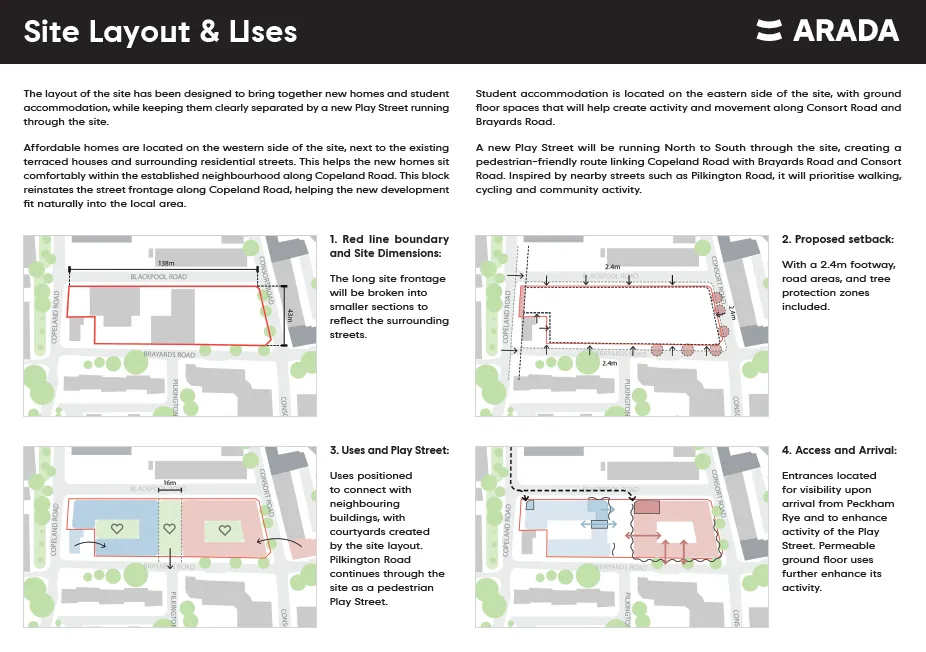
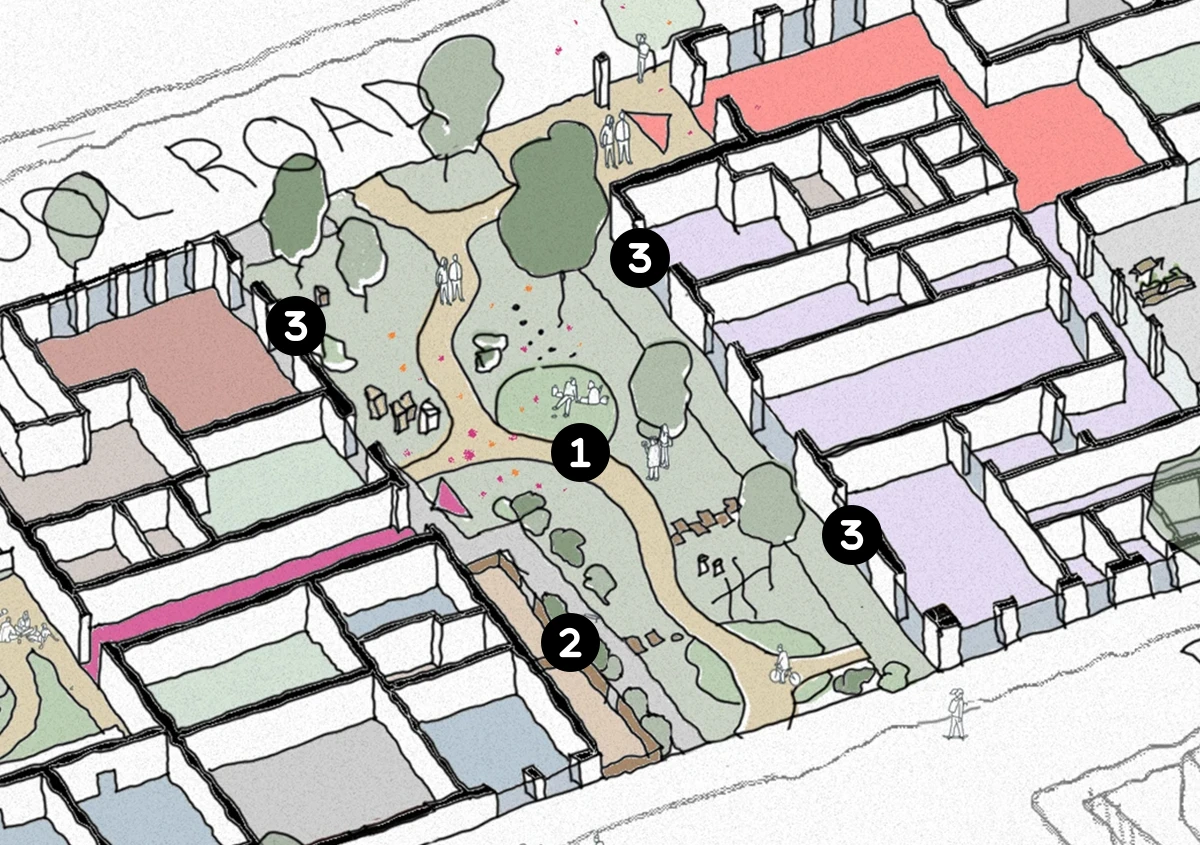
The layout of the site has been designed to bring together new homes and student accommodation, while keeping them clearly separated by a new Play Street running through the site.
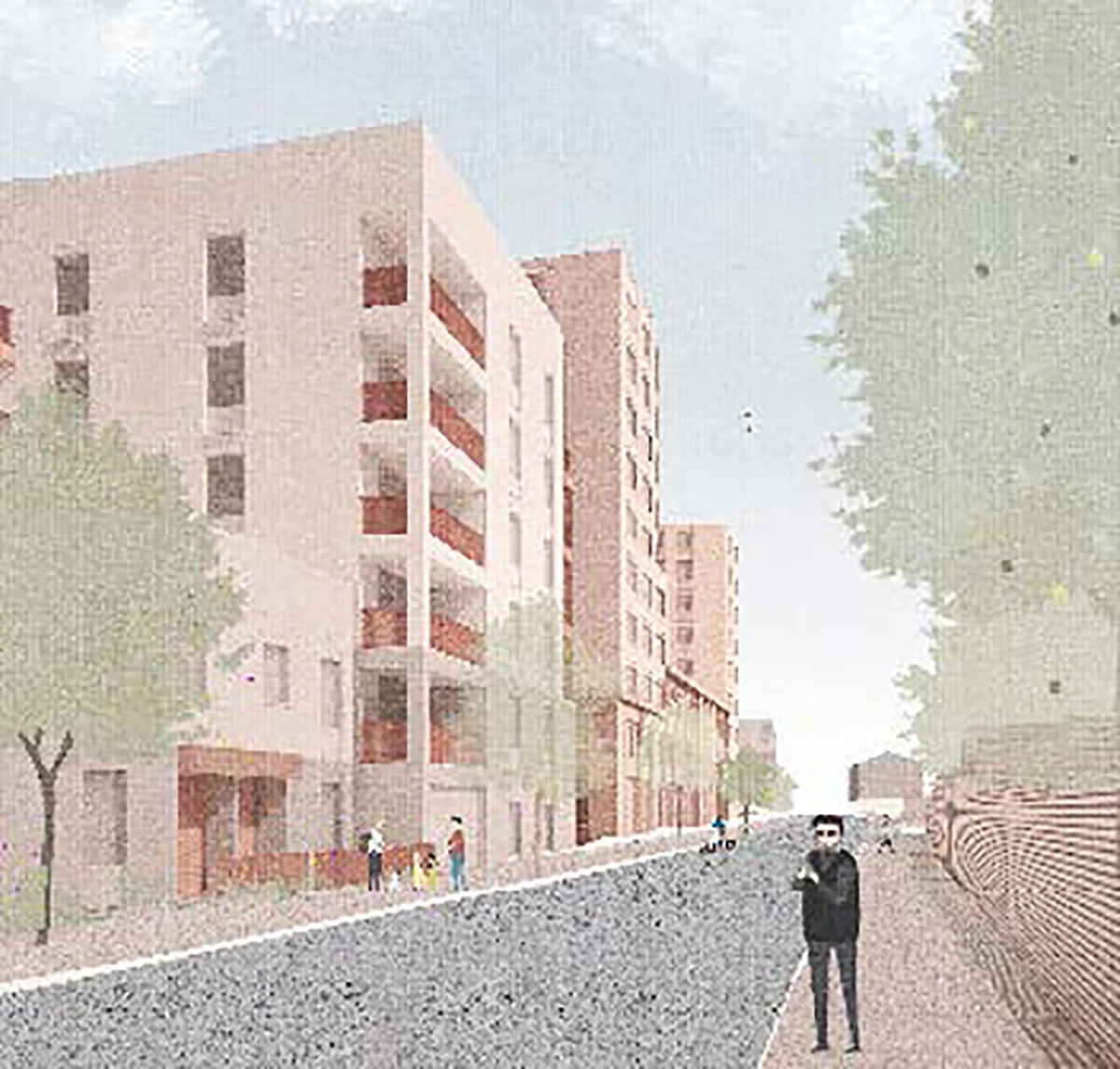
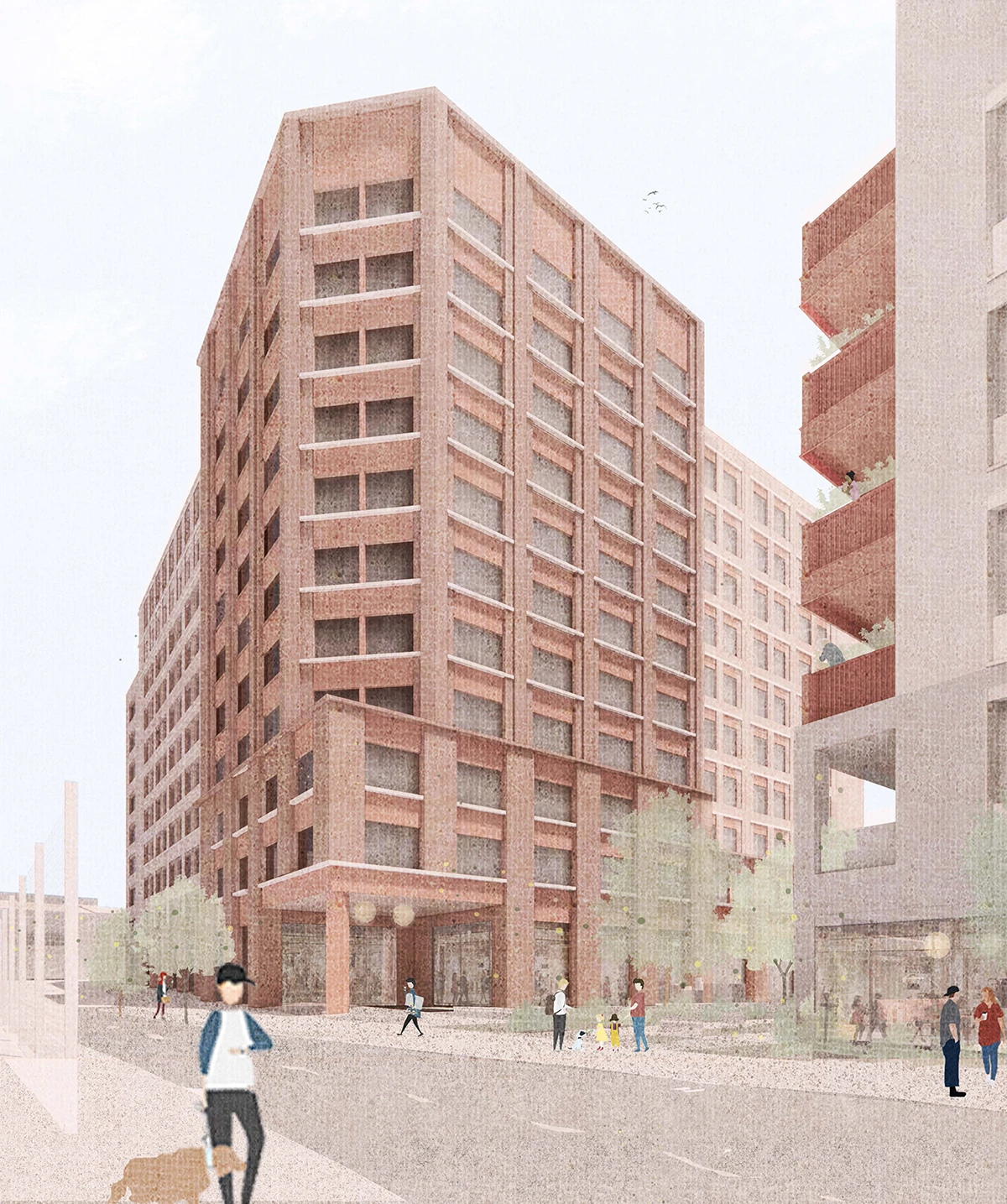
Affordable homes are located on the western side of the site, next to the existing terraced houses and surrounding residential streets. This helps the new homes sit comfortably within the established neighbourhood along Copeland Road. This block reinstates the street frontage along Copeland Road, helping the new development fit naturally into the local area.
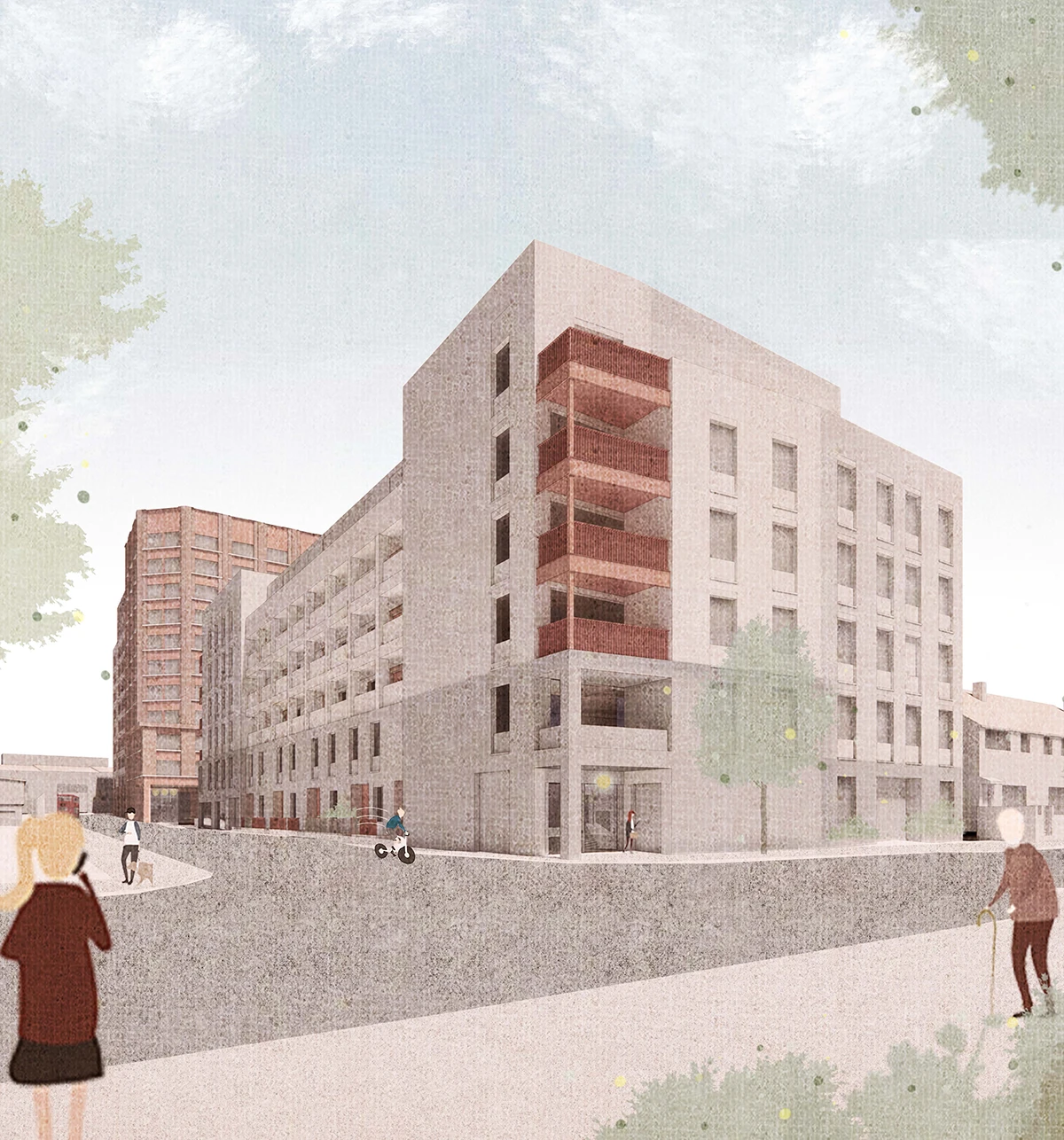
Student accommodation is located on the eastern side of the site, with ground floor spaces that will help create activity and movement along Consort Road and Brayards Road.
A new Play Street will be running North to South through the site, creating a pedestrian-friendly route linking Copeland Road with Brayards Road and Consort Road. Inspired by nearby streets such as Pilkington Road, it will prioritise walking, cycling and community activity.
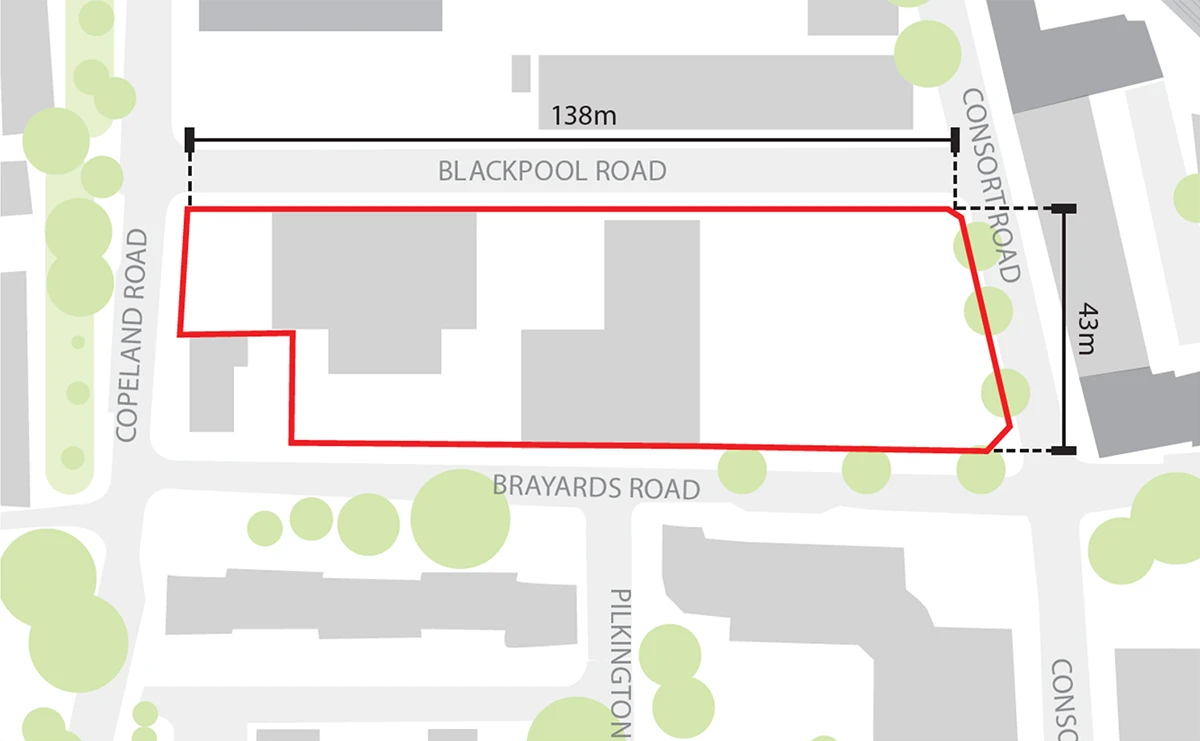
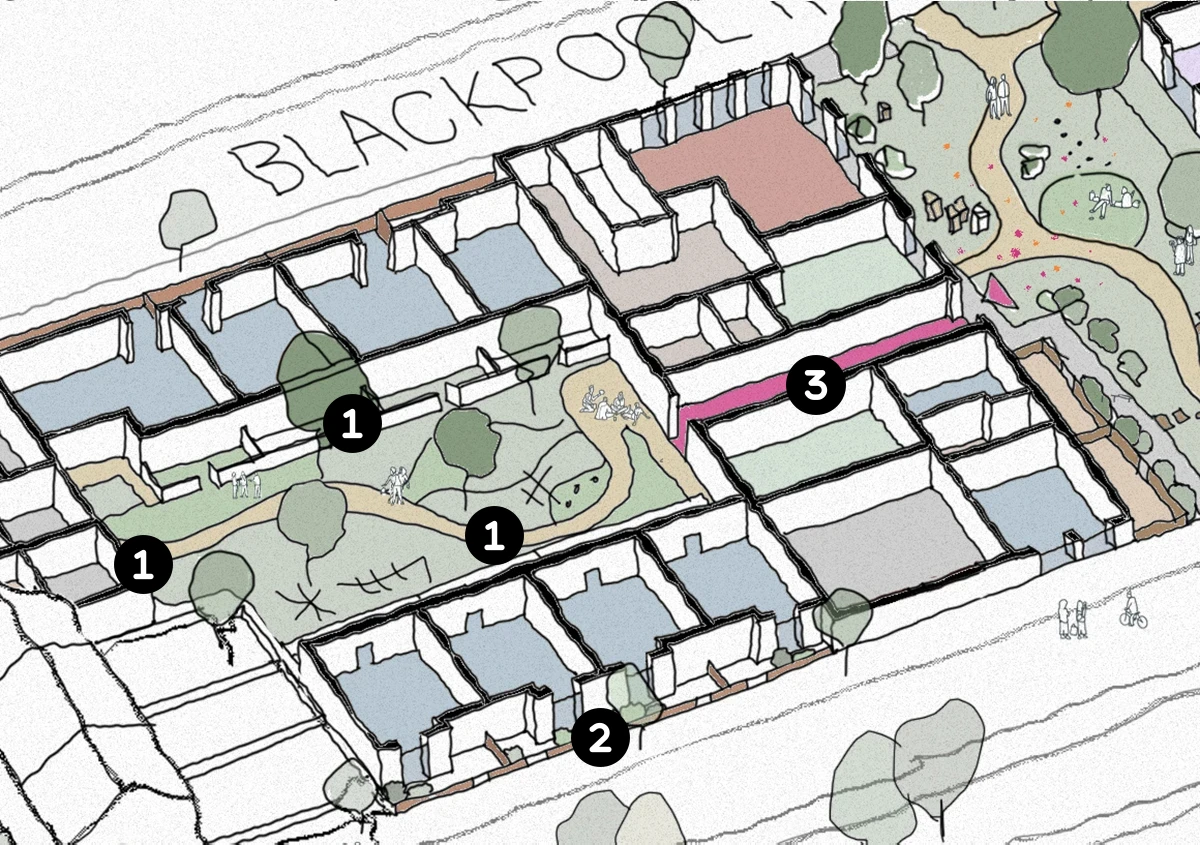
1. Red line boundary and Site Dimensions:
The long site frontage will be broken into smaller sections to reflect the surrounding streets.
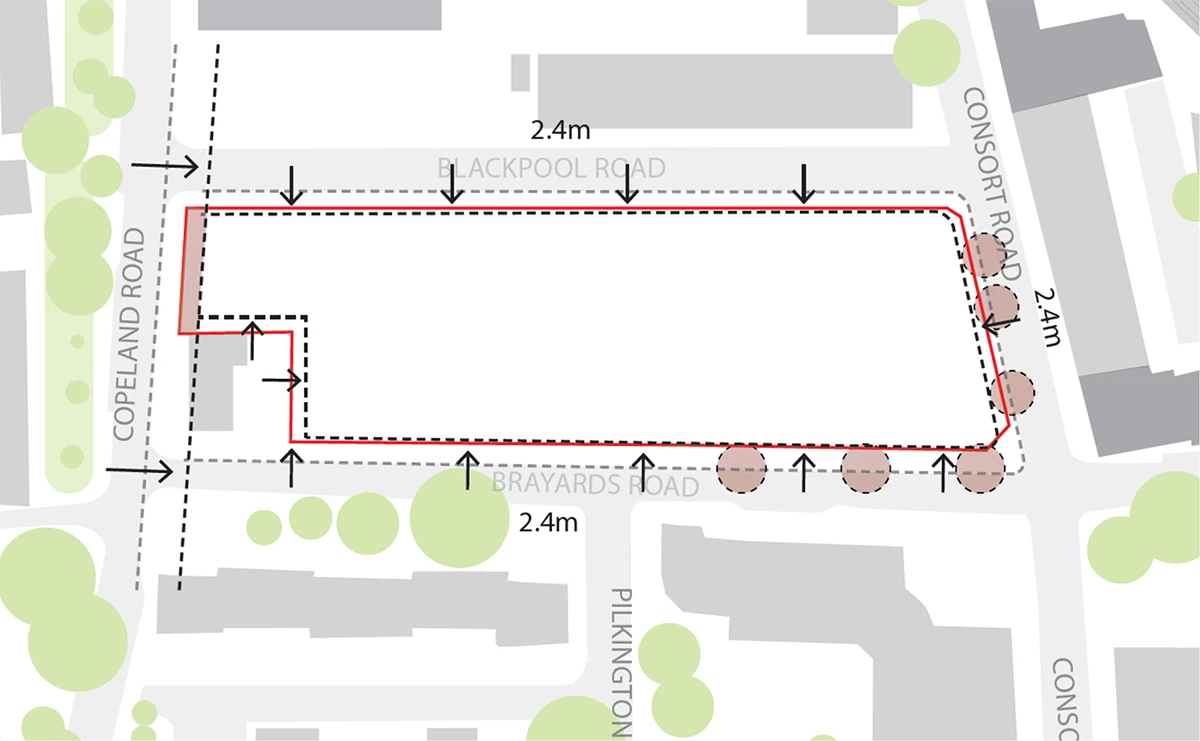
2. Proposed setback:
With a 2.4m footway, road areas, and tree protection zones included.
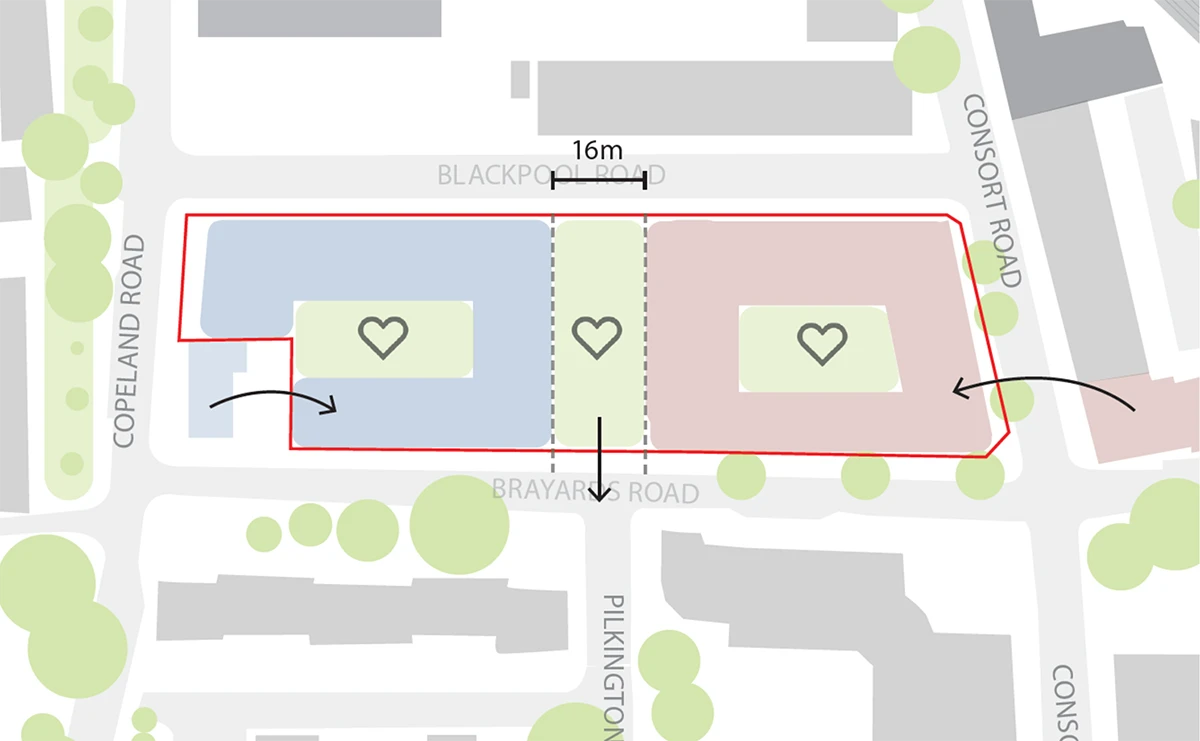
3. Uses and Play Street:
Uses positioned to connect with neighbouring buildings, with courtyards created by the site layout. Pilkington Road continues through the site as a pedestrian Play Street.
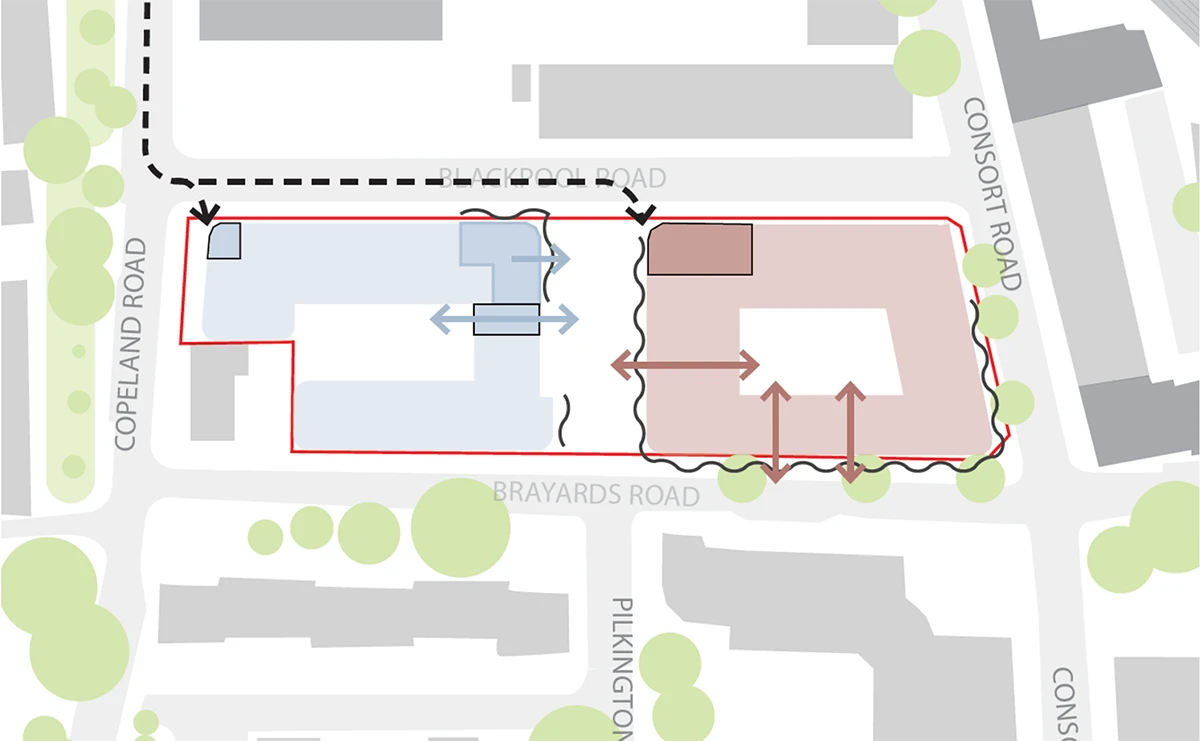
4. Access and Arrival:
Entrances located for visibility upon arrival from Peckham Rye and to enhance activity of the Play Street. Permeable ground floor uses further enhance its activity.
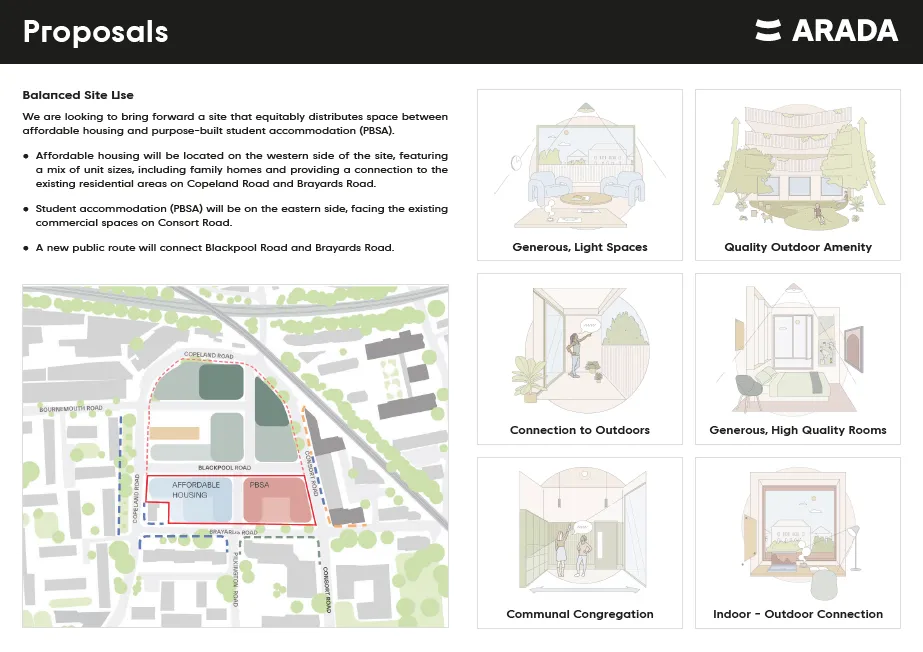
The proposals will deliver much-needed affordable homes, including family-sized units, all at social rent—equivalent to over 40% if a mix of tenures were applied.
The scheme will also include a flexible space that could be used for community or local commercial uses.
We are also looking at providing larger family homes, alongside high-quality outdoor spaces for those living on the site.
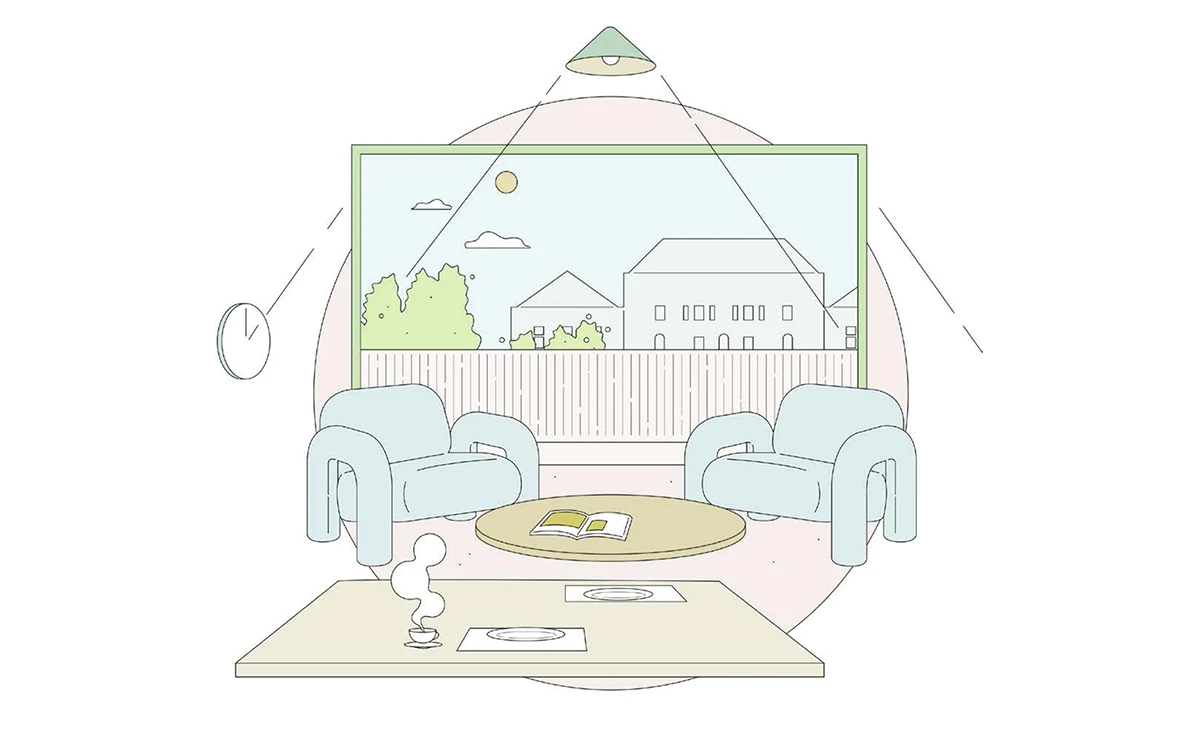
Generous, Light Spaces
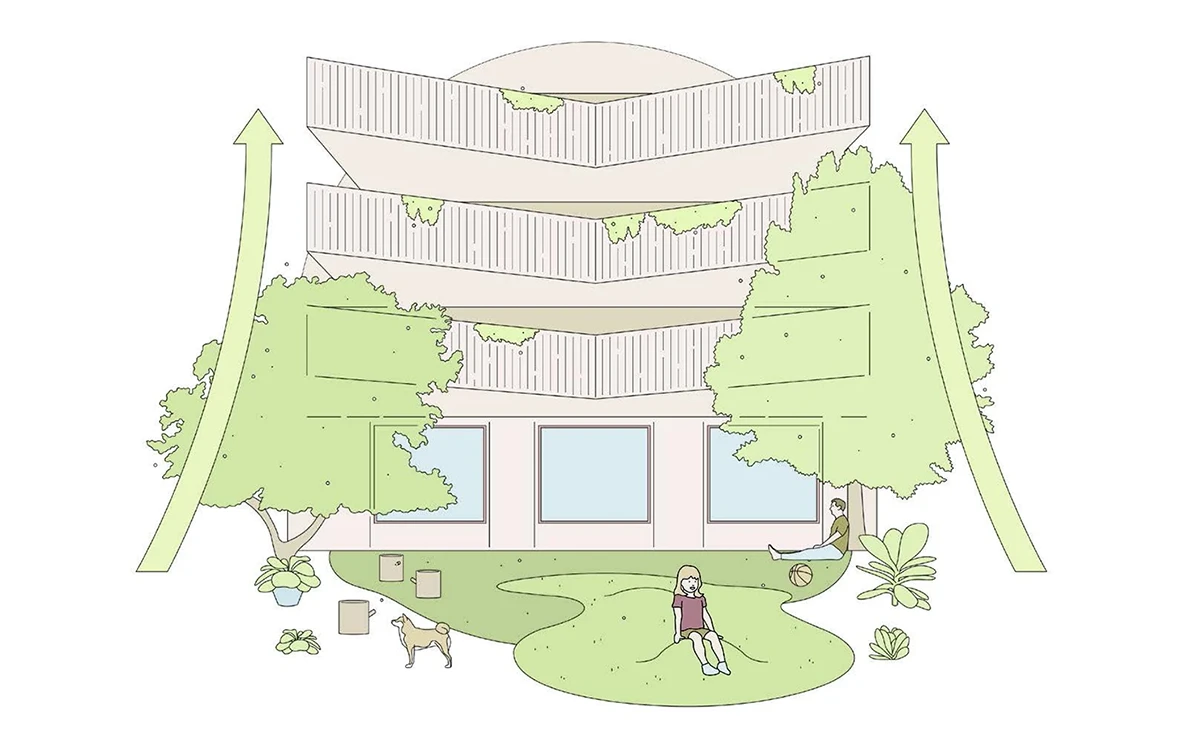
Quality Outdoor Amenity
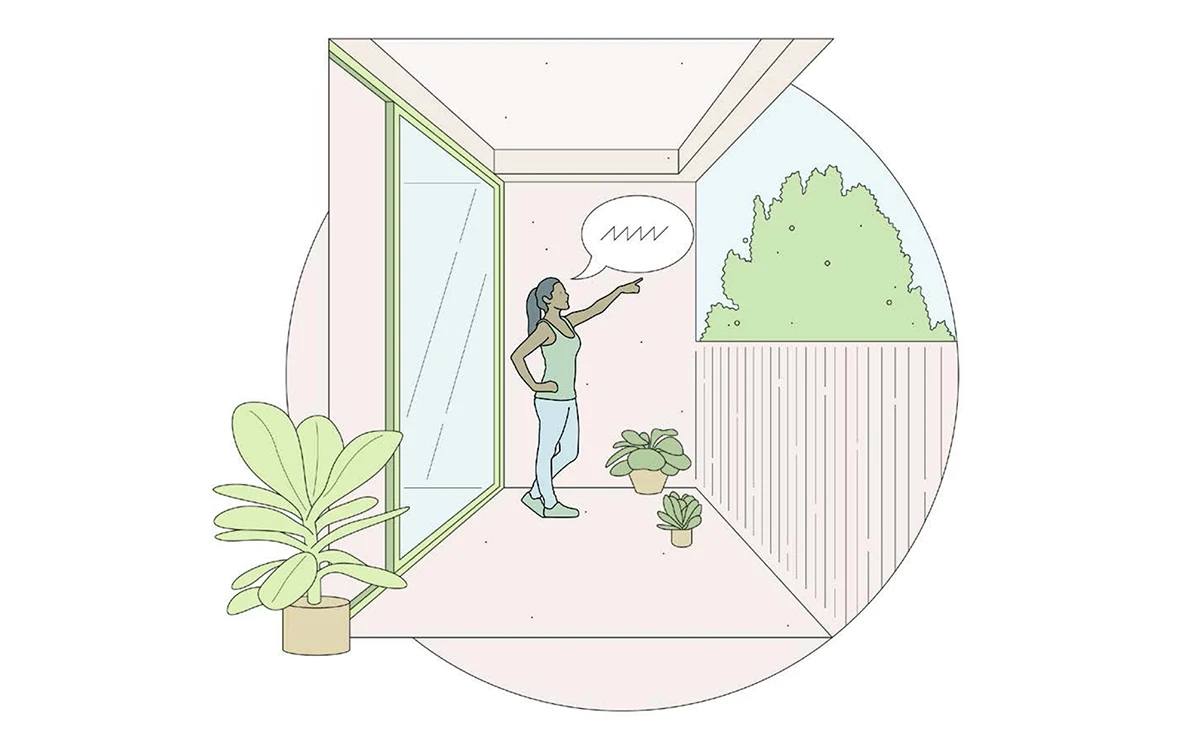
Connection to Outdoors

Views from Key Spaces
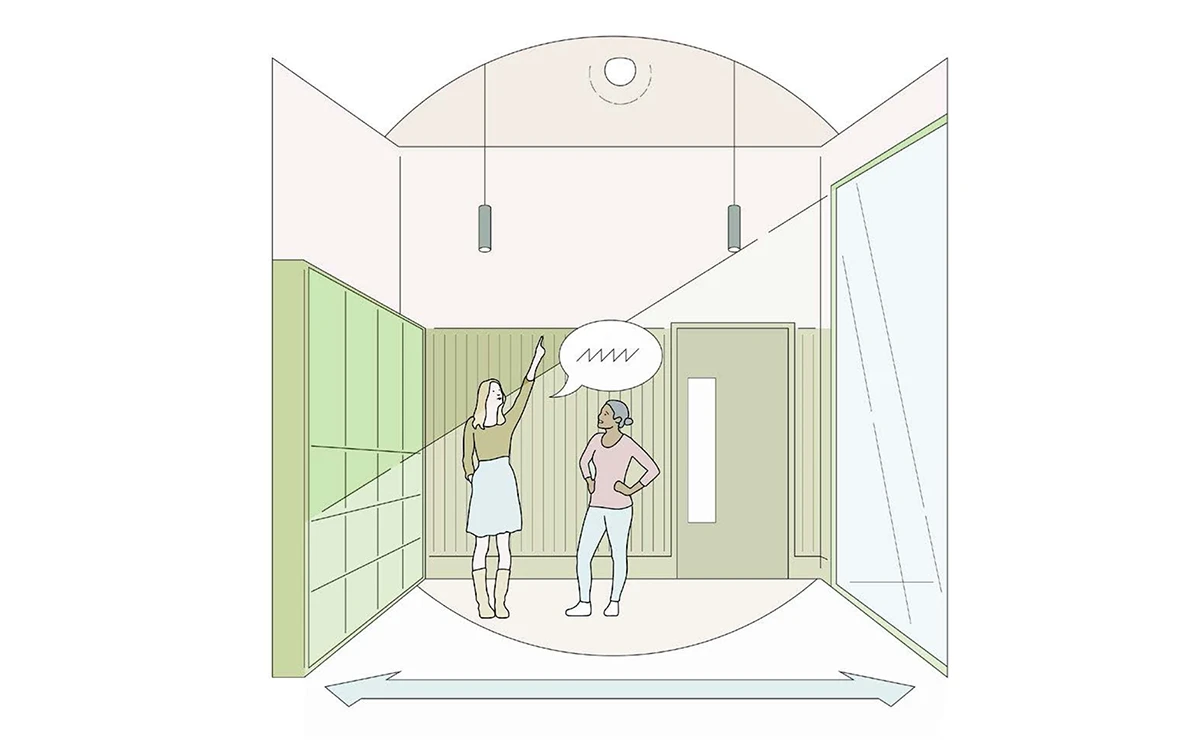
Communal Congregation
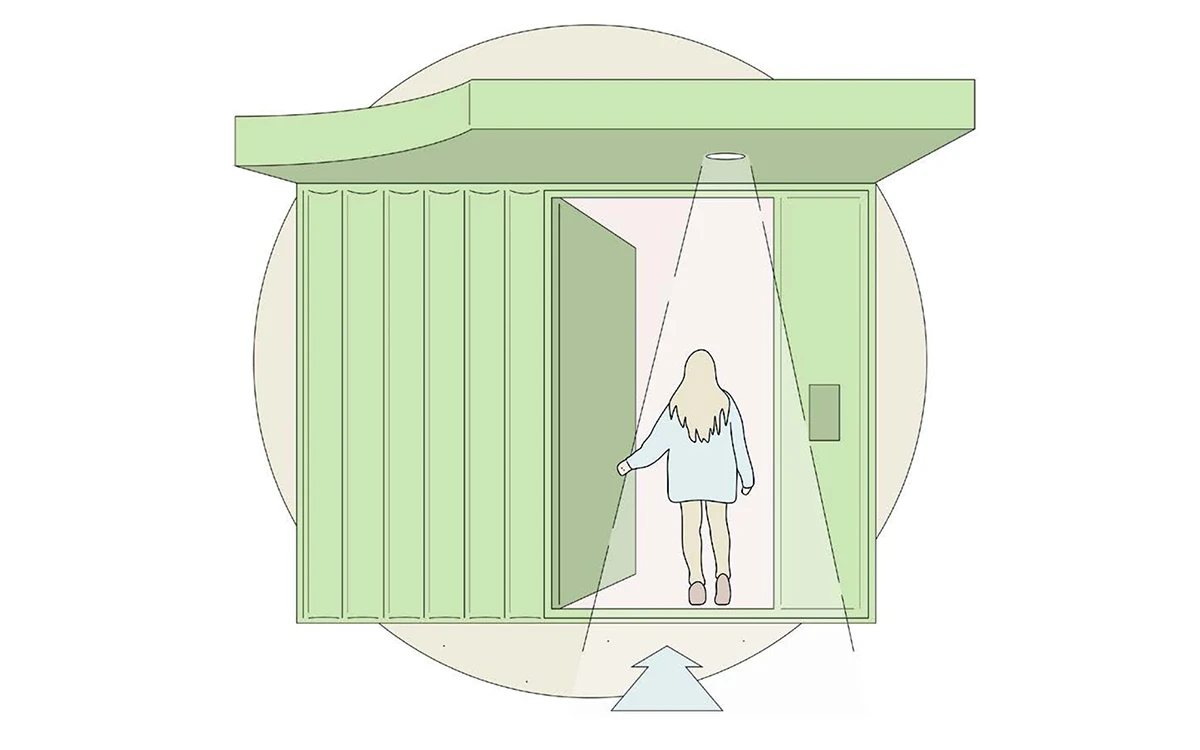
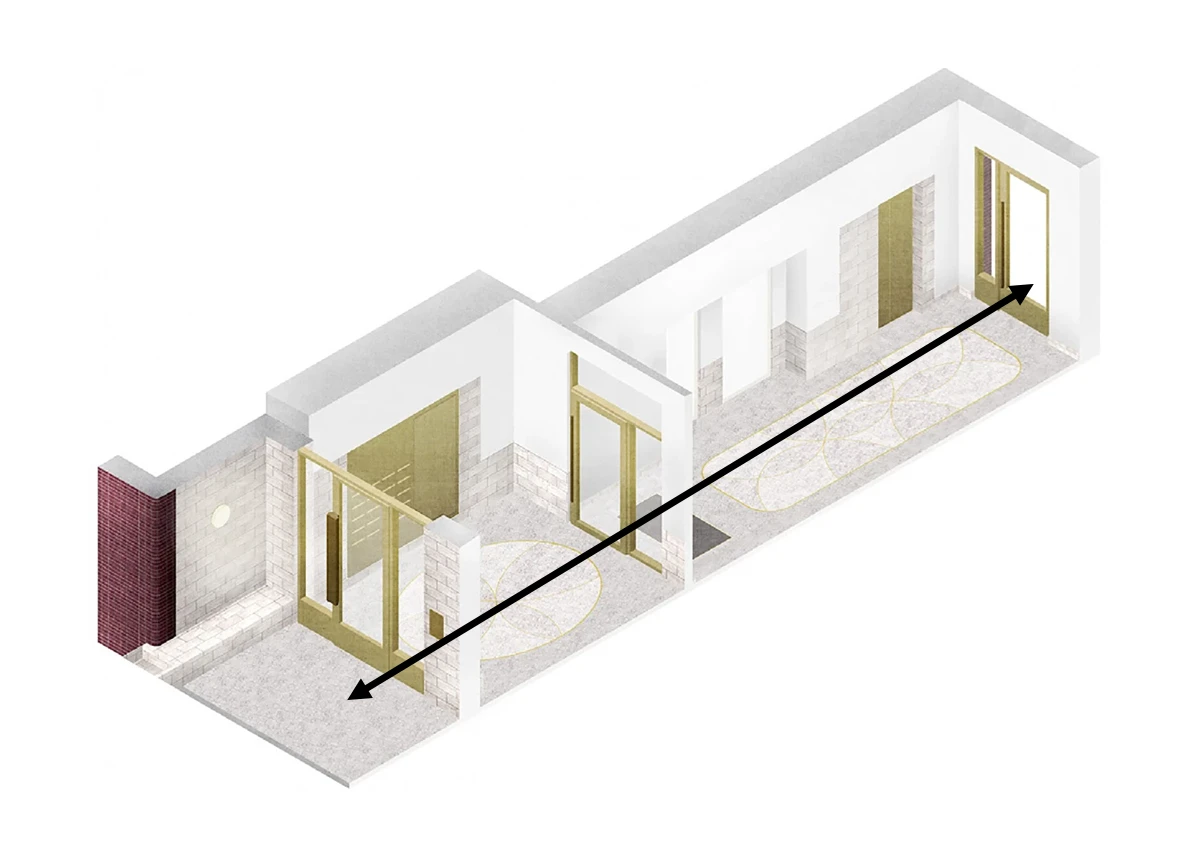
Welcoming Statement Entrances
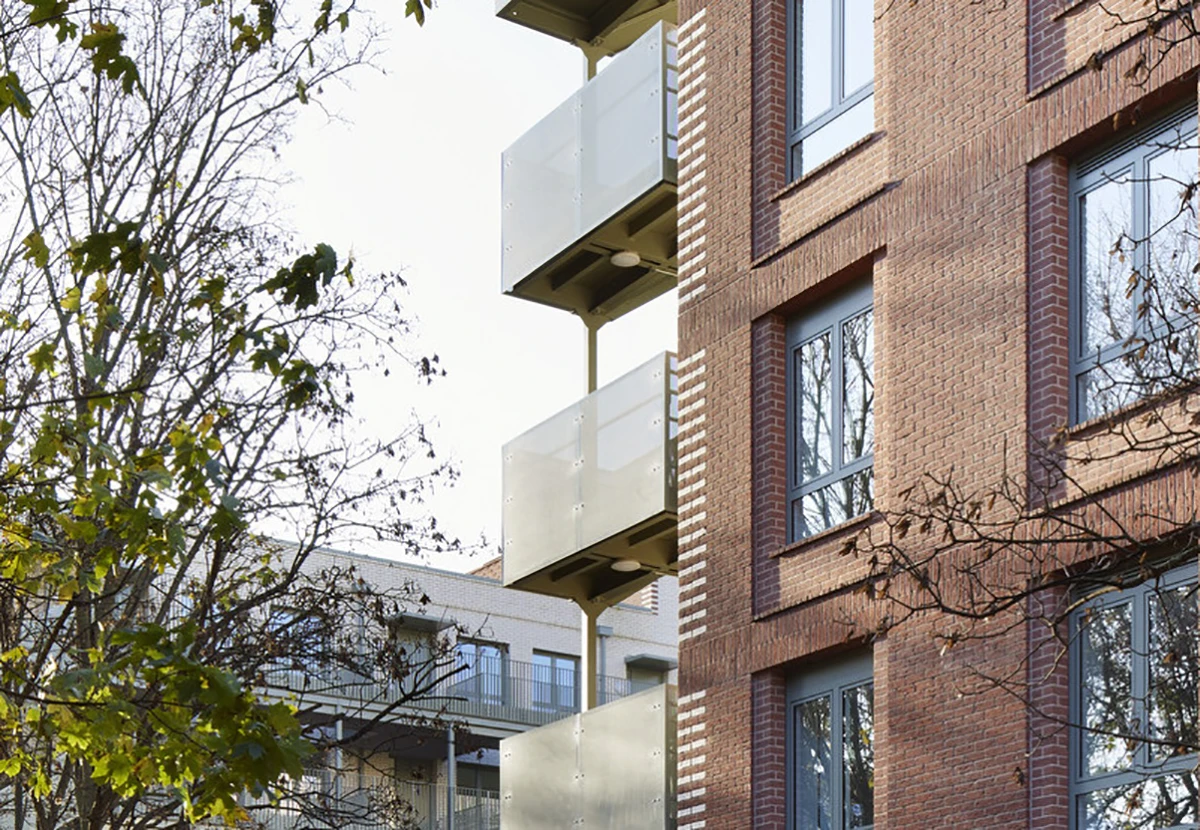
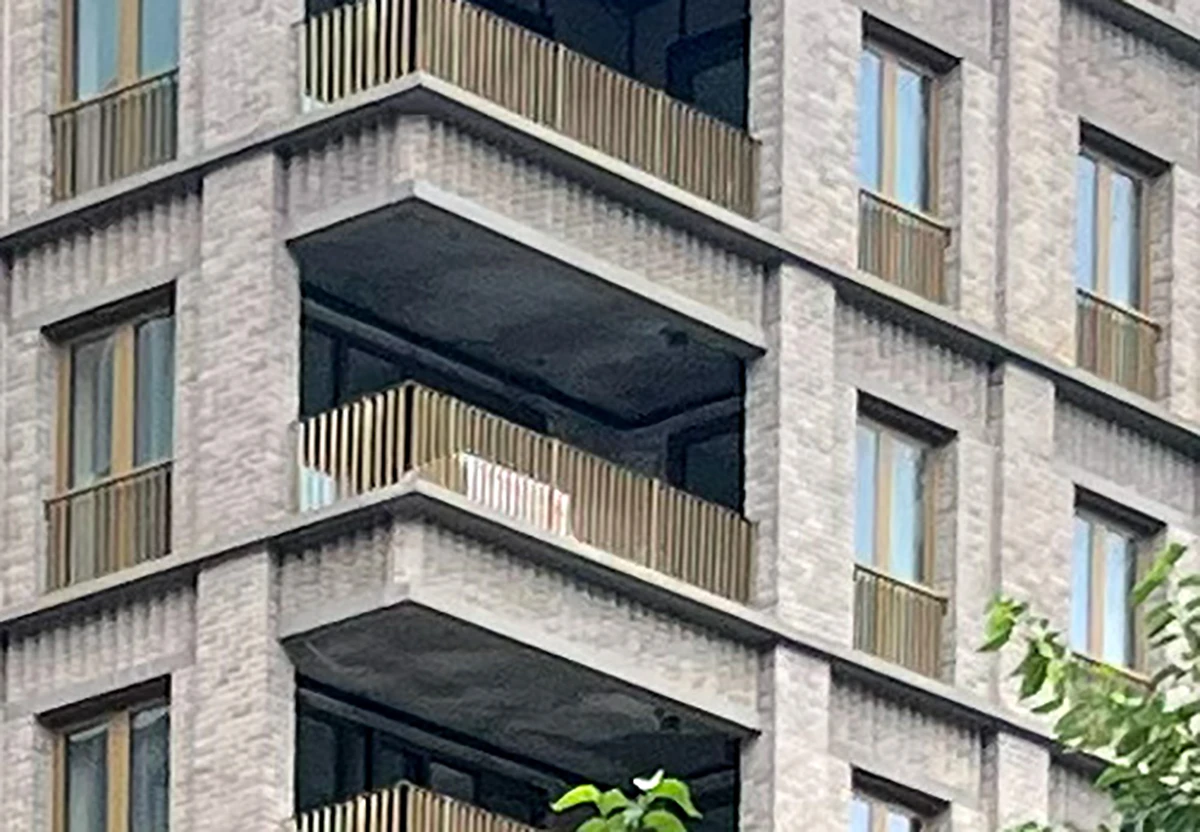
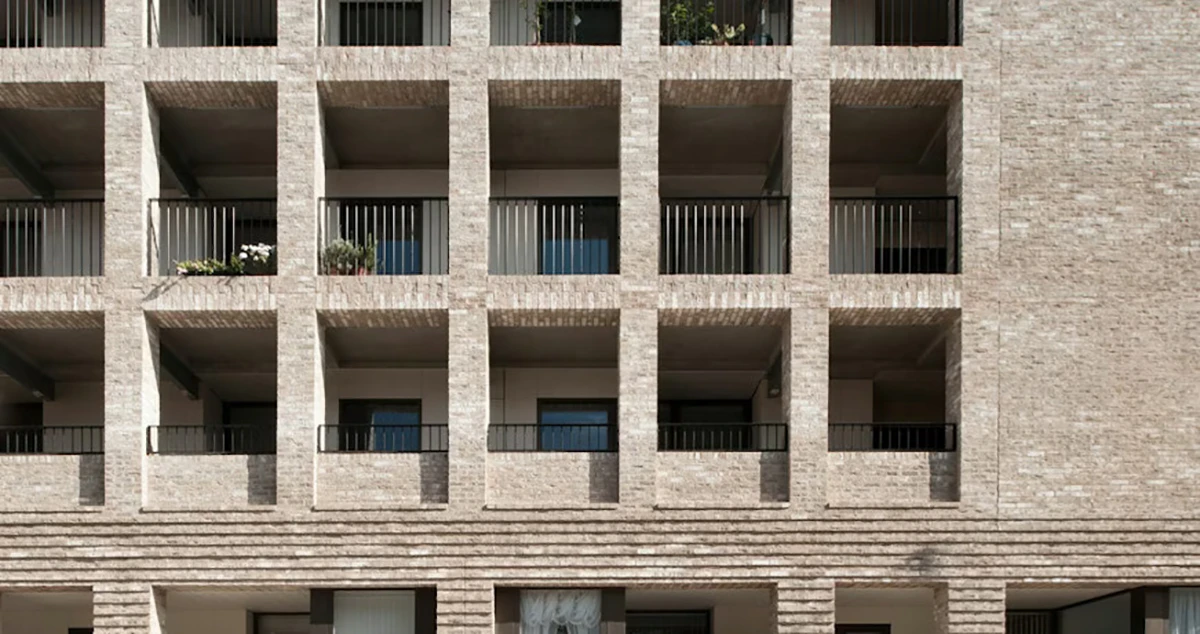
Silchester Housing by Haworth Tompkins Architects, Photographers Philip Vile, Fred Howarth, Keith Hunter
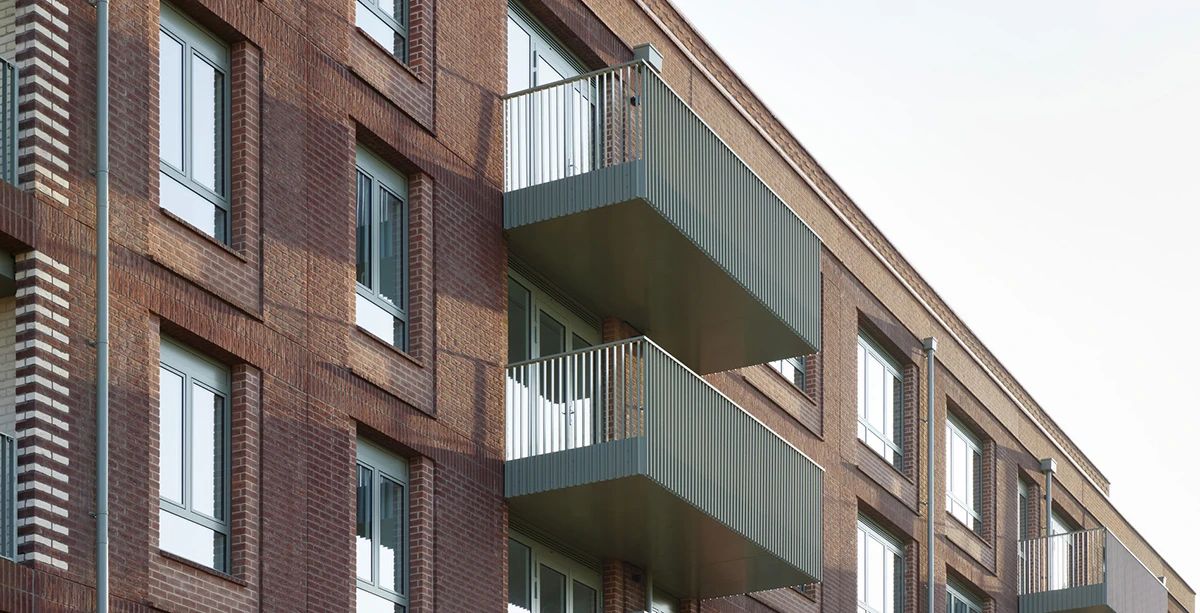
Family Homes and Courtyard
The proposed development will provide a mix of homes for different households, including a significant proportion of family homes, with maisonettes on the ground floor and apartments above.
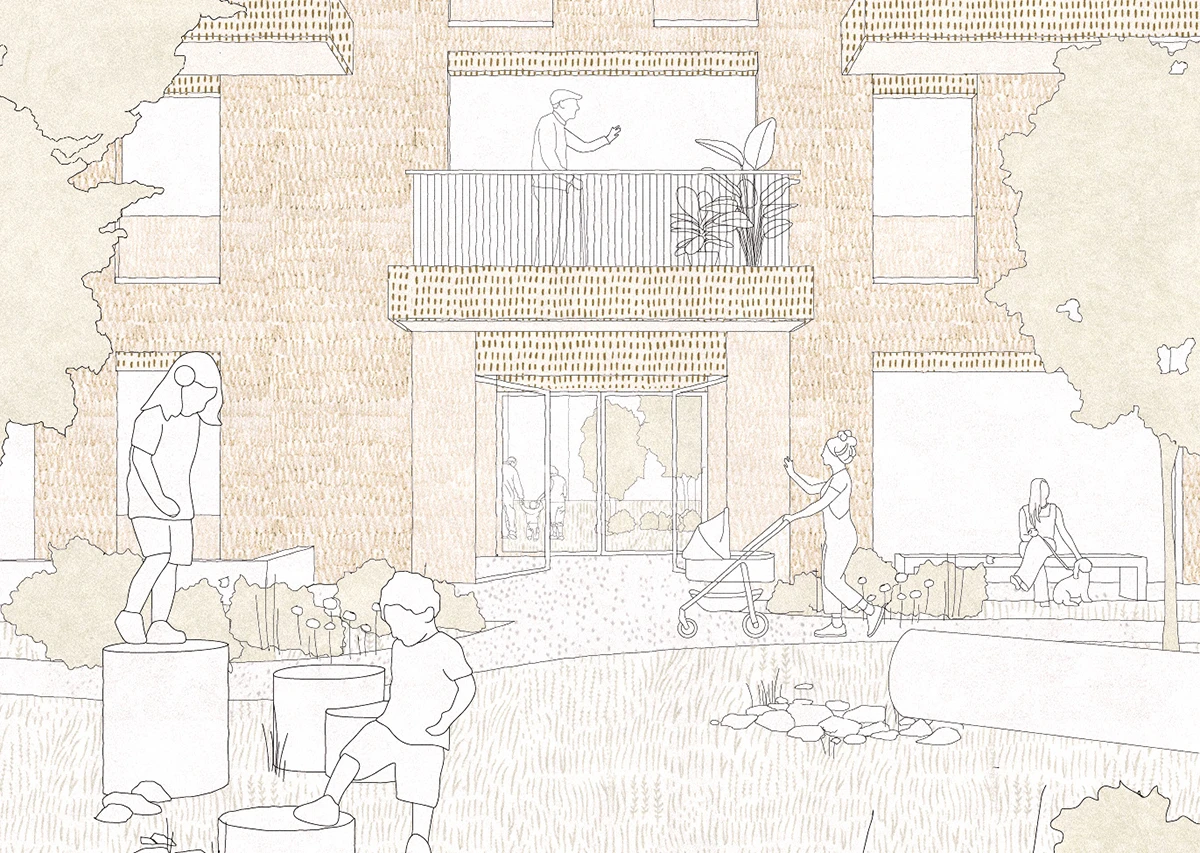
Three- and four-bedroom homes are arranged around a central courtyard with a children’s play area, creating a safe and welcoming space for residents.
Every home will have private outdoor space, with larger family homes benefiting from terraces or balconies of at least 10m². Homes are designed to provide generous living spaces with good natural light and practical layouts suited to family life.
The proposals include c.550 purpose-built student accommodation designed to meet the needs of London’s growing student population.
Providing purpose-built accommodation helps reduce pressure on traditional rented housing in the area.
The building is arranged around a central courtyard and includes shared spaces for studying, relaxing and socialising. The accommodation will be professionally managed with on-site staff to support residents and ensure the building operates well.
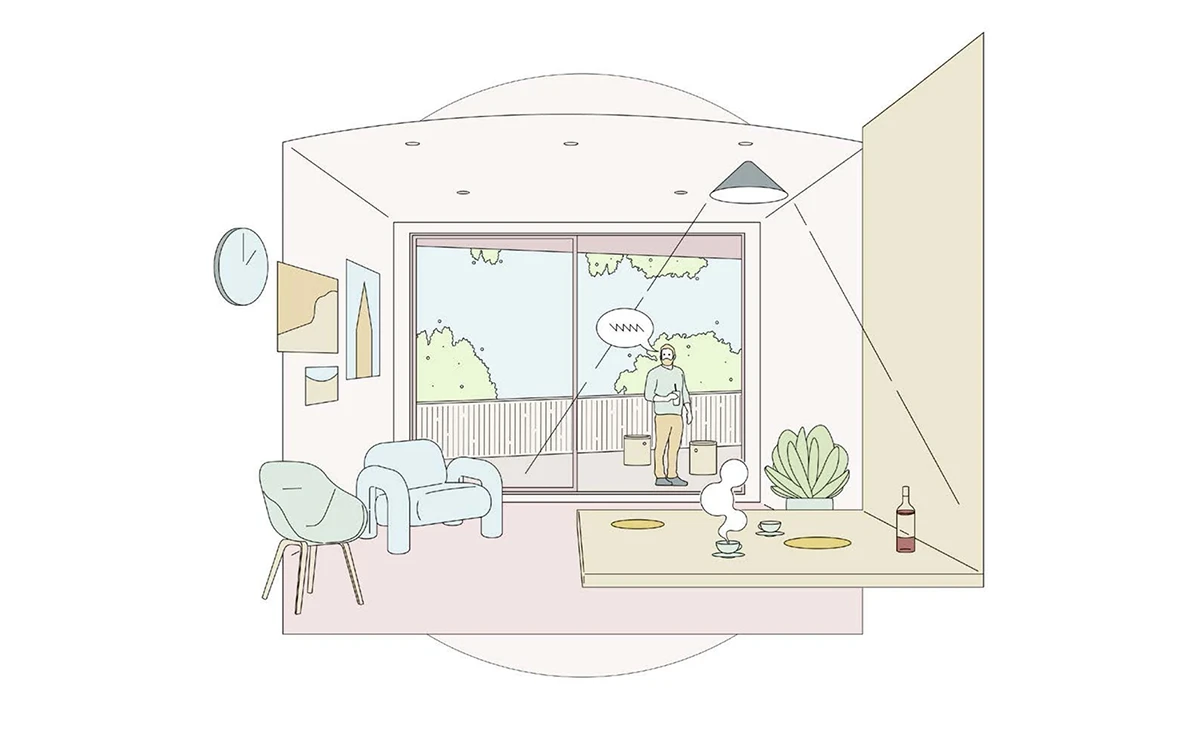
Spaces for Sharing and Congregation
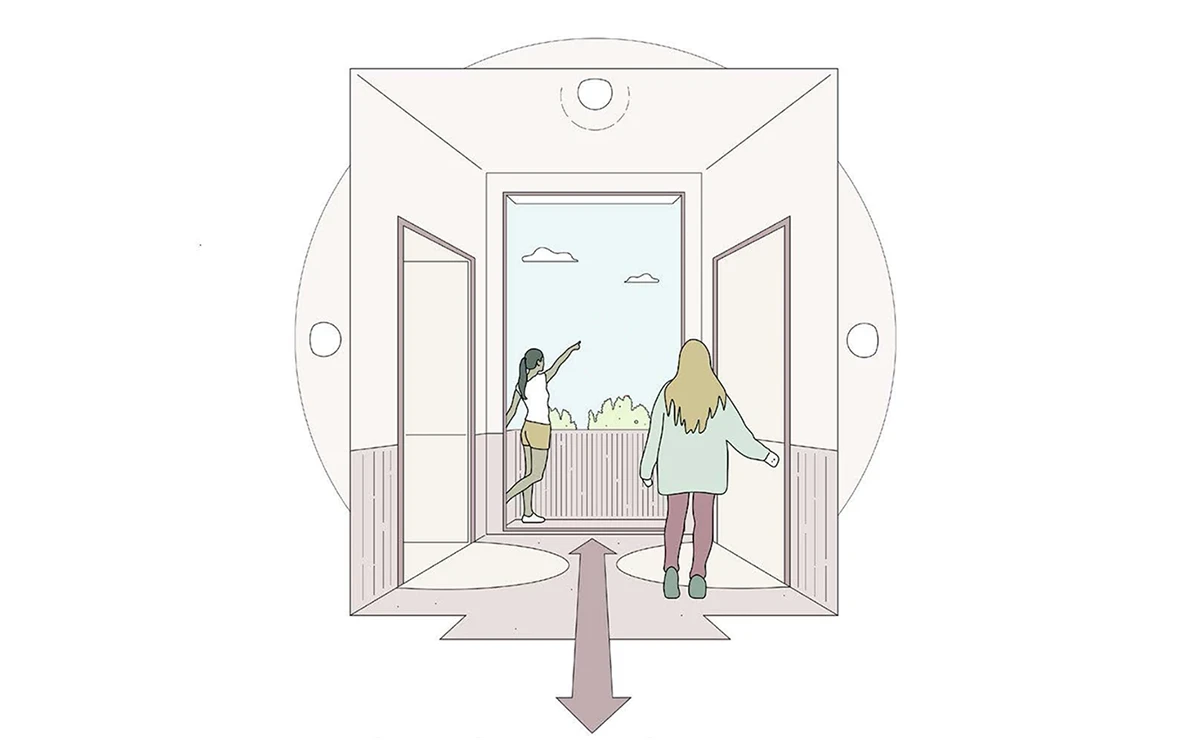
Views and Light in Communal Corridors
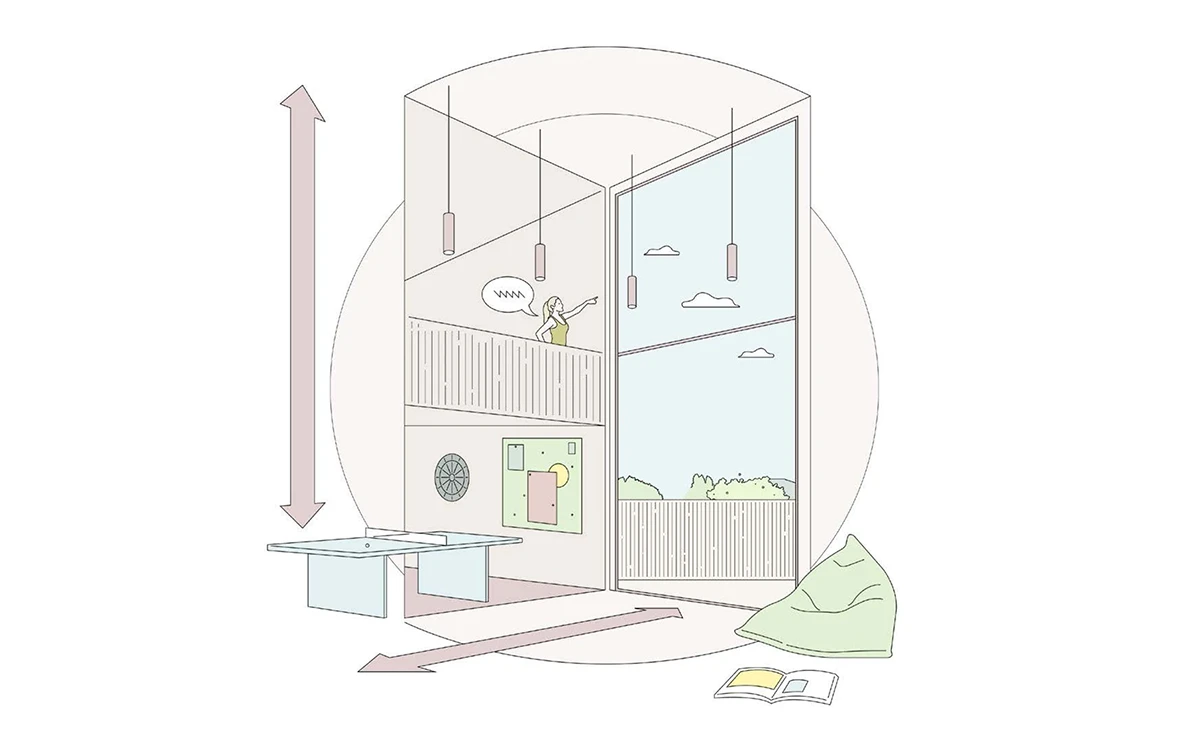
Considered Internal Amenity
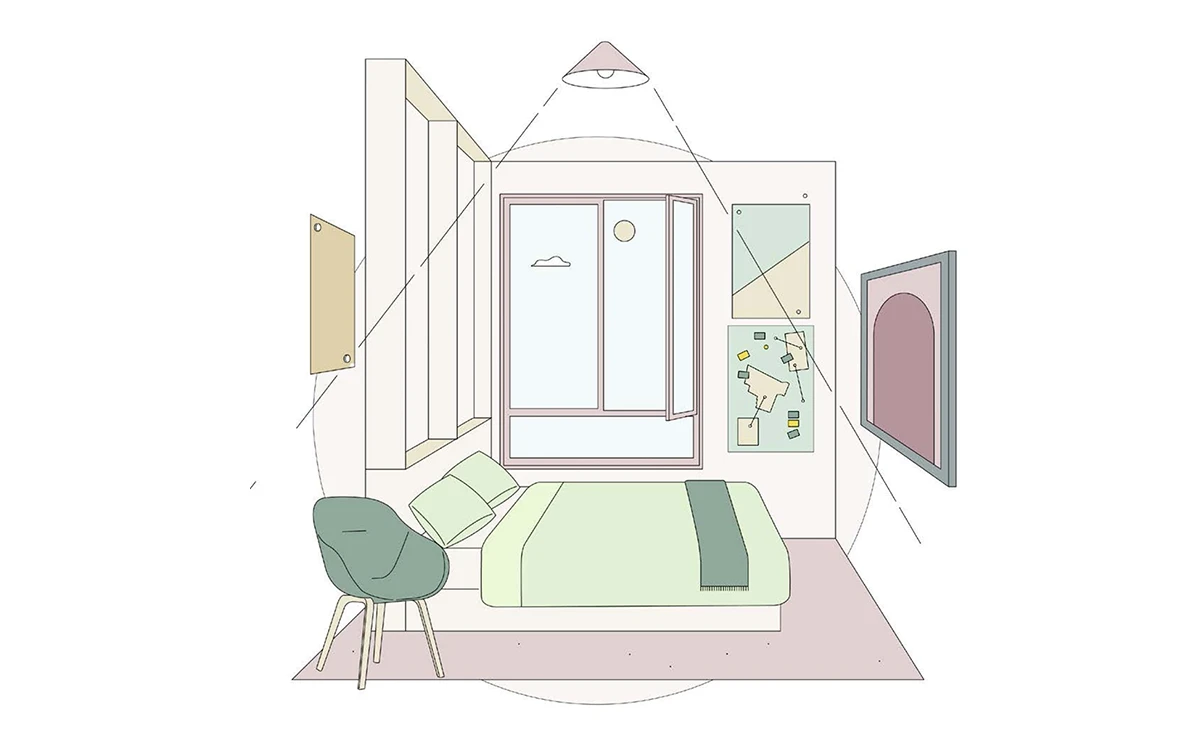
Generous, High Quality Rooms
Communal Congregation

Indoor – Outdoor Connection
Frontage Key:
Student Amenity Spaces
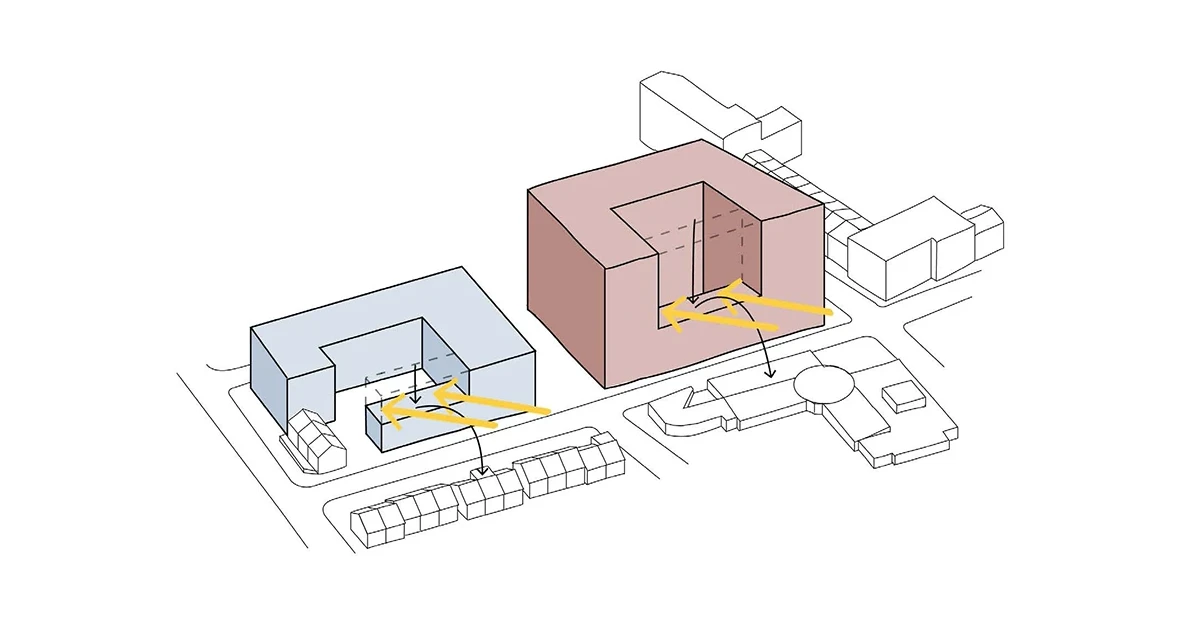
Massing Rationale
Lower Southern Blocks
South facing elements are lower in height to allow sunlight into the courtyards and surrounding areas, creating bright, welcoming spaces.
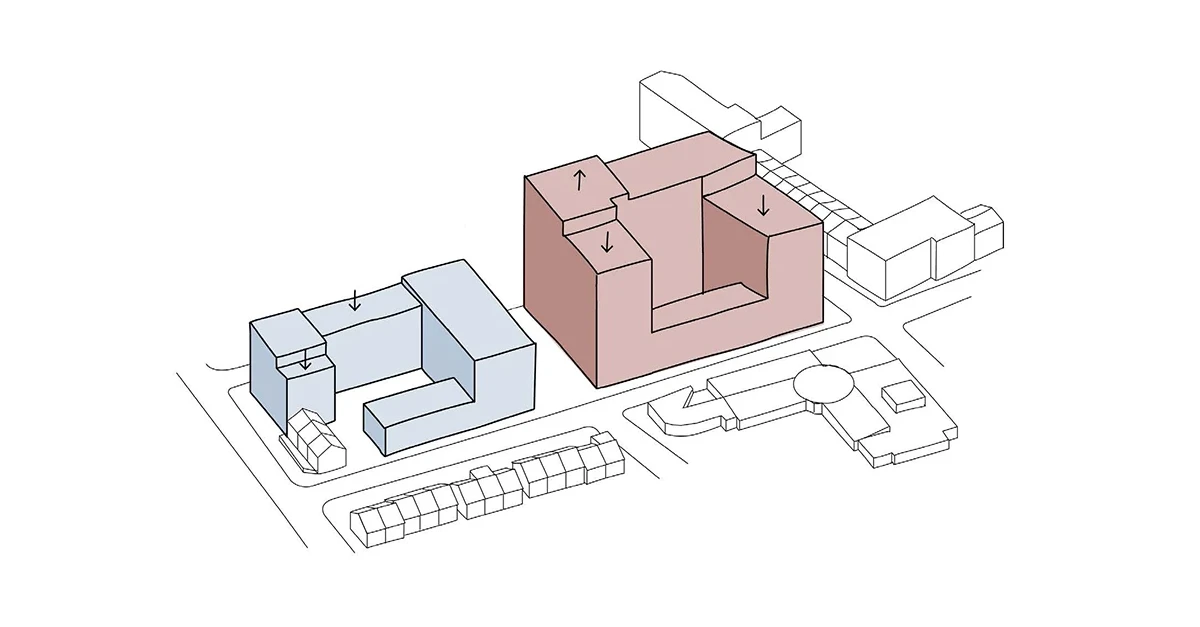
Height That Responds To Surroundings
Building heights are adjusted to fit the local context, creating an interesting and varied roofline.
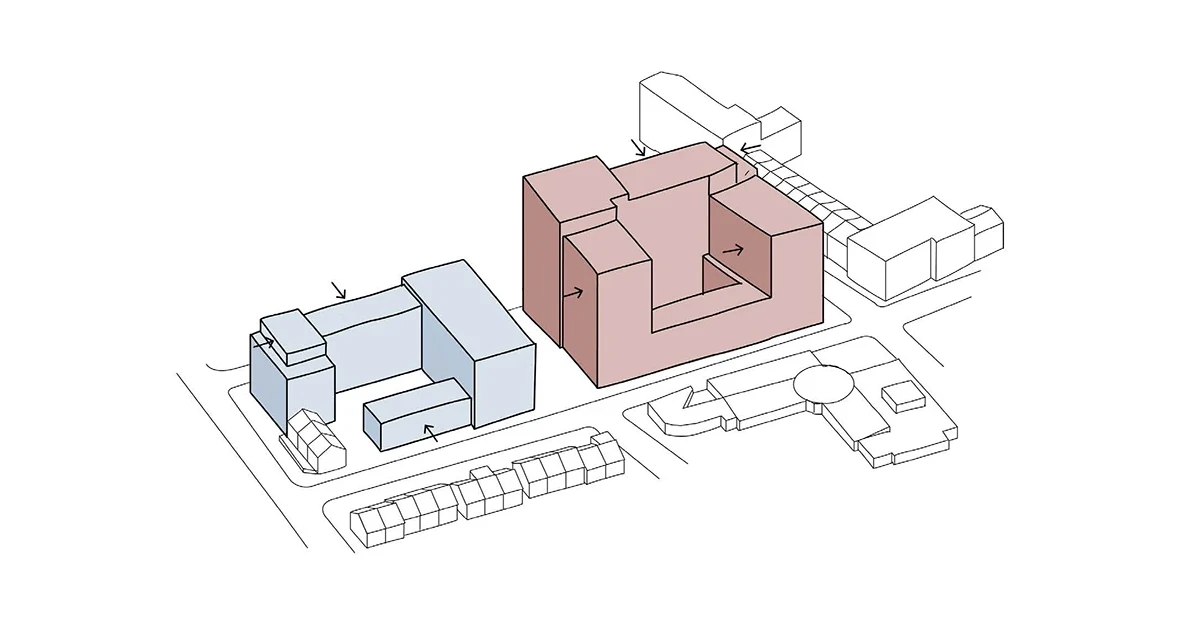
Breaking Down The Building Frontages
The design includes features that divide the buildings into smaller, human-scale sections, giving variety and character
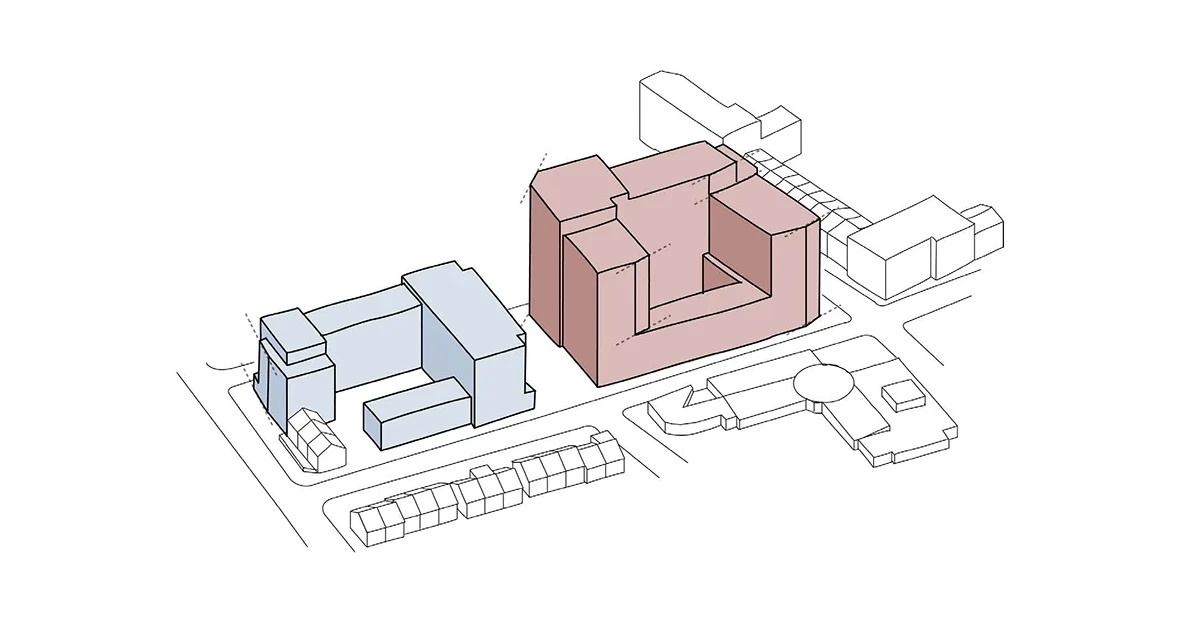
Welcoming Entrances
Key corners are chamfered to designate entrances and aid in wayfinding around the site whilst reducing frontage lengths.
Neighbouring and Site Impact
The proposed buildings have been designed to respect the neighbouring homes to the east and west, while also connecting with future plans for the bus depot to the north.
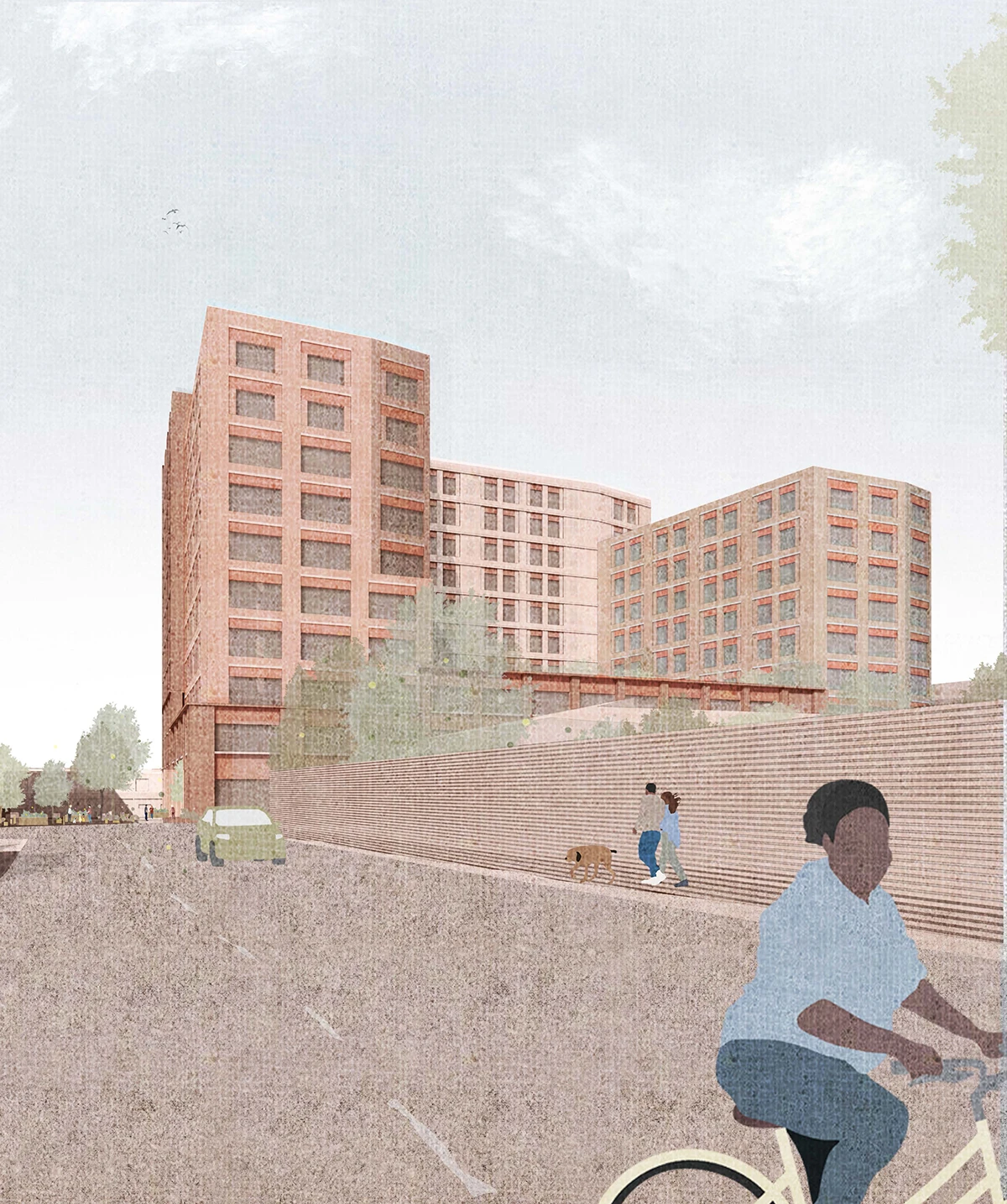
Along the southern edge, a series of smaller gabled buildings step up towards the centre of the site, with lower sections in between to create a gentle transition in height. The tallest buildings, up to 11 storeys, are located towards the north, where they respond to the site’s context.
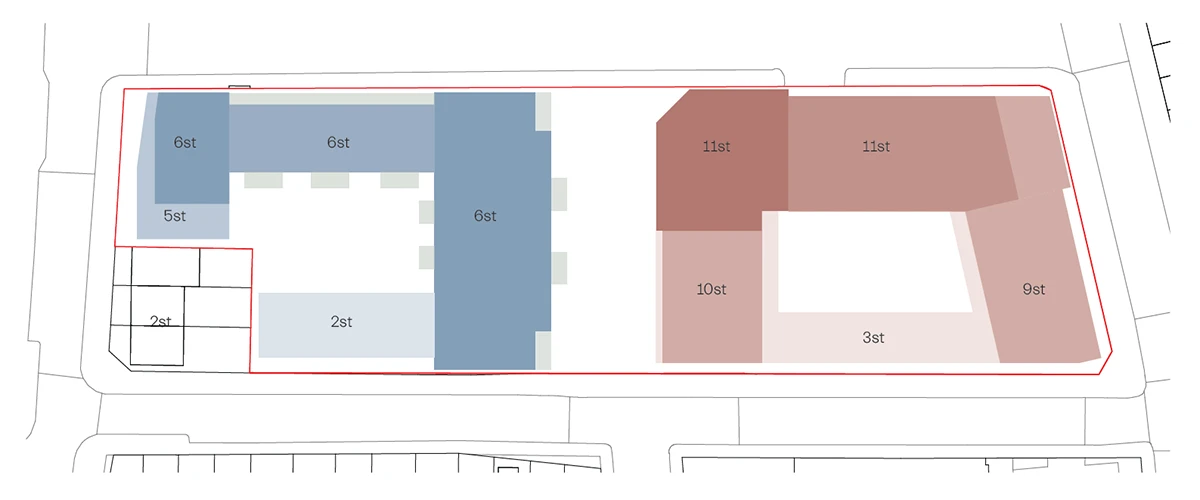
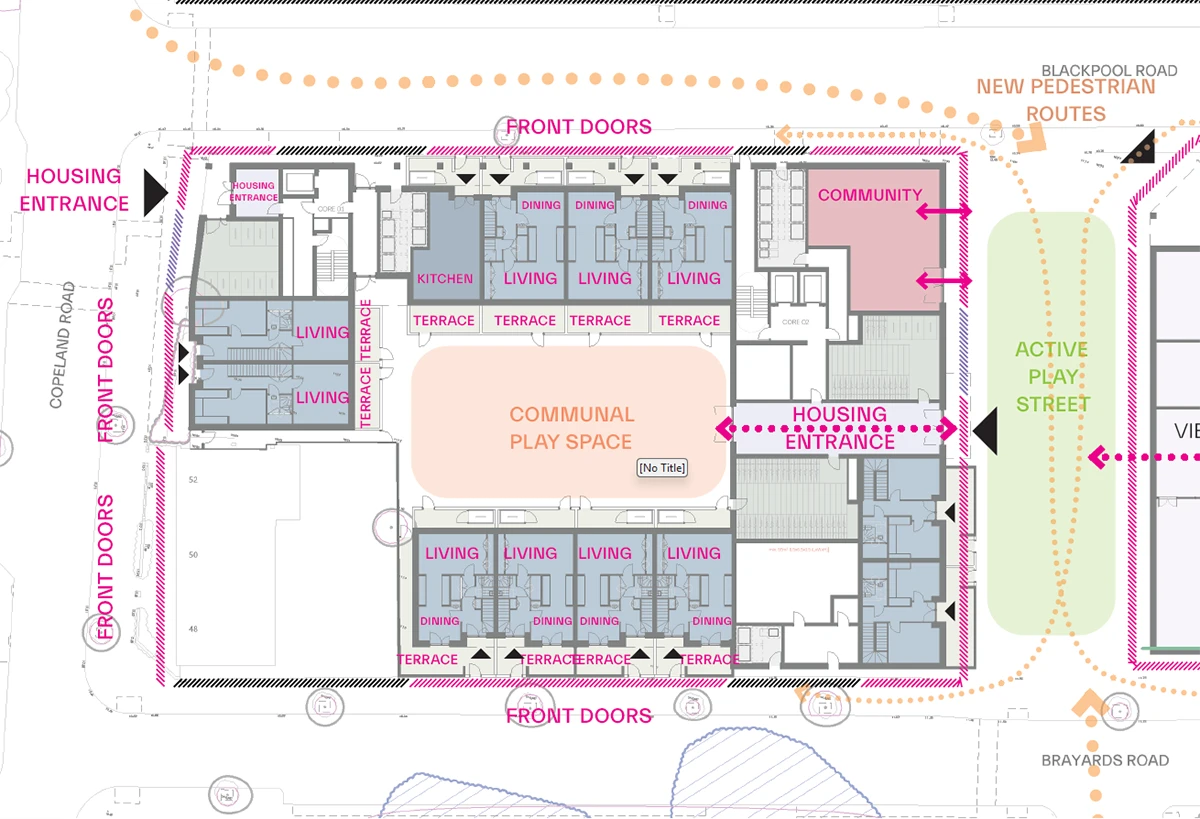
The ground floor layout separates family homes and student accommodation around two courtyards, creating spaces suited to different types of residents.
Family Courtyard
Indicative Precedent
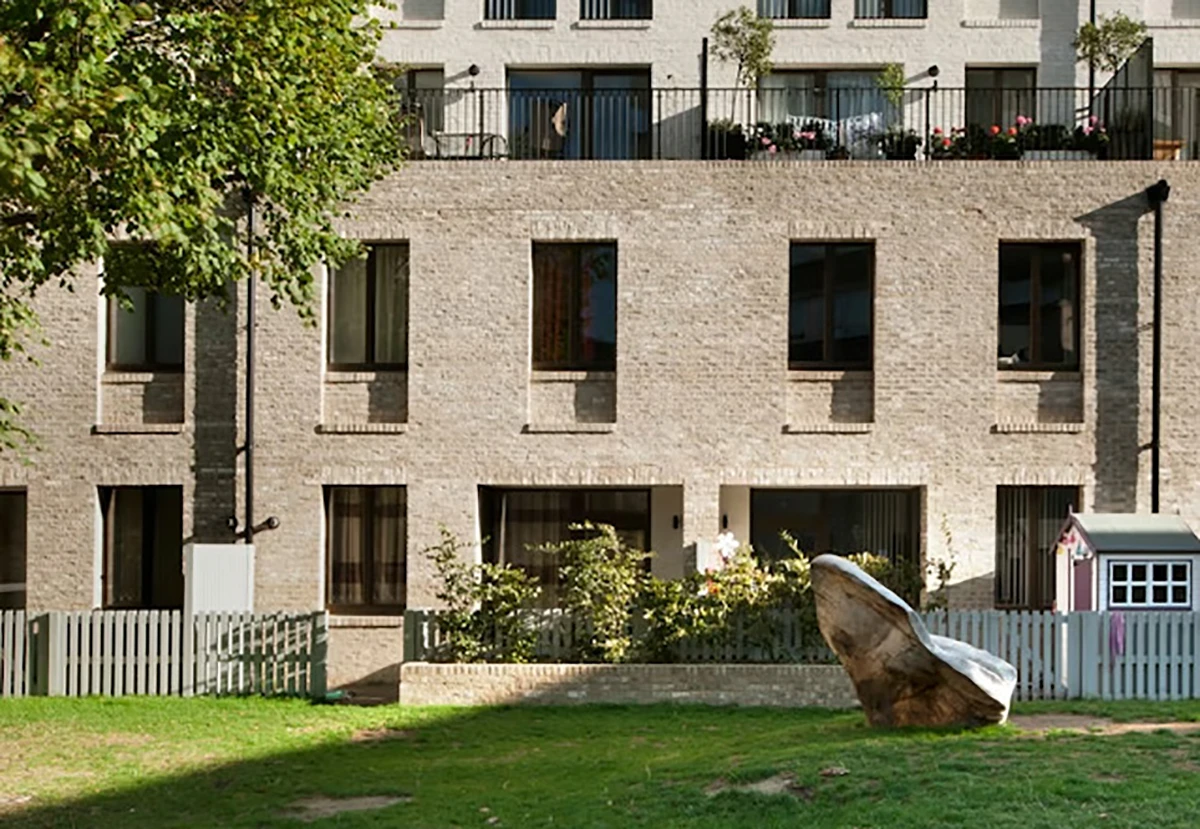
Silchester Housing by Haworth Tompkins Architects, Photographers Philip Vile, Fred Howarth, Keith Hunter
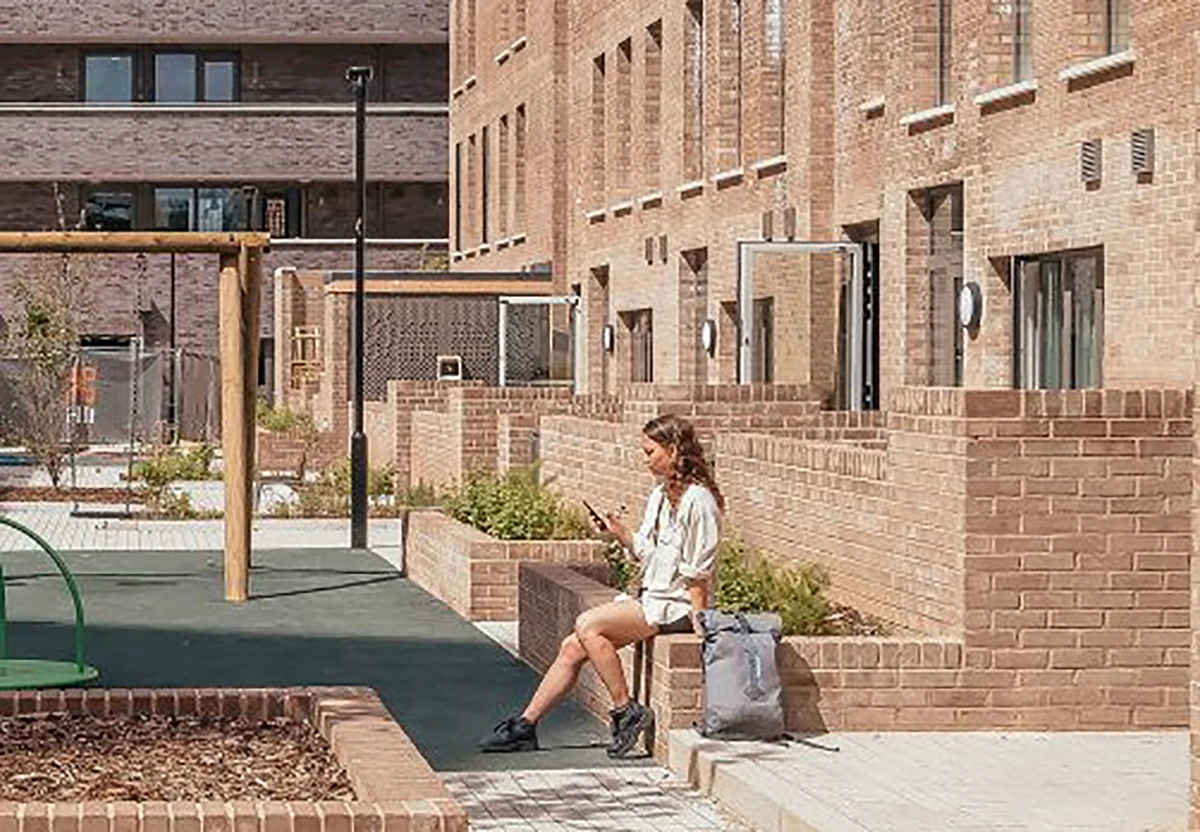
Agar Grove Estate by Mae Architects
The entrance opens onto a family-friendly play space, creating a welcoming arrival. Public areas are connected to the residents’ courtyard, giving a sense of openness and community.
Private outdoor spaces bring life to the homes and provide natural buffers, while thoughtfully designed front doors give residents a sense of pride.
A lower two-storey section on the south side maximises sunlight throughout the homes and outdoor areas.
Private balconies offer pleasant views and encourage positive overlooking of shared spaces.
Indicative Precedent
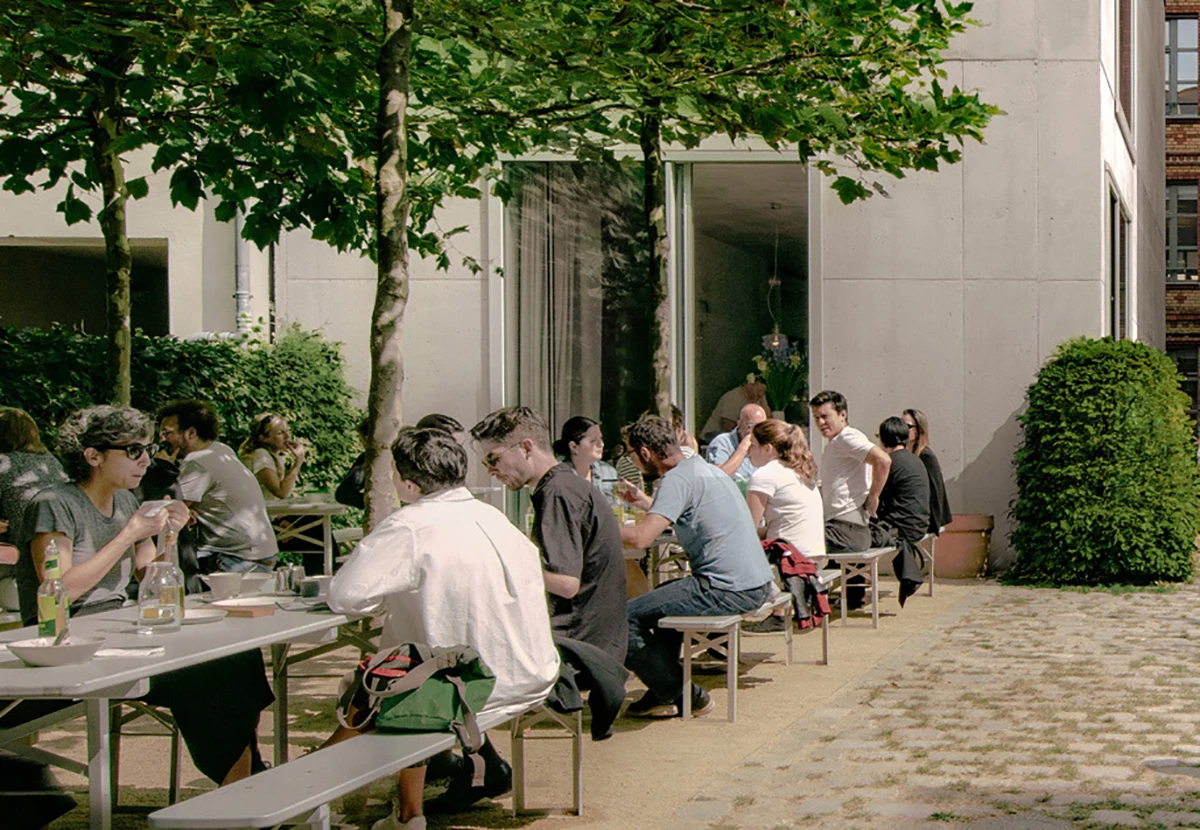
Joachim Strasse by David
Chipperfield Architects – Simon
Menges-01 (Photographer)
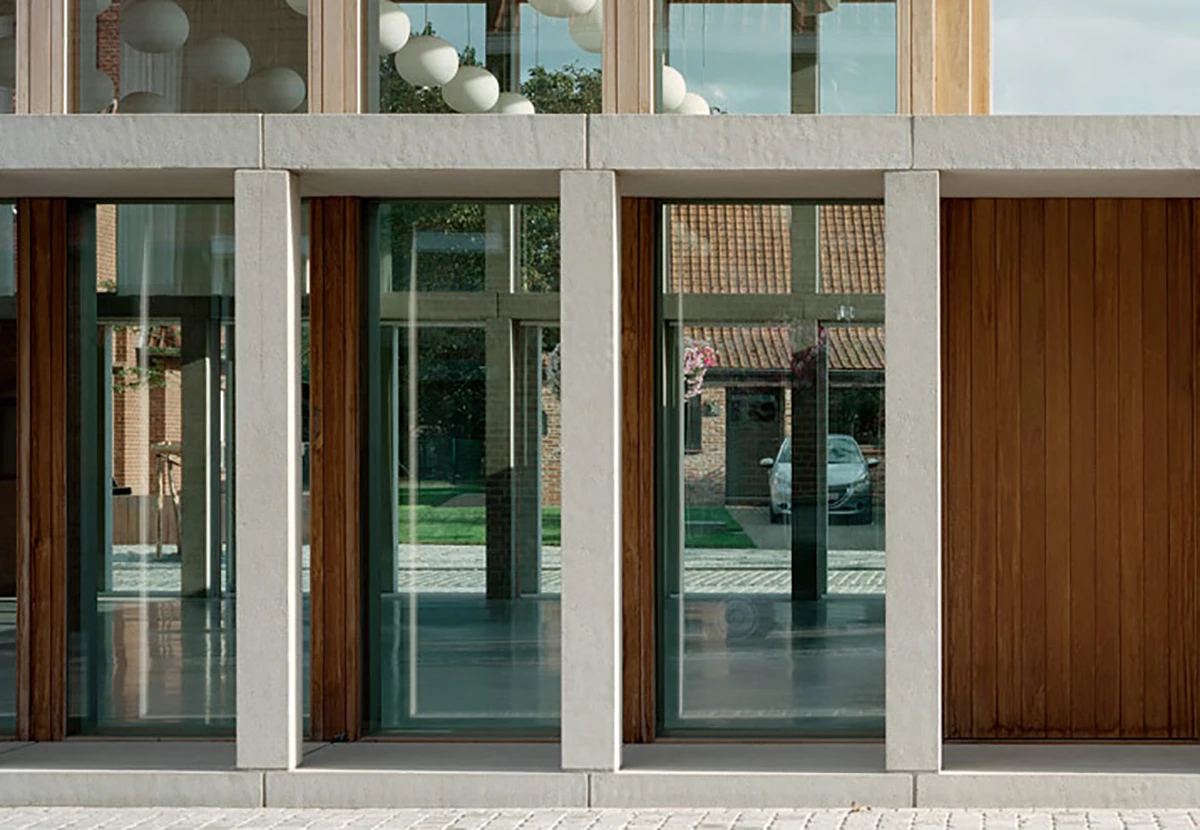
Merkem Community Centre
by Rapp+Rapp, Kim Zwarts (Photographer)
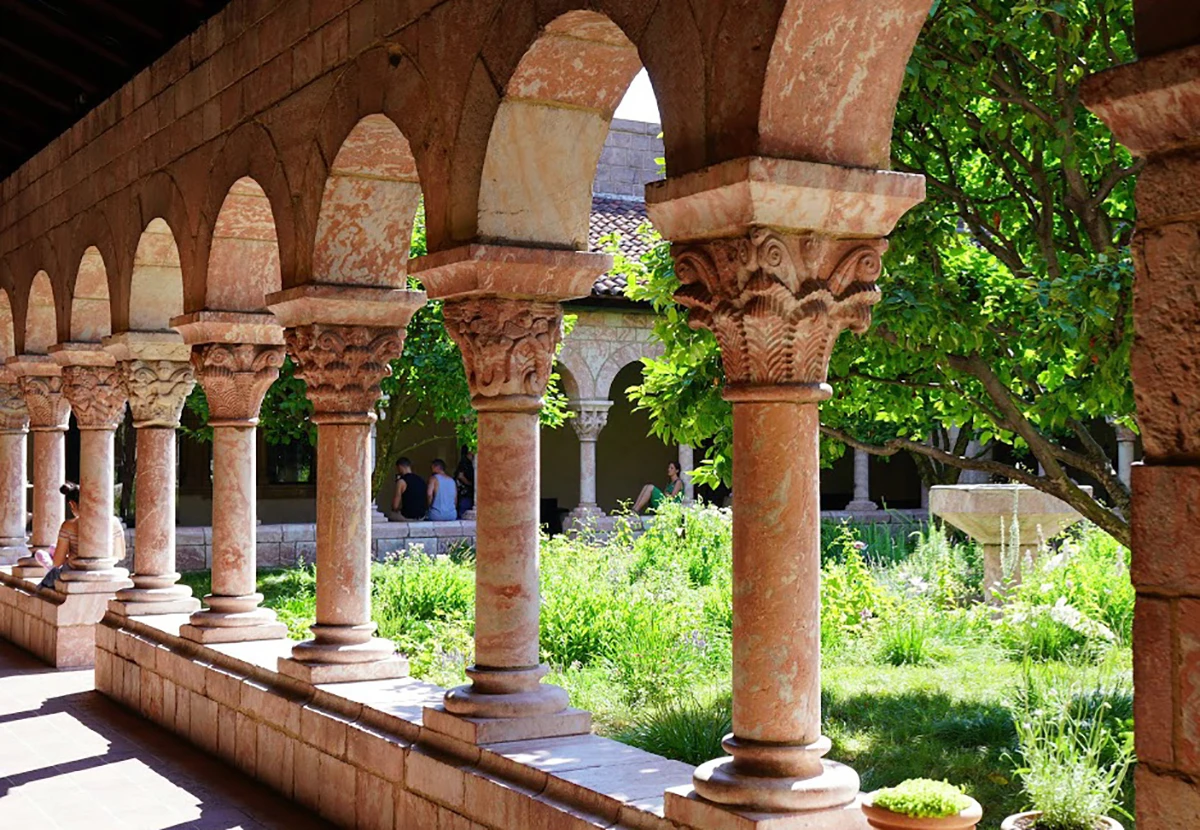
Cloister, Photography Dr. Juliette Parsons, Ph.D.
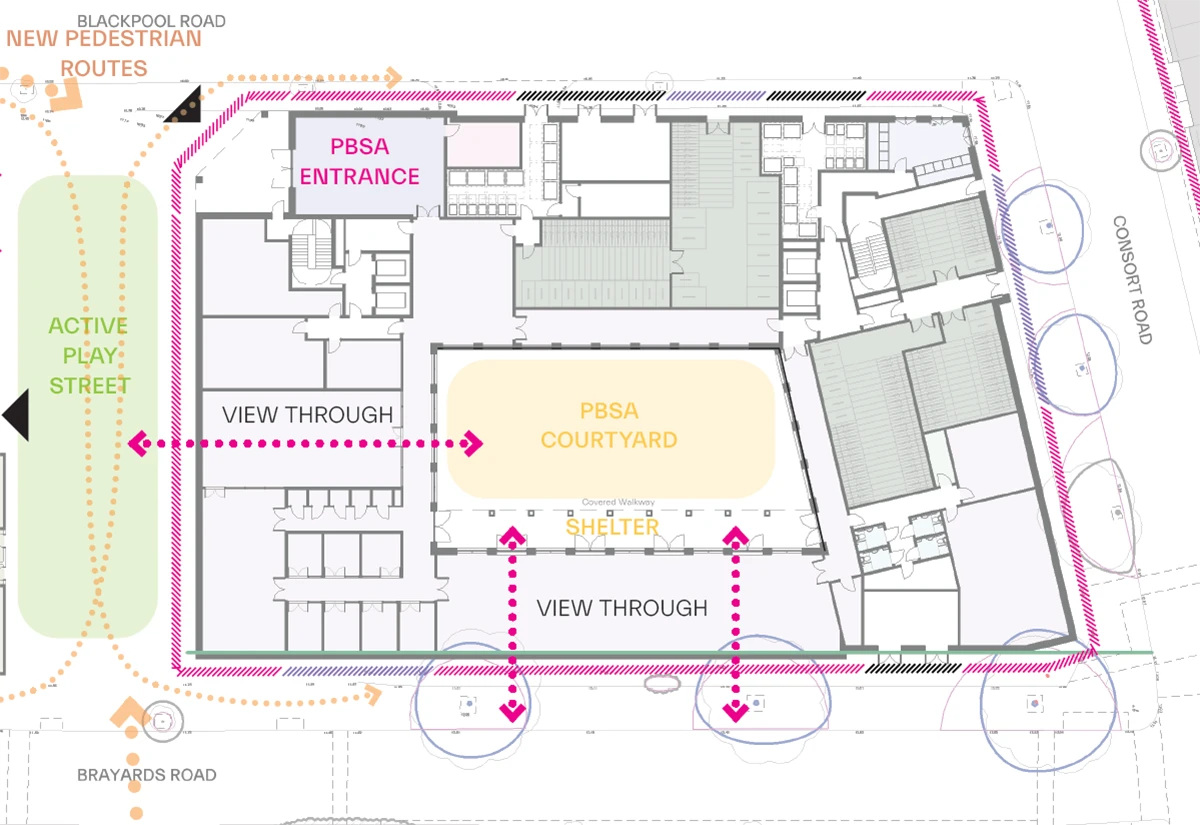
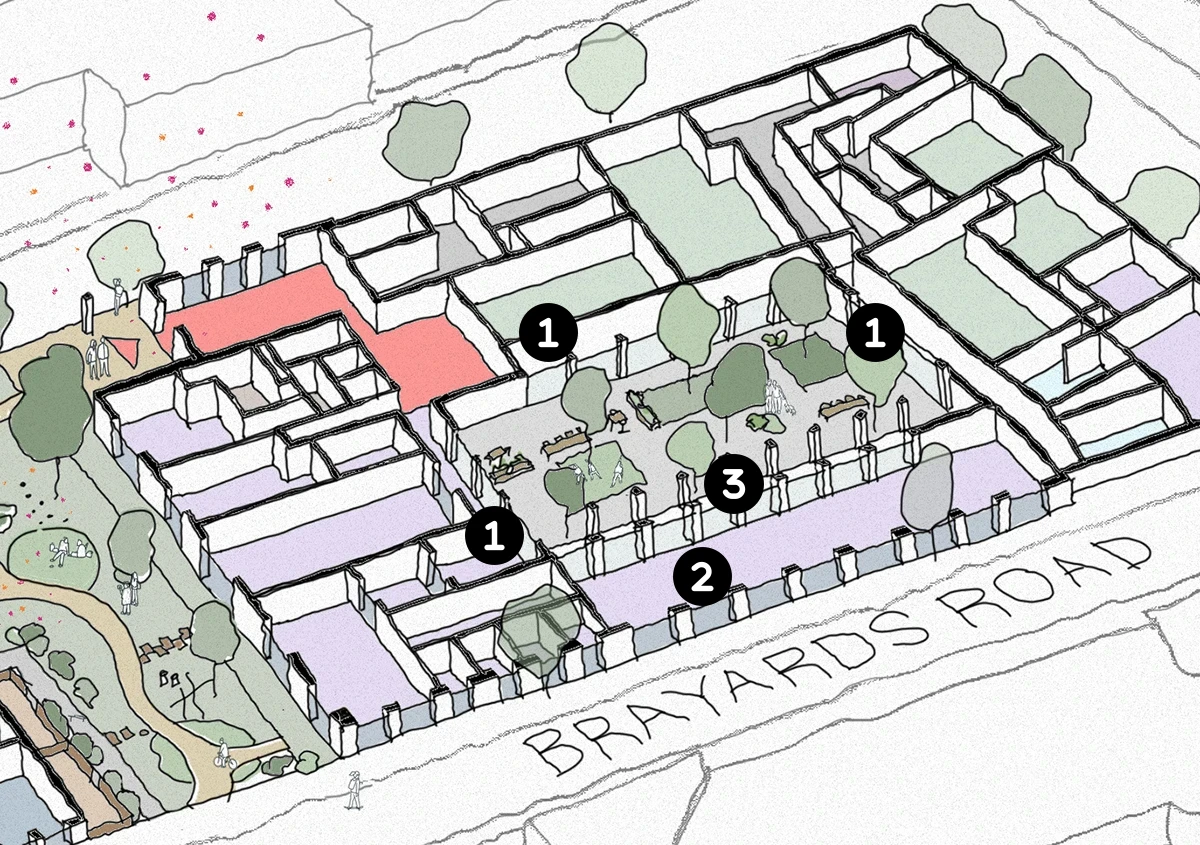
The building is designed around a central courtyard with walkways around the edges.
The main entrance opens directly onto this central space.
Ground floor areas around the building will include spaces for students to meet, study, and spend time together.
A lower three-storey section on the south side allows more sunlight into the courtyard and surrounding areas.
The proposals aim to create greener streets, safe places to play and welcoming spaces for residents and the wider community.
Play Street for All
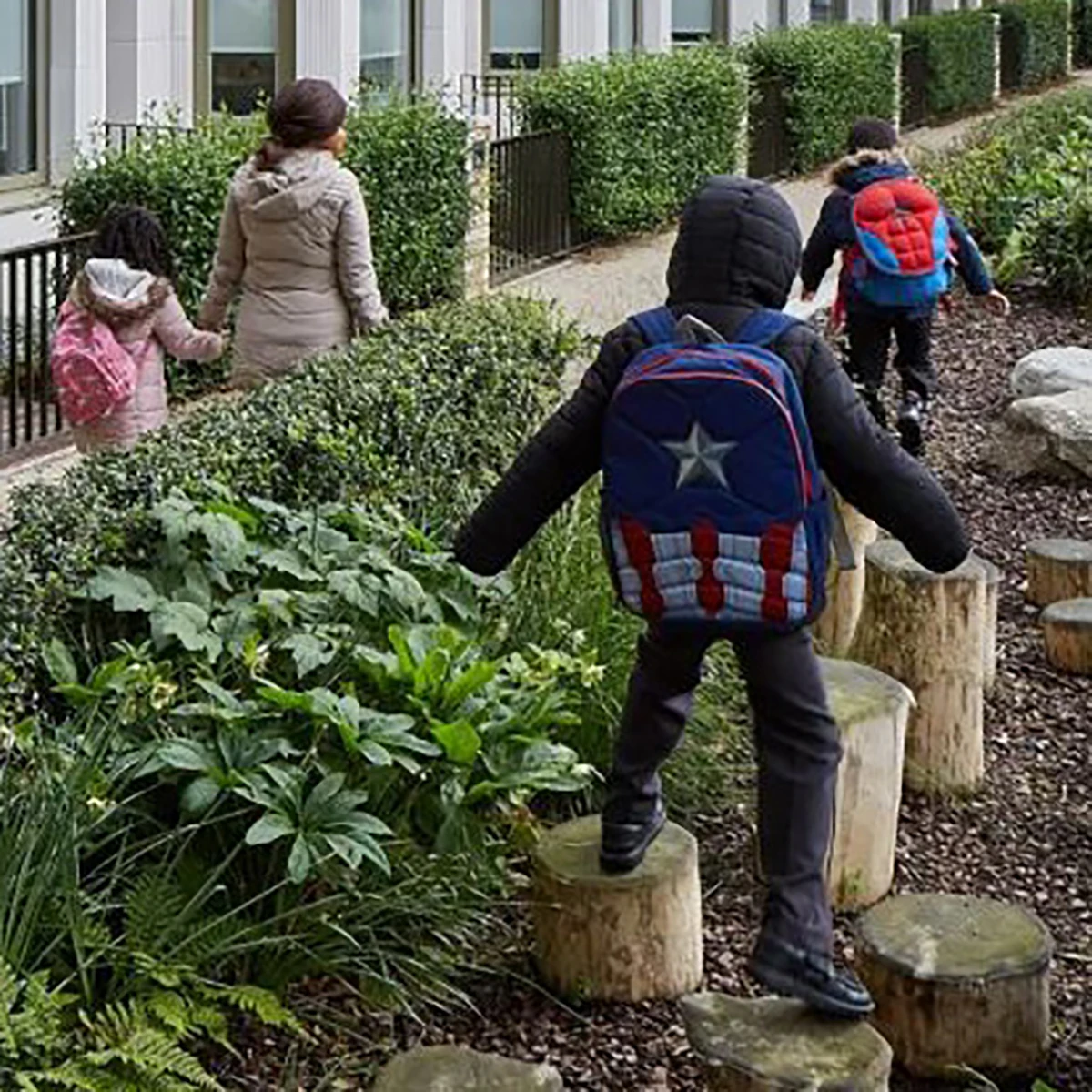
South Gardens by Maccreanor Lavington, Photography by Tim Crocker
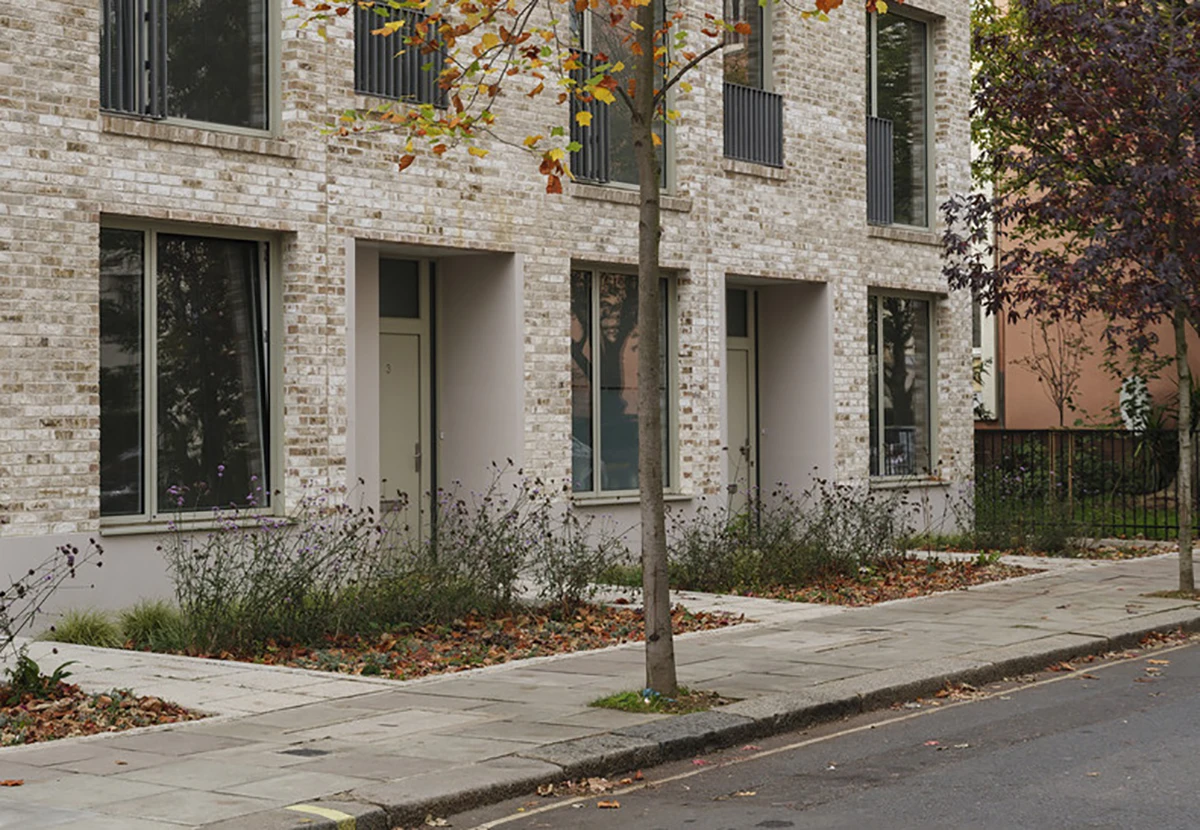
Kirkfell and Caudale Housing by Mae
Architects, Photography by Tim Crocker
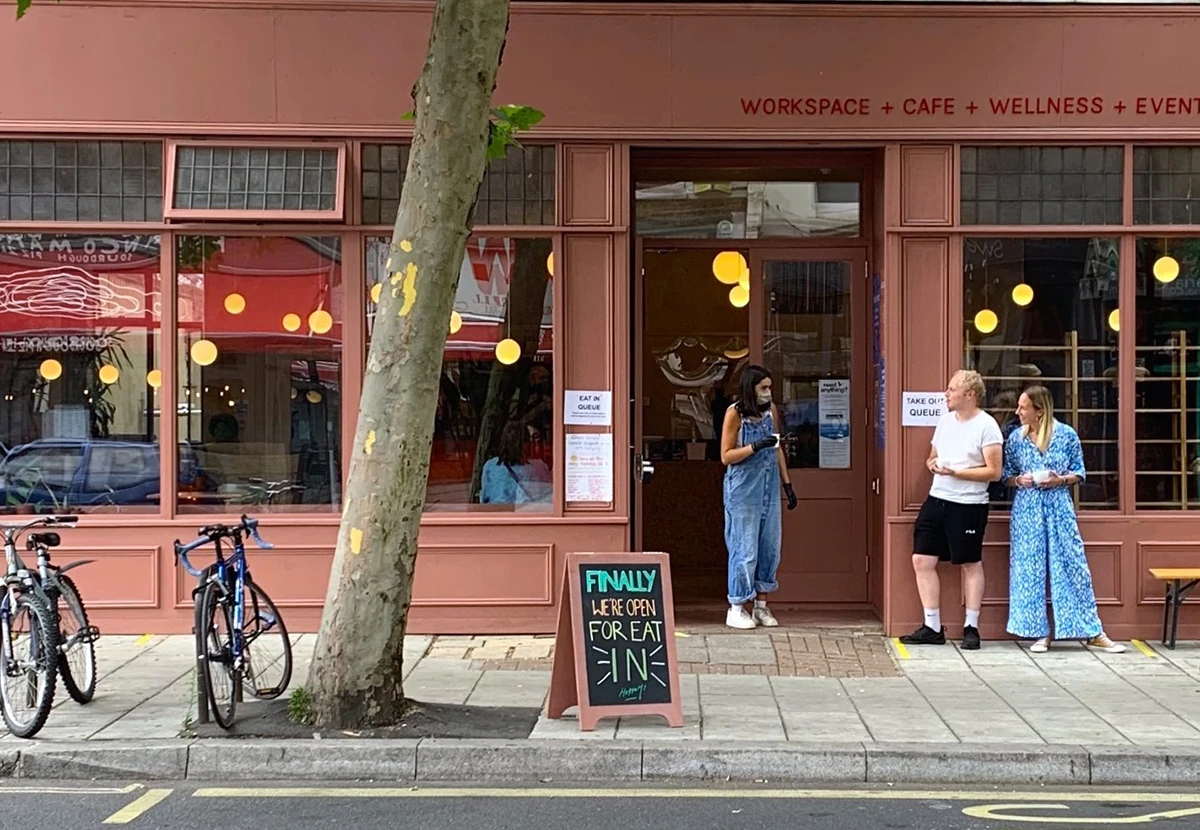
Oru East Dulwich by OthersCloister, Photography Dr. Juliette Parsons, Ph.D.
Character Areas
A safe, vibrant playable street
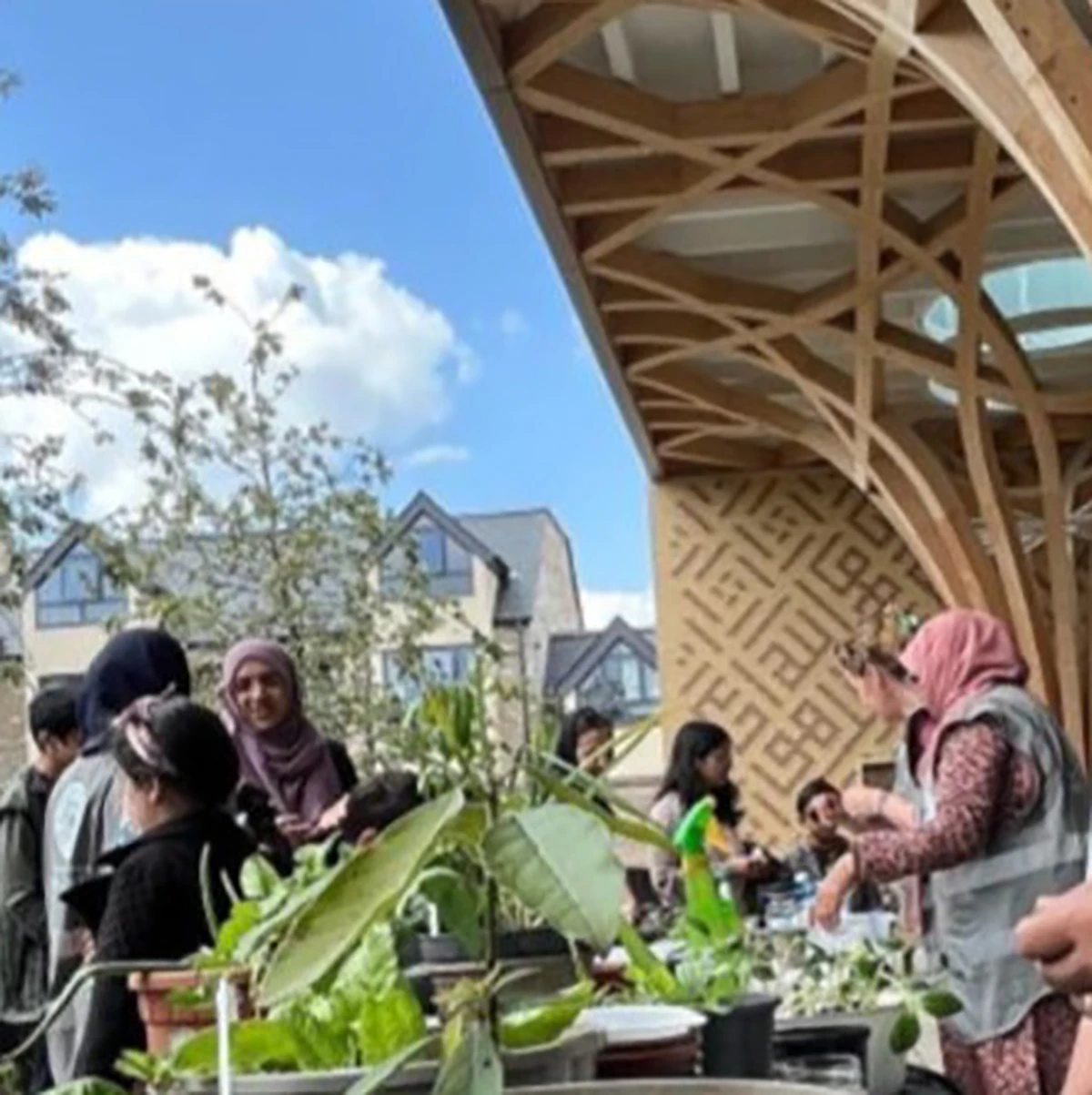
A connected community

Local contextual references
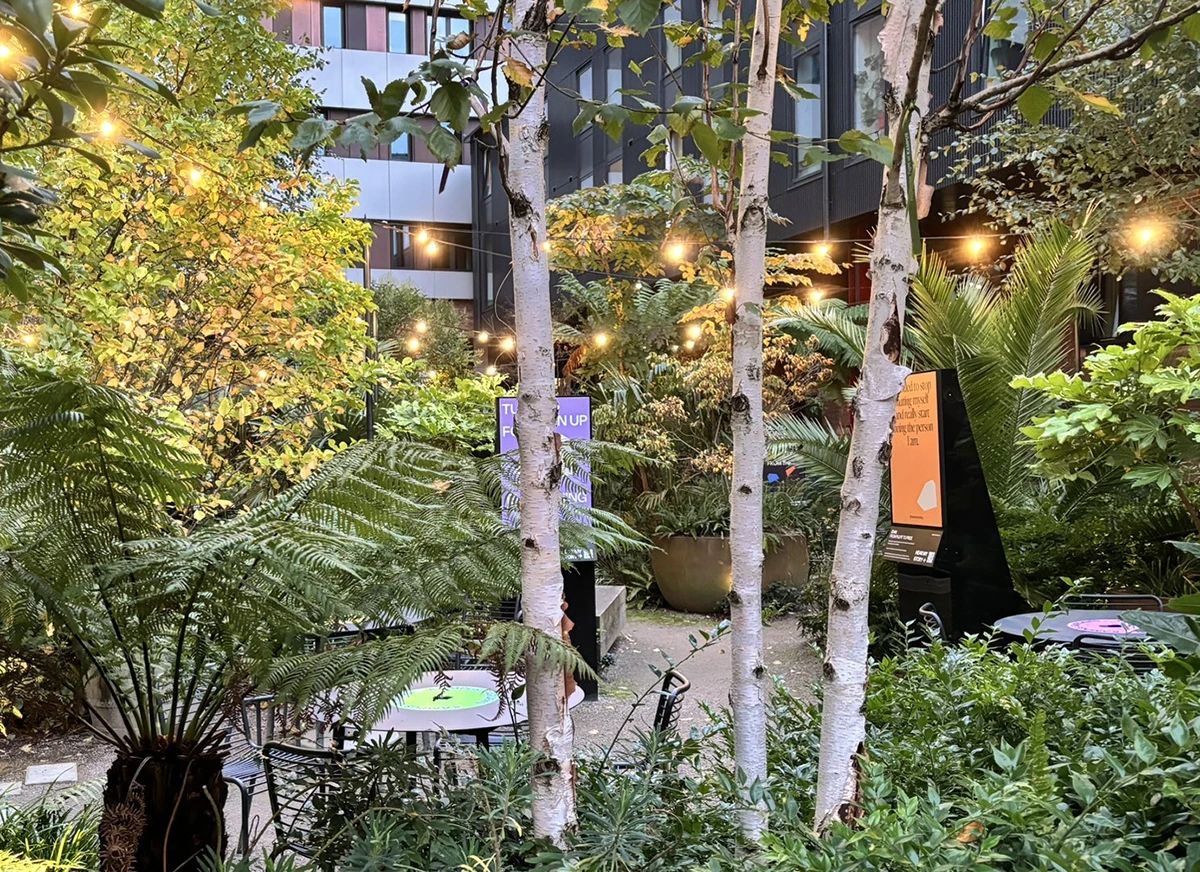
Enjoyable nature and green spaces
Residential Courtyard
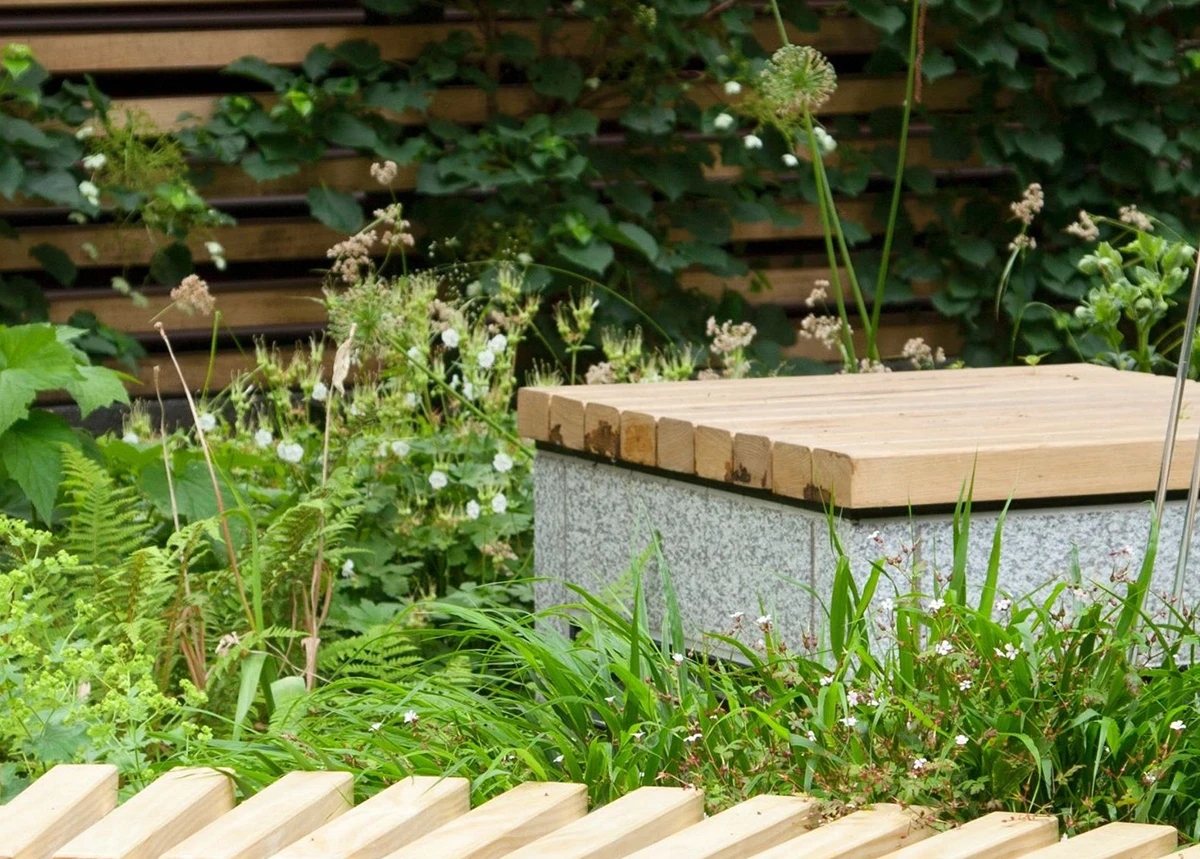
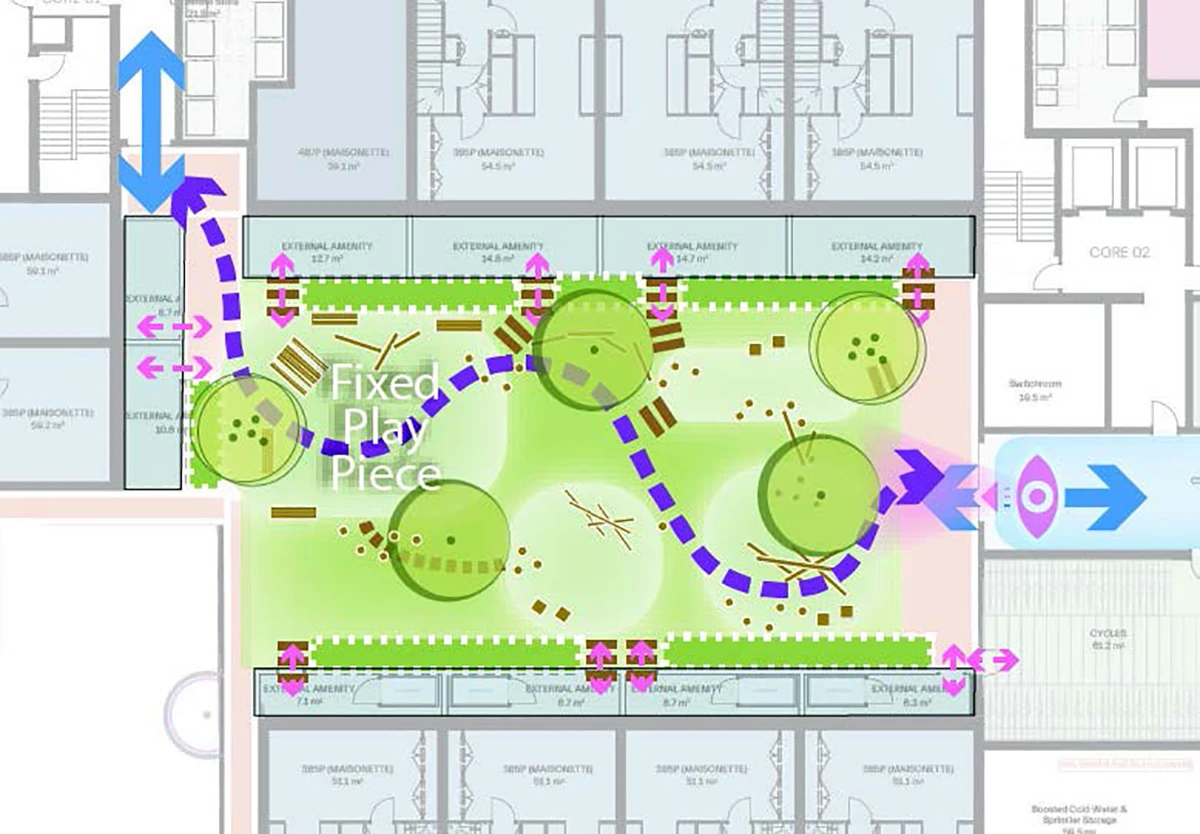
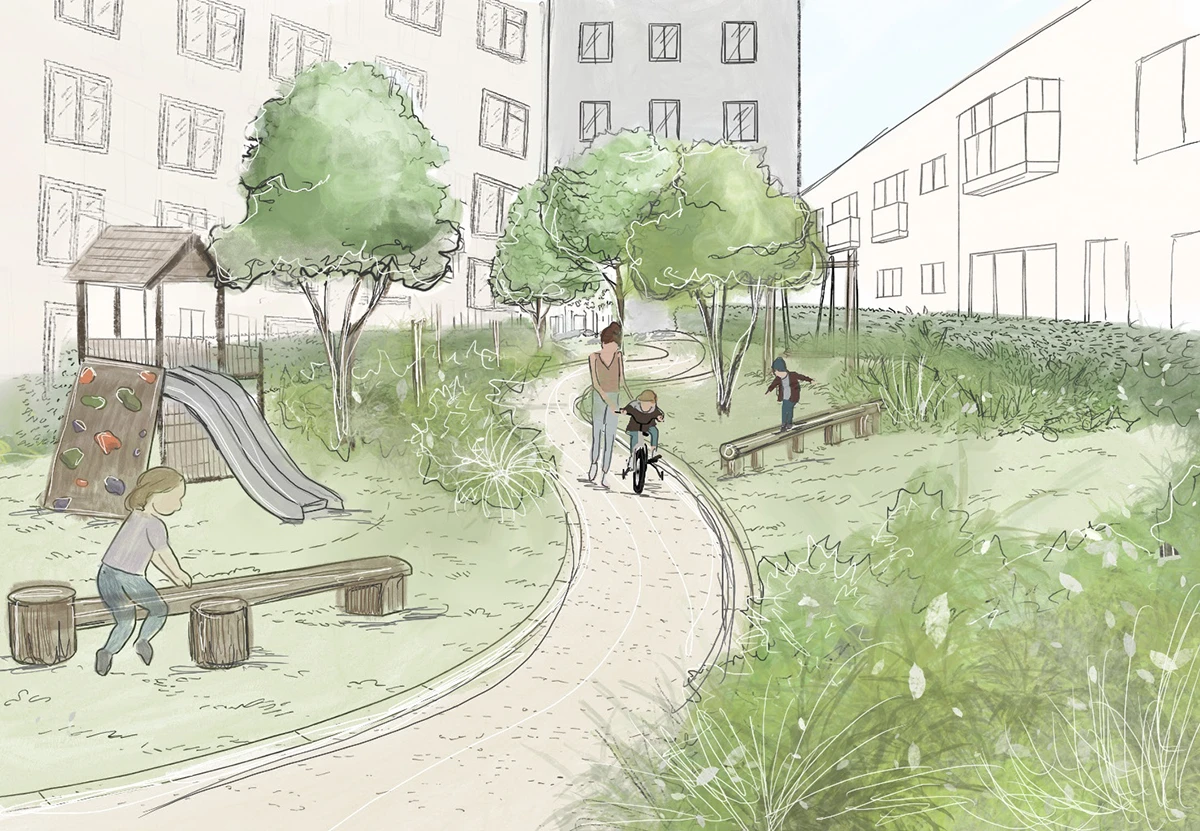
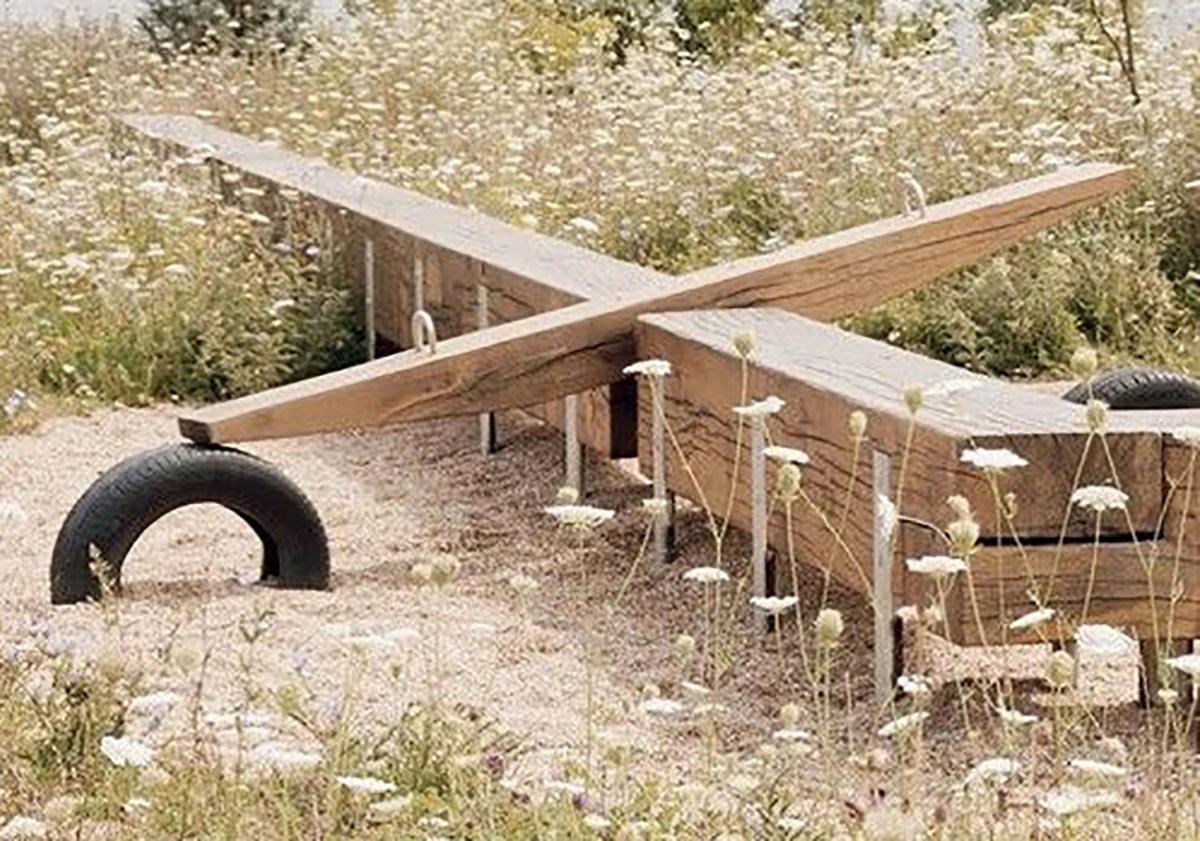
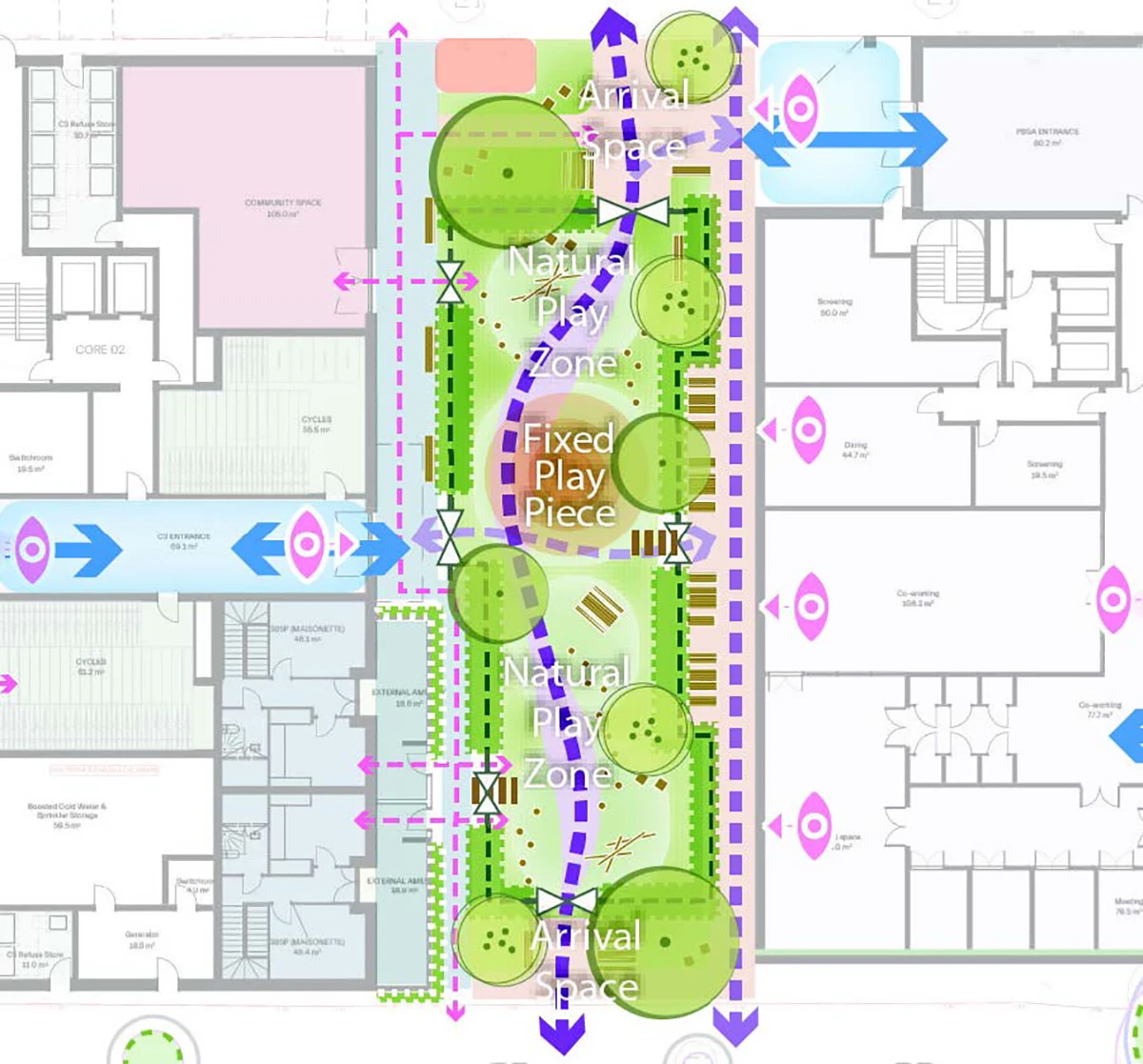
A playful courtyard space with trails and focal pieces for meaningful play opportunities, encouraging children’s safe exploration and providing doorstep play, fostering connection within a multi-generational community.
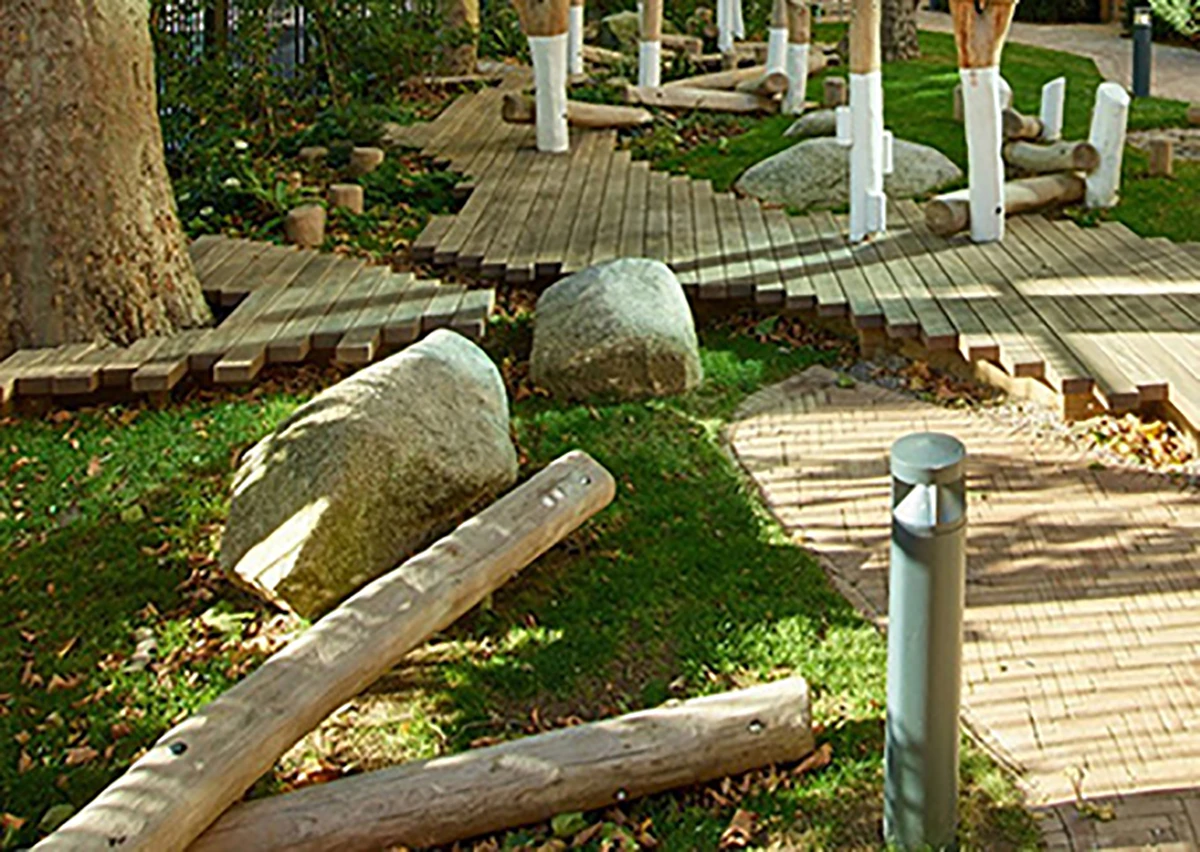
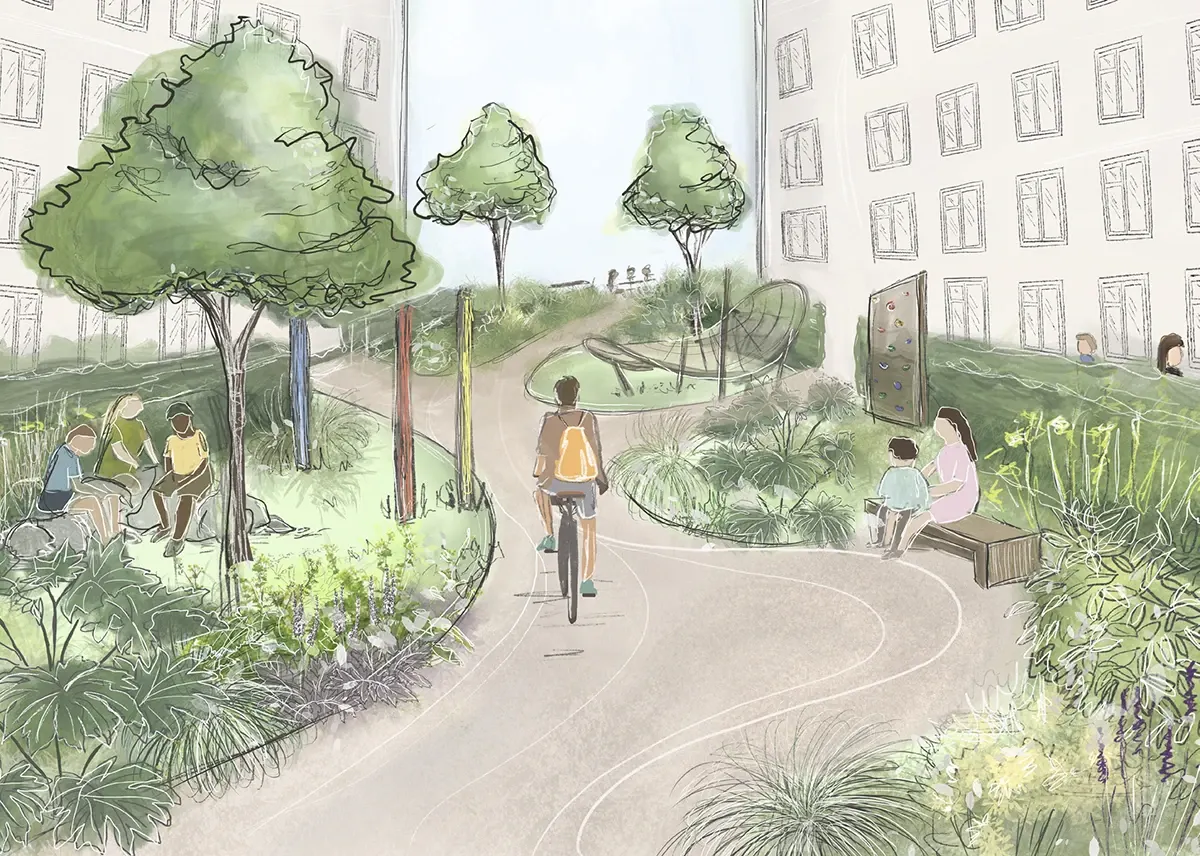
Play Street
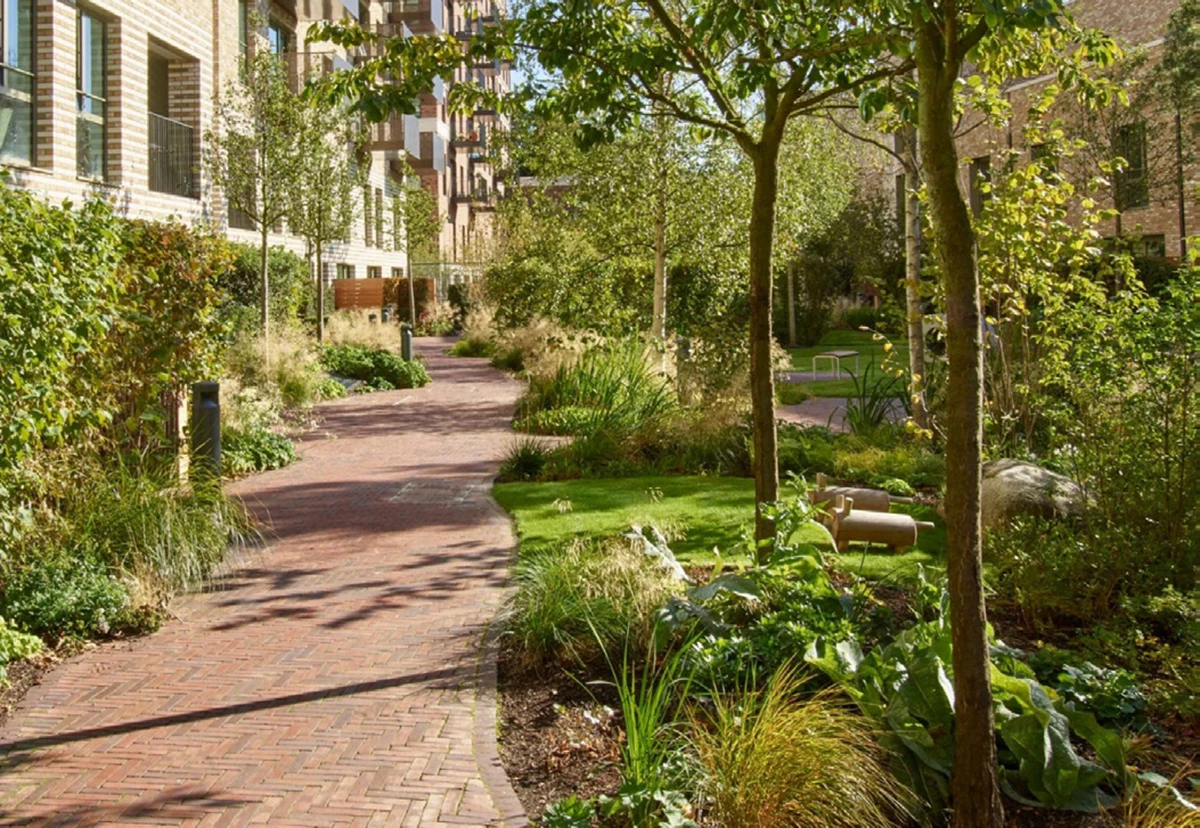
A child-friendly urban space that is safe, enclosed, and welcoming, prioritising play and exploration.
Accessible to all abilities, with playful and interactive street furniture and seating for neighbours to gather. Proposed planters, trees, and rain gardens to soften the urban edge and improve air quality.
Student Courtyard
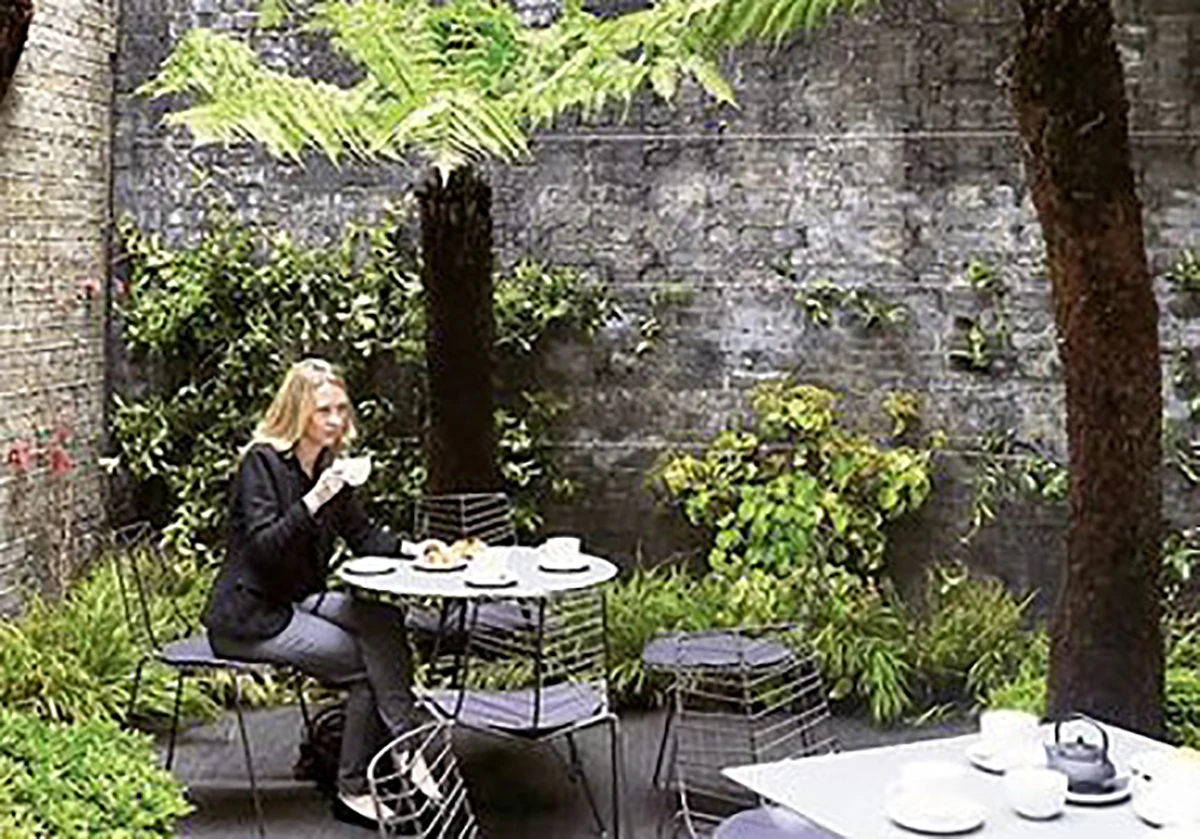
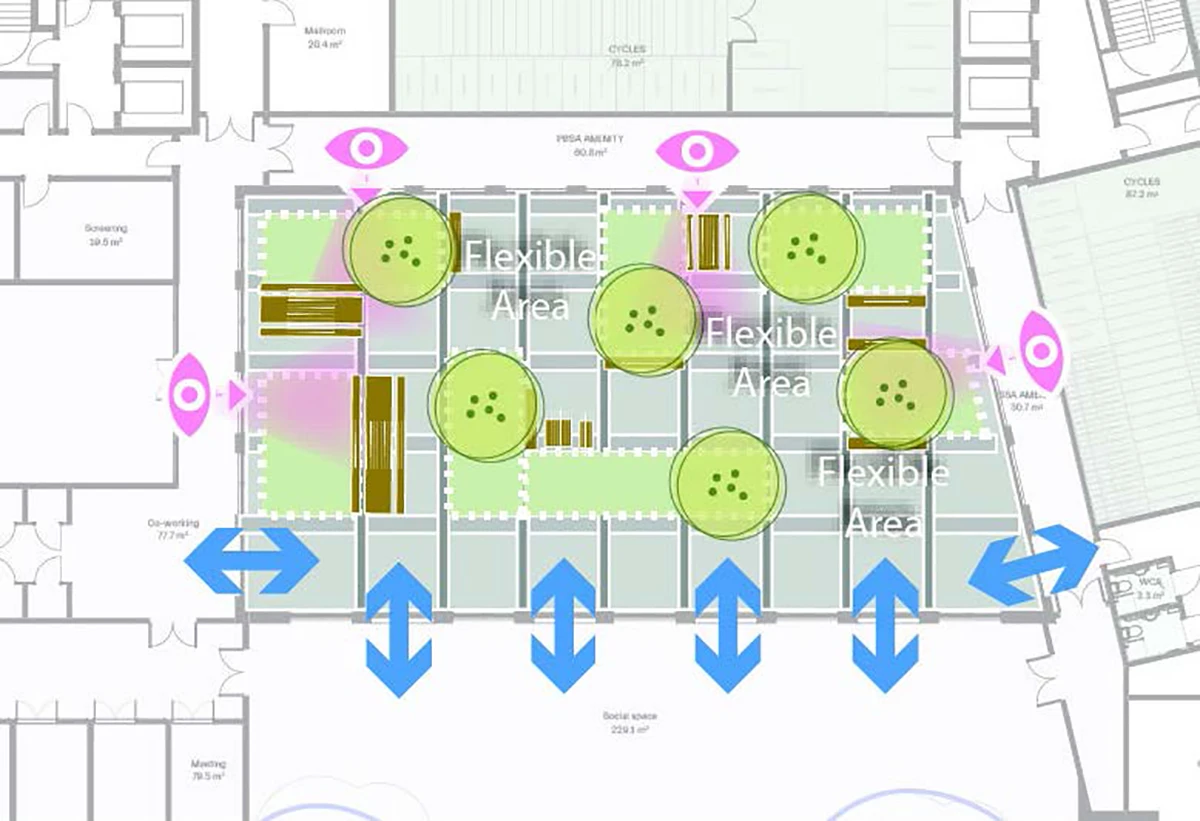
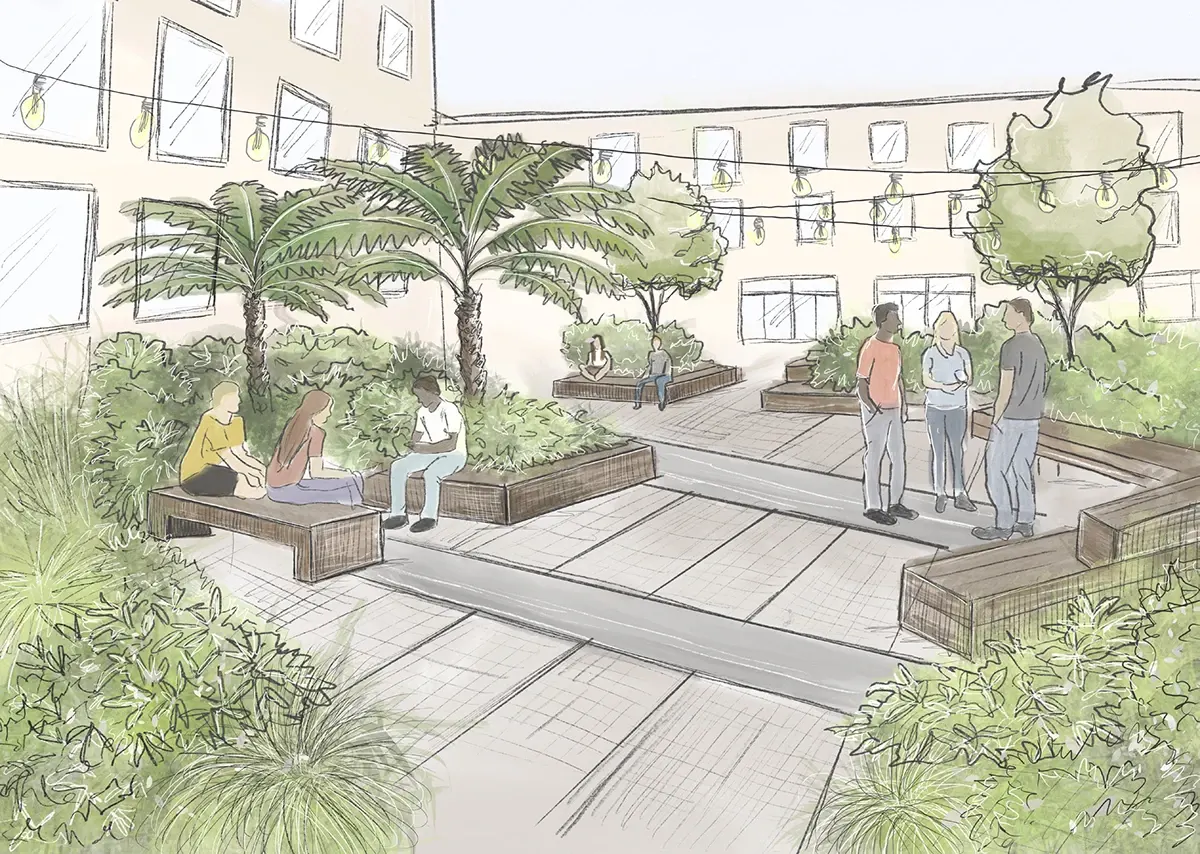
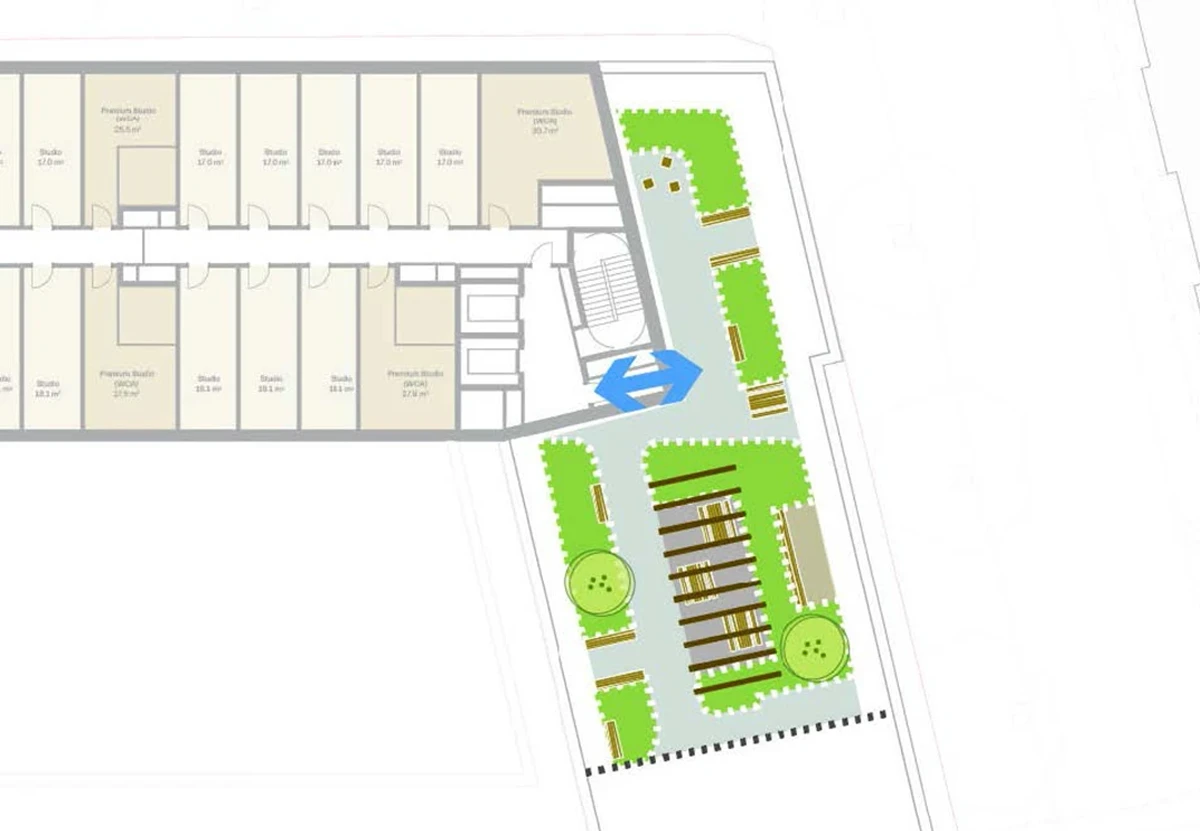
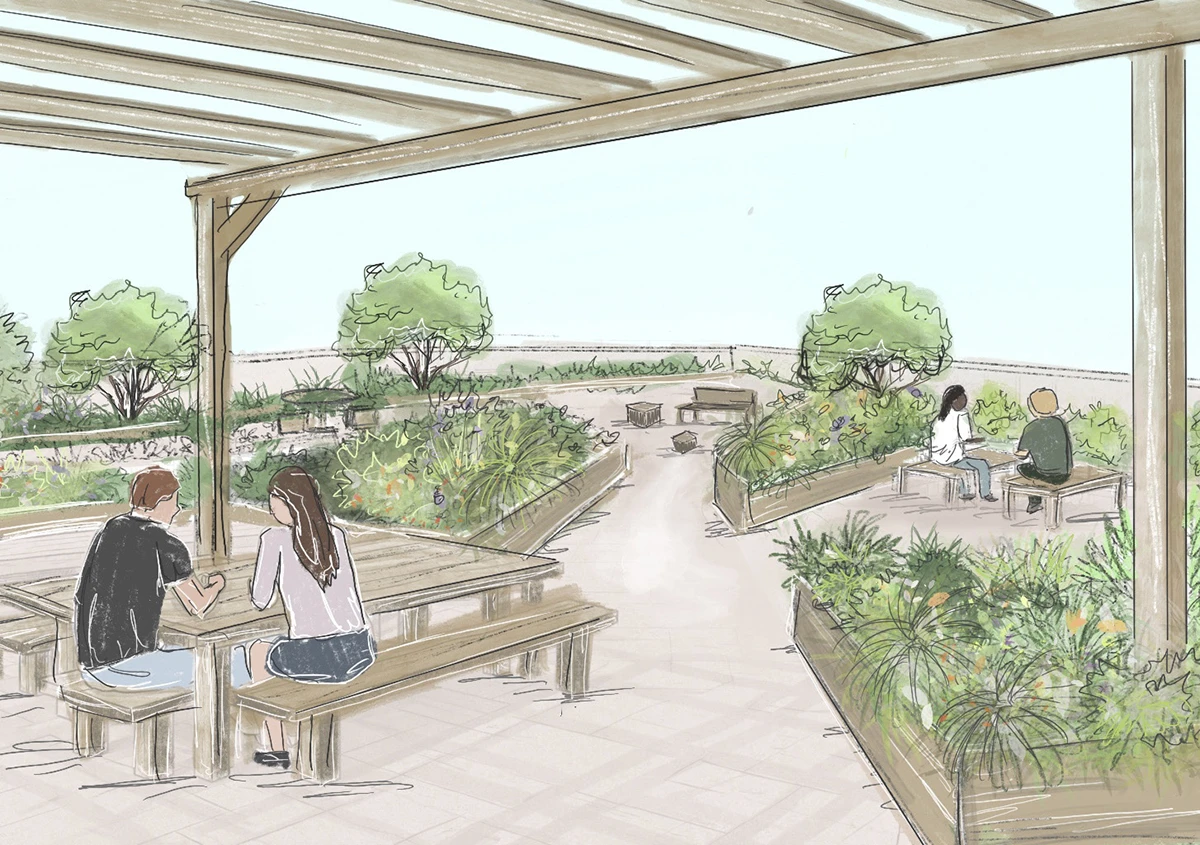
Flexible use spaces for collaboration and solitude, including outdoor learning & activity zones. A shaded area designed for year-round comfort with lush planting of shade-tolerant species. A natural and inclusive atmosphere encouraging reflection, socialisation, and engagement.

Student Roof Terrace
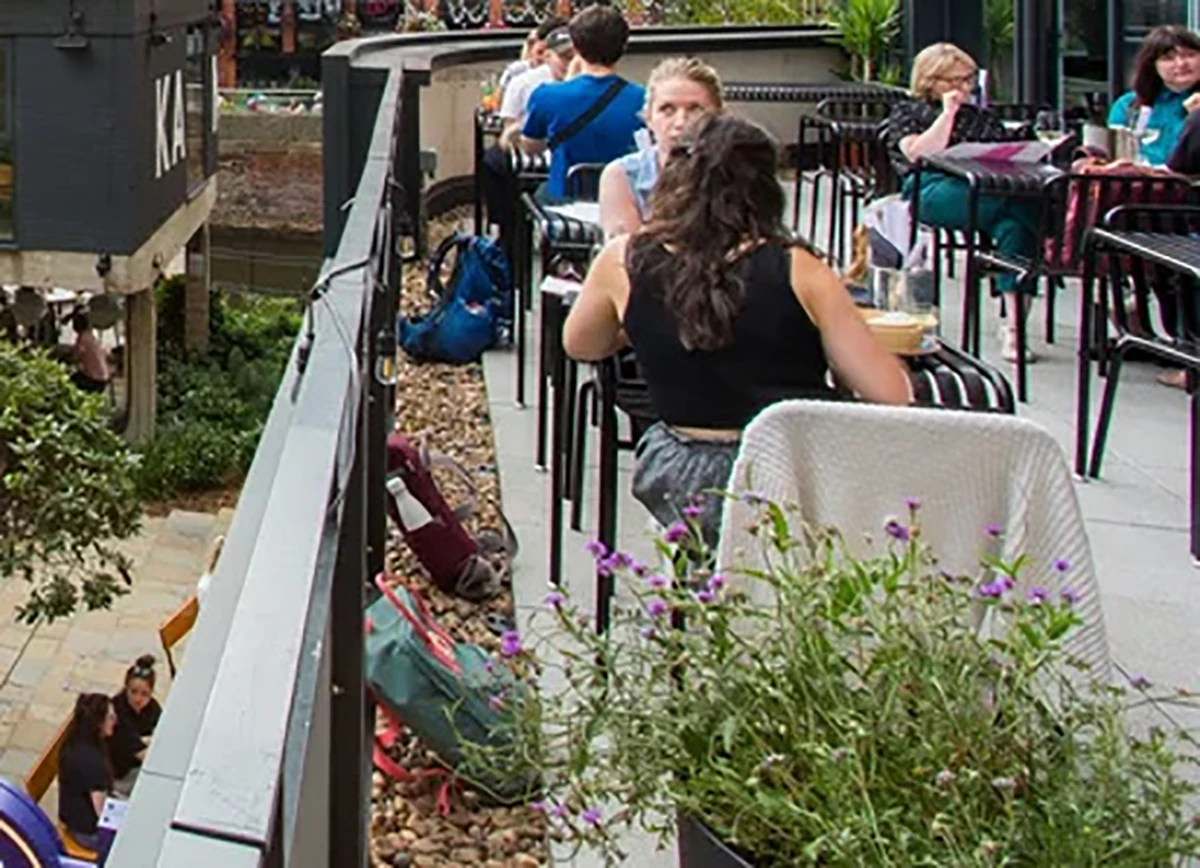
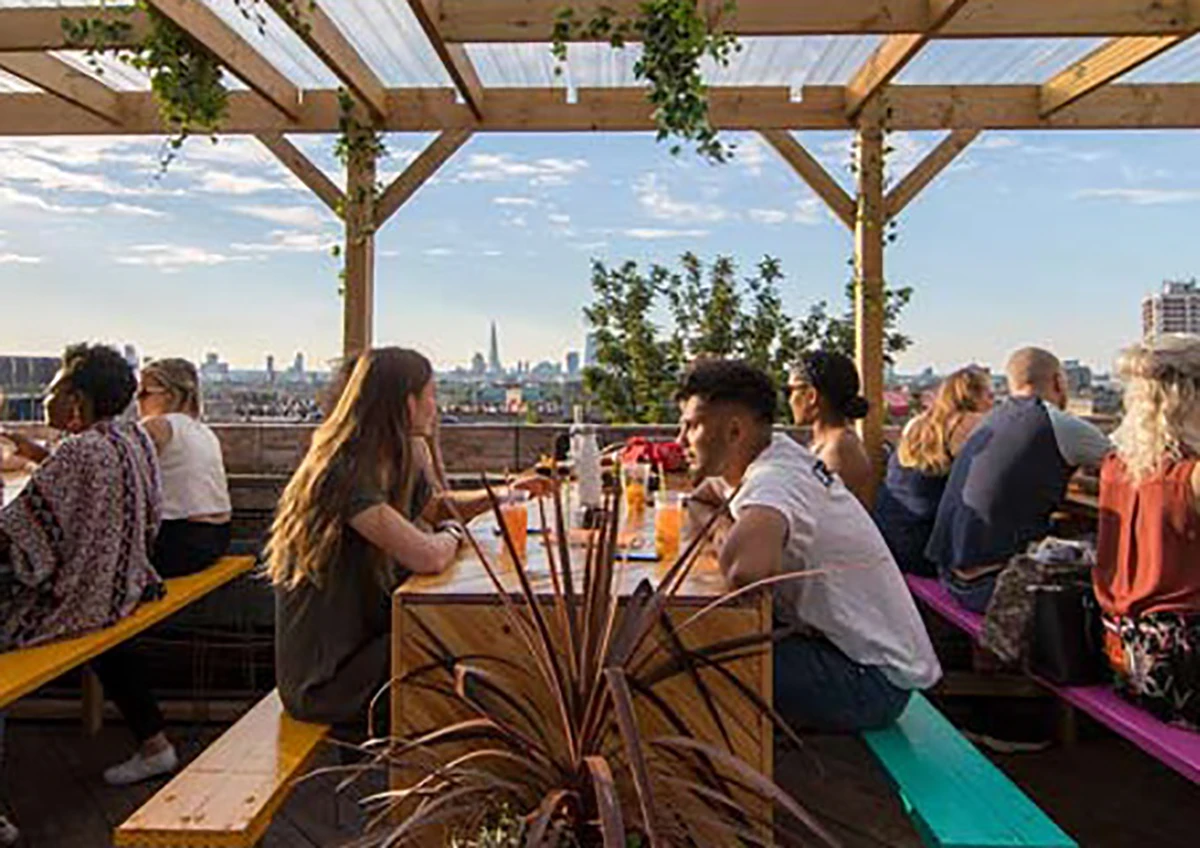
Outdoor social zones with multi-use areas, reflecting local spaces in a design which draws inspiration from existing social terraces and spaces in the area. Blurring indoor and outdoor boundaries through visual and physical links to the terrace.
Energy Aspirations
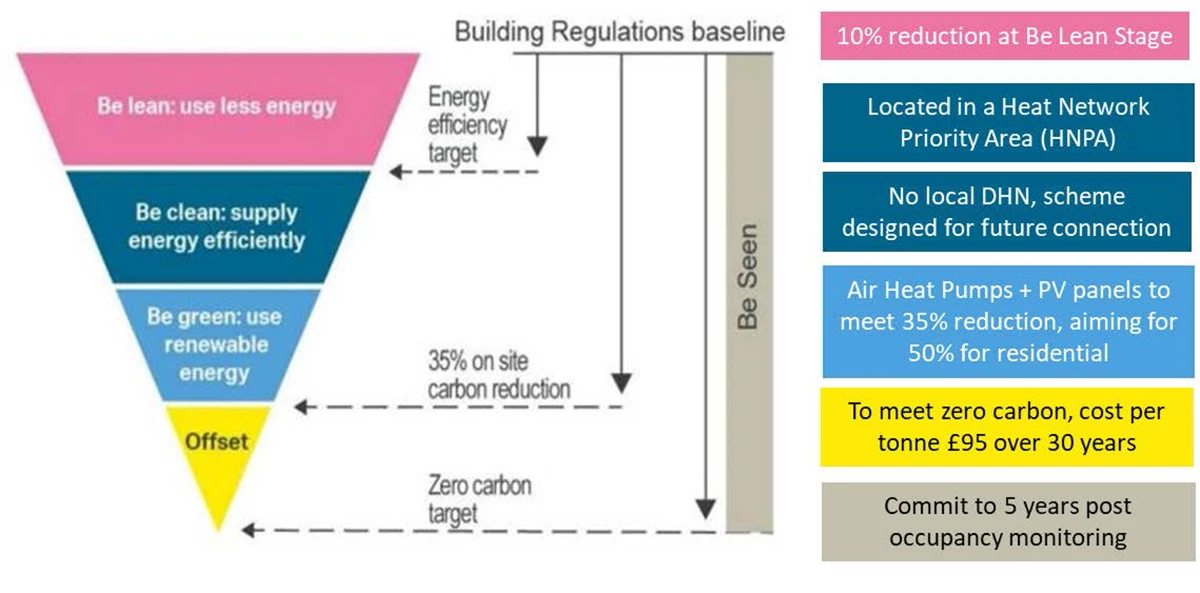
The scheme will meet London Plan 2021 and Southwark Local Plan sustainability requirements, including the Policy SI 2 energy hierarchy, and will achieve BREEAM Excellent.
BREEAM Targets
The proposed development is targeting a BREEAM UK New Construction 2018 ‘Excellent’ rating for the PBSA areas.
The strategy is embedded from the outset, focusing on a fabric first energy approach, reduced operational carbon emissions, student health and wellbeing, efficient water use, responsible material selection and sustainable transport.

Waste and Servicing
Waste storage will be provided at ground floor level and collected from surrounding streets on collection day. The servicing strategy has been designed to minimise disruption to residents and neighbouring streets.
Key measures include:
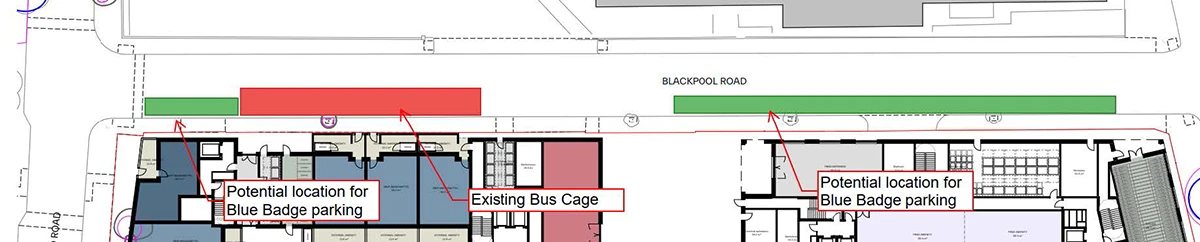
Blue Badge parking spaces will be provided for the affordable housing homes.
Greener Streets and Outdoor Spaces
Better Connections & Accessibility
Streets & Local Character
Sustainability
Social Value and Community Benefits
Key priorities identified include:
A need for affordable, flexible and permanent spaces in the local area in particular for mentoring, youth support, and family services.
Training and employment opportunities: Some groups were interested in site visits, apprenticeships, and work experience opportunities for local people.
Accessible and inclusive facilities: Spaces that can be used by multiple groups, including charities and community networks, will help foster collaboration and stronger neighbourhood connections.
Planning Context
Chelsea Cloisters is a 10-storey mixed-use building with a basement, located in the Brompton and Hans Town Ward of the Royal Borough of Kensington and Chelsea.
At ground level, the building features residential units along the Ixworth Place, Makins Street, and Lucan Place frontages, while the Sloane Avenue frontage comprises a mix of commercial spaces and residential units above. The residential accommodation includes both long- and short-term lettings.
Additionally, two commercial units are situated centrally within the building, and the basement provides parking for both residents and the public.
Community and Amenity Enhancements:
Community and Amenity Enhancements:

Label
Label
Label
Label
Label
Label
Label
Chelsea Cloisters is a 10-storey mixed-use building with a basement, located in the Brompton and Hans Town Ward of the Royal Borough of Kensington and Chelsea.
At ground level, the building features residential units along the Ixworth Place, Makins Street, and Lucan Place frontages, while the Sloane Avenue frontage comprises a mix of commercial spaces and residential units above. The residential accommodation includes both long- and short-term lettings.
Arada London (formerly Regal) is one of the leading property developers in London, creating beautiful and inspiring places, from homes to workspaces, student accommodation to later living communities – and all the spaces in between. Through our projects and partnerships, we both enhance community life and transform urban landscapes.
Unlike many other developers, we take a long-term, close partnership approach in the delivery of all our projects, committing to the entire life-cycle of a development, from acquiring the land through to the construction, delivery and in-house management of sites post completion.
As such, thorough consultation is key from the outset, whether that be working with community groups, local residents, adjacent landowners or future occupiers of their sites. We are committed to creating sustainable places that respond to local needs.
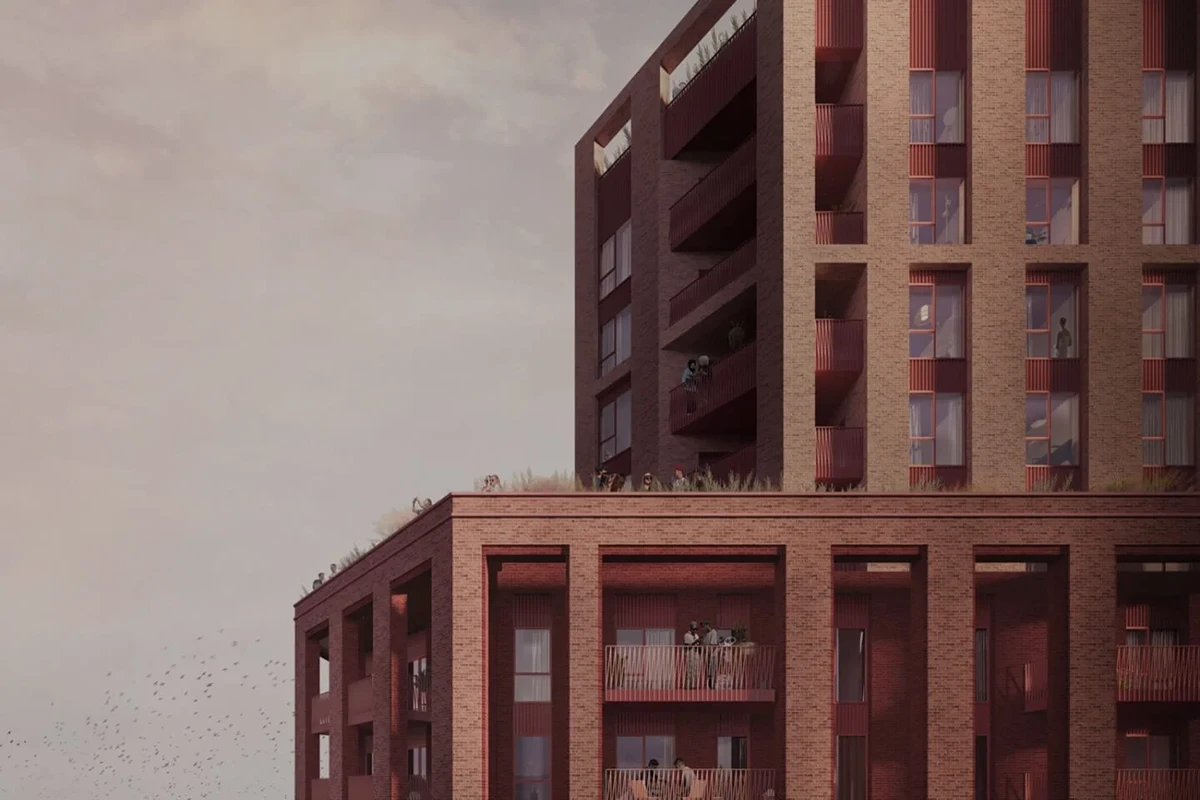
Devonshire Place, Southwark
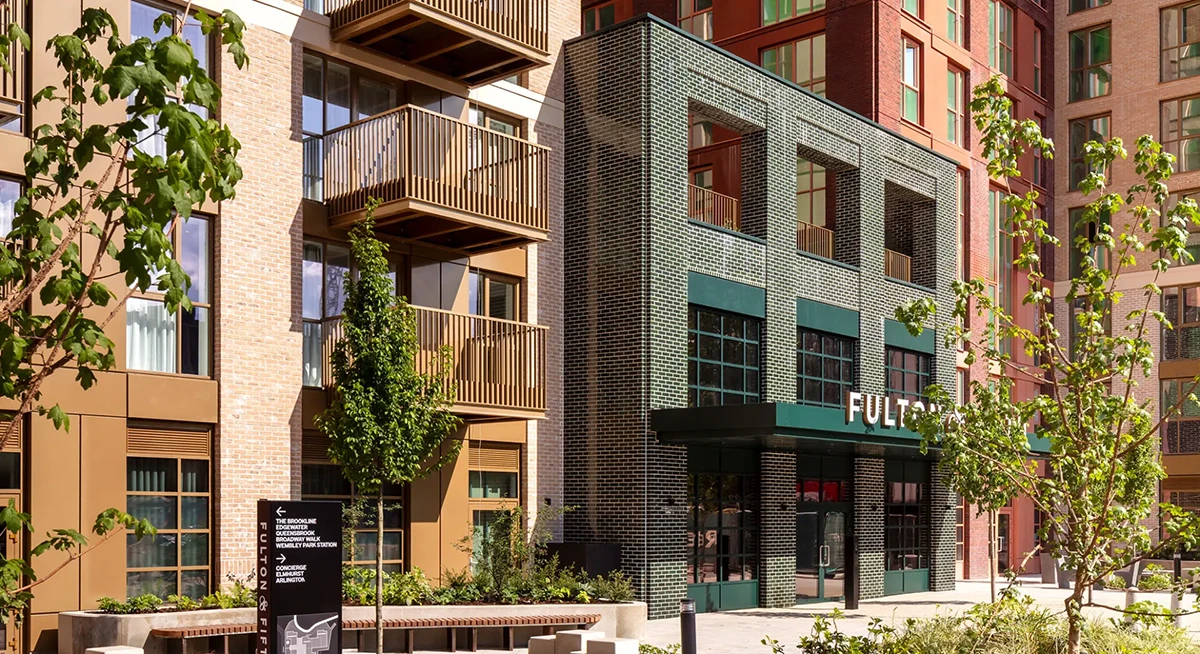
Fulton & Fifth, Wembley
Morris+Company are a London based practice, with a team of 70 specialists who create and deliver housing, schools, healthcare, workplaces, neighbourhood masterplans, and more.
Our teams rich, cross-sector experience informs every stage of the project journey – connecting environmental sustainability with economic, social and cultural resilience.
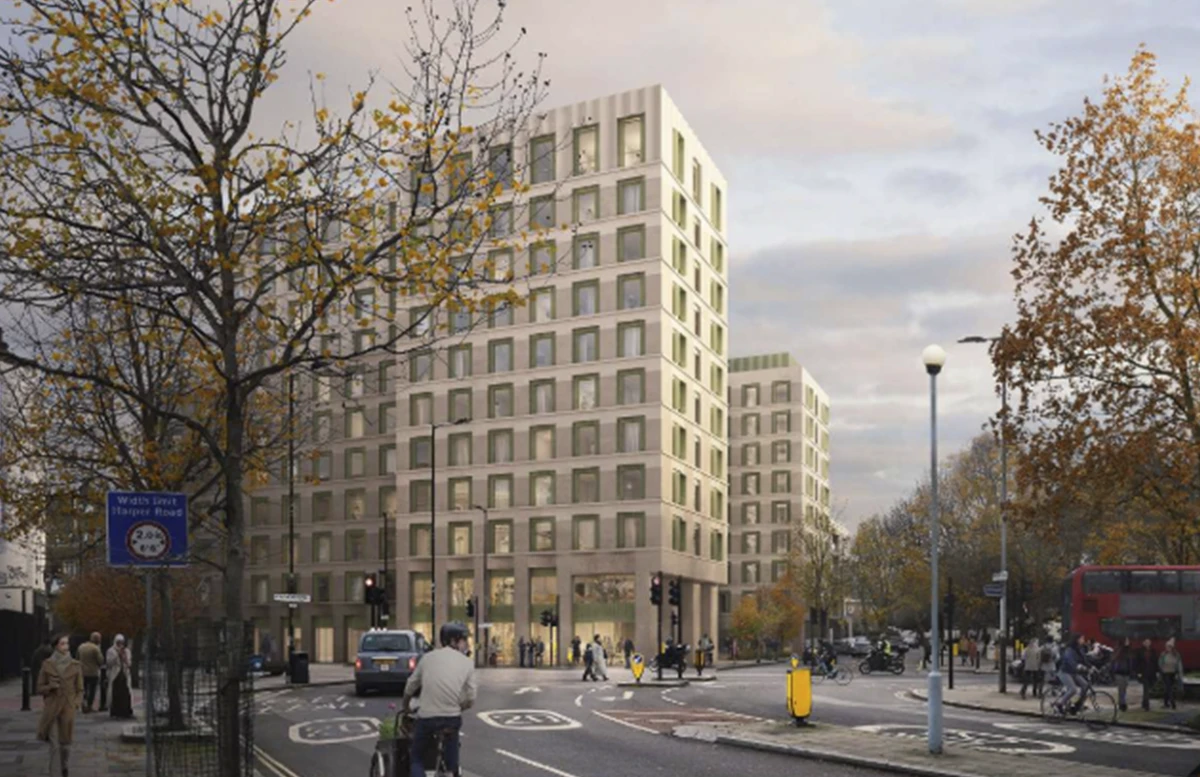
Canada Water K1, Southwark
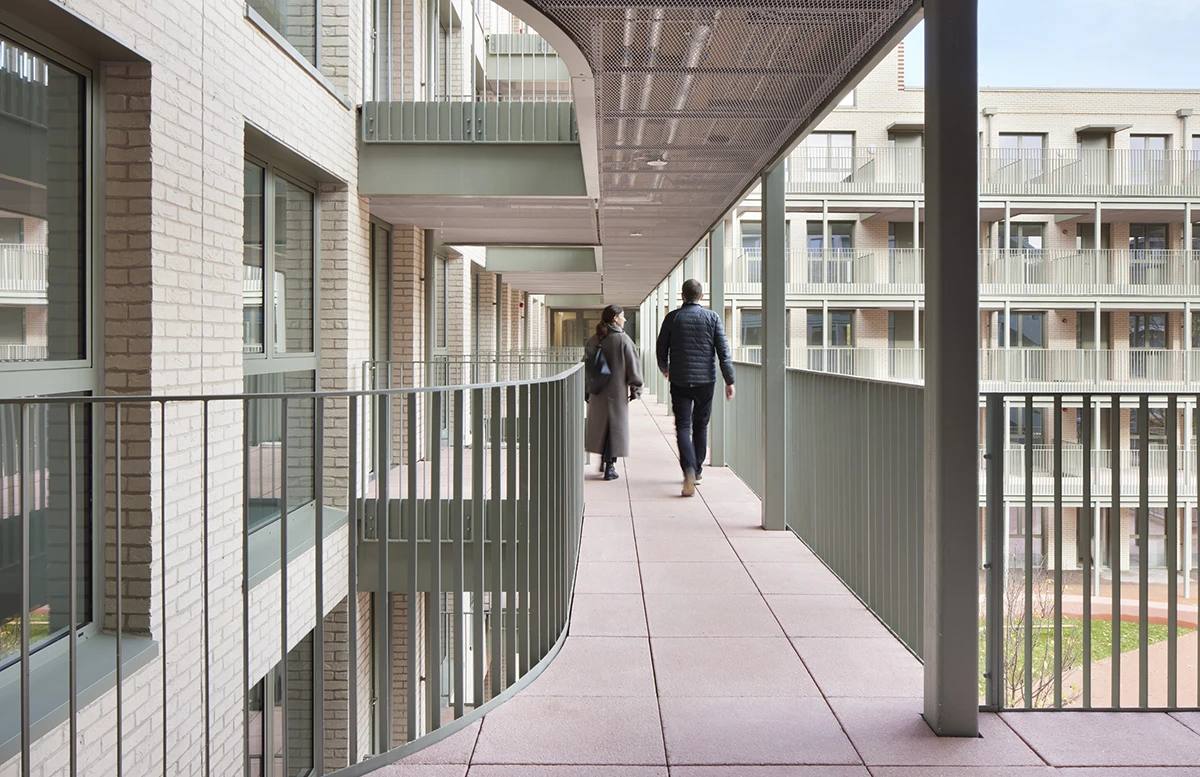
King’s Place, Southwark
Wider Team

Planning & Townscape Consultants

Social Value

Landscape Architects

Canada Water K1, Southwark

Sustainable, Energy & Carbon Consultants

Acoustic Consultants

Air Quality Consultants

Arboricultural Consultants

Fire Engineer

Transport and Waste Consultants
Target Application Submission
Target Start on Site
Target Completion Date
Further to our residents’ meeting in June, the following supporting reports are now available to view:

These reports provide further information that have informed the emerging proposals for the Buildbase Peckham site and will continue to be reviewed and updated ahead of submission of a planning application.
This FAQ provides answers to the key questions and issues raised by the local community during the consultation process. It brings together the main topics discussed through consultation events, meetings, correspondence and conversations with residents and local stakeholders.
We hope this information helps to provide a clearer understanding of the proposals, explains how feedback has helped shape the scheme, and provides links to further information and supporting documents where available.
The site is currently a builder's yard (Buildbase), which generates regular lorry (HGV) traffic. It has fenced, blank-brick boundaries that create an unwelcoming edge to the surrounding streets.
The proposals are for a mixed development scheme, providing purpose-built student accommodation alongside affordable family housing. The scheme would currently deliver:
The proposals aim to make better use of this previously developed site by providing much-needed housing, improving the appearance of the site and creating new pedestrian connections through it.
The Southwark Plan identifies Blackpool Road Business Park as having potential to deliver approximately 250 new homes, alongside other improvements such as better connections through the site and high-quality design.
This figure is an indication of the site's potential rather than a fixed limit. As part of the design process, further assessments have shown that this part of the site can accommodate more homes while creating a high-quality development.
The additional homes proposed will contribute directly to meeting Southwark's housing need, optimising the use of this previously developed site to deliver much-needed student and affordable homes.
The proposals have been designed to respond to two identified housing needs: affordable family housing and purpose-built student accommodation.
The scheme would provide 55 new affordable homes, all at Social Rent, alongside 516 purpose-built student rooms. Providing purpose-built student accommodation helps meet London's growing student population while also reducing pressure on the wider private rented sector, where students and local residents often compete for the same homes.
The site's location also makes it well suited to this mix of uses. It is within an approximately eight-minute walk of Peckham Rye Station, is well served by public transport and local amenities, and is identified in the Southwark Plan for new homes. The mixed-use character of the surrounding area also makes purpose-built student accommodation an appropriate use in this location.
Further information is available in the Student Needs Assessment.
Both needs are real and both are growing, and this scheme has been designed to address them together rather than choosing one over the other.
Student numbers in London are expected to grow by around 17% by 2029/30, an increase of roughly 95,000 students. Closer to this site, within a 45-minute journey, growth is projected to be even higher, at around 27%, or 47,000 additional students. Without enough purpose-built student accommodation to absorb this growth, students end up competing with local residents for the same privately rented homes.
That competition is made worse by a shortage on the supply side. London needs around 3,500 new student bedspaces a year but has been delivering only around 1,829, just over half of what's required, and the number of shared houses (HMOs) available to students and other renters has dropped by about 23% over the past five years.
General housing delivery has the same problem. Over the last decade London has delivered around 27% below its housing target, and in Southwark, annual delivery has averaged approximately 1,540 homes, representing just 66% of the current target.
Given both shortfalls are putting pressure on the same rental market in the same area, the scheme has been designed to respond to both rather than just one.
For further details, please see our Student Needs Assessment.
The scheme includes 55 new affordable homes, all at Social Rent, with a focus on family-sized (three and four-bedroom) homes, which are in greatest need locally. The homes are designed to a high standard, with attractive communal spaces and private amenity space for residents.
The delivery of 55 affordable homes represents a significant contribution to local housing need. This provision is the equivalent of 42.2% affordable housing and is above the level required by planning policy.
The scheme also contributes more broadly to Southwark's housing targets through the delivery of purpose-built student accommodation. Under the Mayor of London's housing methodology, purpose-built student accommodation contributes towards housing supply, with every 2.5 student bedspaces counted as one conventional home. This recognises that providing dedicated student accommodation helps reduce pressure on the wider housing market by freeing up homes that might otherwise be occupied by students.
By delivering both affordable family homes and purpose-built student accommodation, the proposals respond to different housing needs while making efficient use of a previously developed site.
The proposals include 55 affordable family homes, all of which would be provided as Social Rent. This provision is the equivalent of 42.2% affordable housing.
Social Rent is the most affordable form of rented housing and is let at rents that are significantly below market levels. The homes are designed for families and respond directly to the need for genuinely affordable housing in Peckham.
We expect planning conditions to set the hours the terrace can be used. To prevent and discourage any noise related and anti-social behaviour, all students will:
Access to communal outdoor space will be restricted to registered residents via an electronic fob/app system, with all areas covered by 24/7 CCTV monitored from the management office. On-site staff will be present during office hours, backed by evening security and a 24/7 Helpdesk out of hours. All residents will sign up to tenancy rules on noise and neighbourliness, will be inducted via a Resident Handbook, and will be monitored by staff and CCTV for breaches. Repeated or serious anti-social behaviour will be treated with appropriate enforcement action, which may include warnings or, in serious cases, termination of tenancy. Neighbours will be given direct contact details for the site team and Helpdesk, and the on-site team will hold regular liaison meetings with local residents' groups to address any concerns.
The design takes its cues from the surrounding area. The affordable homes have been designed to reflect the surrounding streets, drawing inspiration from Peckham's traditional terraces and nearby historic buildings, including the former workhouses on Nazareth Gardens.
The student building has been designed to reflect the character of Peckham's industrial buildings, including the nearby Bussey Building. The building has been broken into smaller elements so it feels more in keeping with the surrounding streets rather than appearing as one large block.
The proposals also include new landscaping, improved routes through the site and better-quality streets and spaces compared with the existing builder's yard.
Following feedback received during the consultation process, the height and massing of the proposals have been revised, including a reduction in the height of the tallest building. The revised proposals, which reflect these changes and other design updates, will be presented and discussed at the residents' meeting.
The design presented at the most recent consultation event included an 11-storey element to the north of the PBSA building along Blackpool Road, stepping down to 3 storeys towards the southern boundary along Brayards Road. In response to feedback, the northern element has been reduced by one storey to 10 storeys. The southern element has increased from 3 to 4 storeys in locations where this would have minimal impact on neighbouring properties, helping to create a more balanced transition across the site.
Buildings now range from 2 to 10 storeys, stepping down towards neighbouring homes and the surrounding streetscape. The design has been carefully developed to reduce impacts on neighbouring properties by:
The height reduction forms part of a number of changes made in response to feedback received from residents and stakeholders during the consultation process.
We have carefully shaped the buildings to reduce the impact on neighbouring homes, stepping down heights near existing properties, setting blocks back from boundaries, and positioning windows to protect privacy.
A technical daylight and sunlight assessment has been carried out against the standard national guidance (the BRE guidelines). As part of the planning application, a comprehensive Daylight and Sunlight Assessment will be submitted. This assessment will evaluate the proposals against the relevant national guidance (BRE Guidelines) and will be available to view as part of the planning application documentation.
The proposals have been designed as a car-free development, in line with London planning policy, with parking provided only for Blue Badge users.
The existing Buildbase site generates regular staff, customer and delivery traffic, including heavy goods vehicles (HGVs). Replacing this use with affordable homes and purpose-built student accommodation is expected to significantly reduce HGV movements while having only a limited impact on general local traffic.
The development has also been designed to encourage sustainable travel by providing secure cycle parking, improving walking routes and making use of the area's excellent public transport connections.
An independent Transport Assessment has been carried out as part of the planning application. This concludes that the proposals would have a limited impact on the local road network and would result in fewer servicing vehicle movements than the existing Buildbase use.
The assessment also found that:
More information is available in the Transport Assessment.
Yes. Given the site's excellent public transport connections and the profile of students likely to live here, we expect most students to arrive by public transport, walking, cycling or taxi rather than by private car.
Where students do choose to arrive by car with family or friends, a managed arrival process will be put in place to minimise disruption to local residents. Students will receive information before they arrive about the most appropriate travel and arrival arrangements.
During peak move-in periods, additional on-site staff will be available to coordinate arrivals, manage activity on site and direct students quickly to their accommodation. The management team will liaise with the local highway authority and other relevant organisations, where appropriate, to help minimise congestion and avoid obstruction on surrounding streets.
Student arrivals will be staggered over several days to reduce pressure on the local area. Measures are expected to include:
Arada London will support the provision and enhancement of local services and infrastructure across the borough by delivering a substantial contribution through the Community Infrastructure Levy (CIL) and Section 106 obligations.
With regards to transport, a package of measures to promote sustainable travel to the site will be agreed to mitigate the transport impacts of the scheme. The site is in a highly sustainable location, with a Public Transport Accessibility Level (PTAL) rating of 4 out of 5, providing opportunities for journeys to be made by a range of transport modes, including bus services and Peckham Rye Station, which provides Overground connections. Local amenities are also accessible by short walking and cycling journeys, supported by existing footways and crossing points.
Given the existing Buildbase site already generates vehicle movements from staff, customers and deliveries throughout the day, the proposed scheme is expected to have a limited impact on local traffic conditions. Furthermore, the introduction of student accommodation will have a different impact on local services compared with traditional housing, as students typically have limited demand for certain services such as schools and healthcare provision. The scheme will therefore help to meet identified housing needs while managing impacts on existing local infrastructure.
The development is expected to generate both Community Infrastructure Levy (CIL) and Section 106 (S106) contributions.
Section 106 contributions are secured through a legal agreement and are used to deliver specific measures required to mitigate the impact of the development. These are agreed with the London Borough of Southwark as part of the planning process.
Community Infrastructure Levy (CIL) contributions help fund wider infrastructure needed to support growth across the borough, such as transport, education, parks and community facilities. Decisions on how CIL funding is spent are made by the London Borough of Southwark in line with its infrastructure priorities.
As both developer and contractor, Arada London have a long-term interest in delivering the project responsibly. We will engage proactively with the Council, local residents, and businesses throughout the construction process.
A detailed Construction Management Plan will be prepared and consulted on, setting out measures to manage noise, permitted working hours, traffic, and site operations. We will work closely with all relevant stakeholders to mitigate impacts wherever possible.
A Construction Management Plan will be prepared and submitted alongside the planning application, setting out how these impacts will be controlled.
The proposals are expected to deliver a number of public benefits, including:
The site is currently a builder's yard with an inactive, fenced and blank-brick frontage along all of its boundaries and generates regular HGV traffic. The proposals would replace this with active, landscaped frontages, high-quality architecture and new pedestrian routes through the site, transforming an unwelcoming edge into a positive part of the neighbourhood.
Yes. The proposals include a communal play space and an active play street serving the residential homes, together with a landscaped courtyard for the student accommodation and new pedestrian routes through the site.
We have been engaging with the local community since the early stages of the project to understand local priorities and gather feedback before submitting a planning application.
This has included meetings with community organisations and ward councillors, alongside a series of public consultation events where residents have been able to view the proposals and speak directly with the project team.
The feedback received has helped shape the proposals as they have developed.
An early stage 'Meet and Greet' event took place in December 2025, and we held follow up Public Exhibition Events in March 2026. An additional meeting was held in June 2026, and another meeting will be held in July 2026.
The proposals have been shaped through three rounds of public consultation, held in December 2025, March 2026 and June 2026, alongside a series of five pre-application meetings with the London Borough of Southwark and a Design Review Panel critique.
Feedback received has led to specific changes to the scheme, including reducing the height of the mass terminating on Brayards Road, introducing a set-back to the north-eastern corner of the student accommodation block, and refining building heights and massing to protect neighbouring daylight and sunlight following specialist assessment.
We have used a range of methods to help ensure local people have had opportunities to find out about the proposals and share their views, including:
| Event | Date |
|---|---|
| Residents' Meeting | Thursday 23rd July 2026 |
| Submission | Summer 2026 |
| Start on Site | Winter 2027/2028 |
| Completion | Summer 2031 |